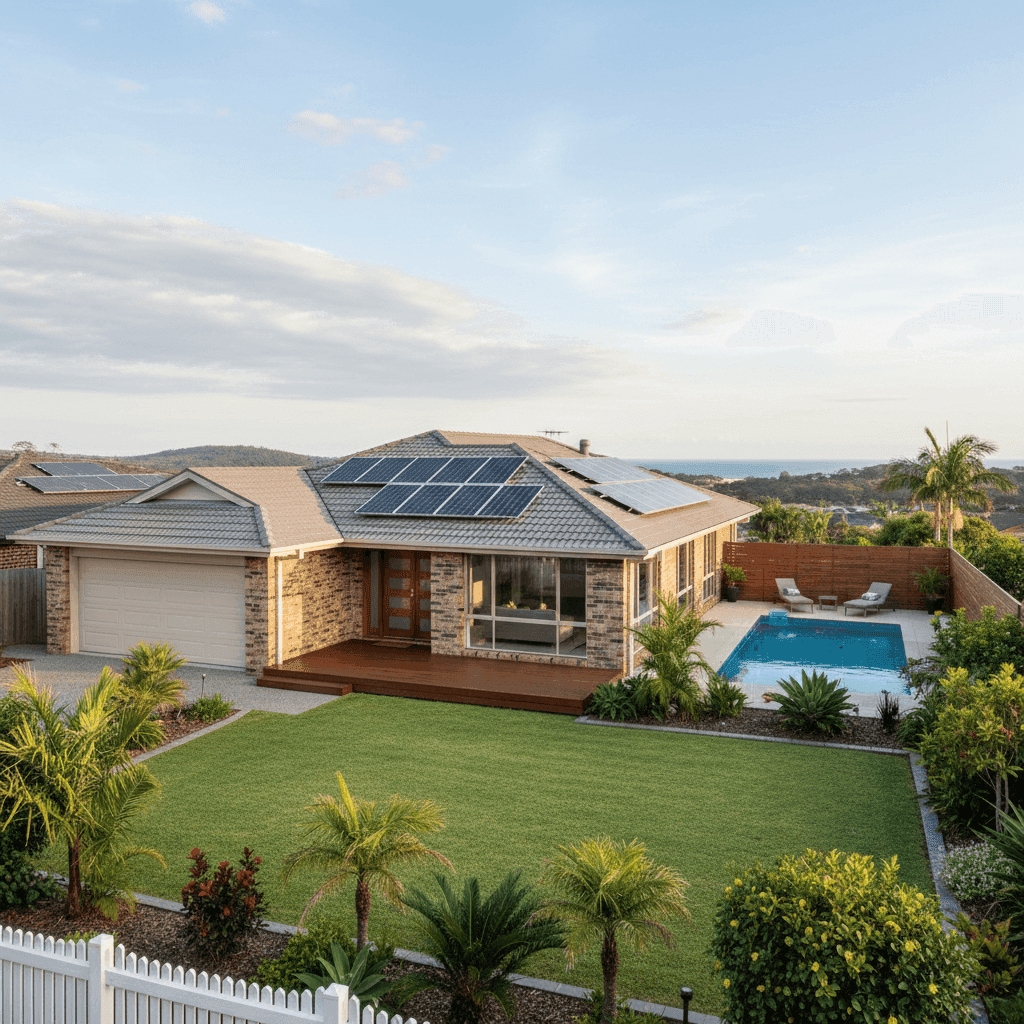
Coffs Harbour is one of the Mid North Coast's most sought-after places to call home — a coastal city with a relaxed lifestyle, strong community, and a property market that continues to attract families and retirees alike. But owning a home here, like anywhere in Australia, comes with the responsibility of protecting it properly. This article breaks down a real home and contents insurance quote for a four-bedroom, free-standing home in Coffs Harbour (NSW 2450), and puts that premium in context so you can judge whether you're getting a fair deal.
---
Is This Quote Fair?
The annual premium for this property came in at $2,651 per year (or $264 per month), covering a building sum insured of $802,000 and contents valued at $50,000. The building excess is $5,000 and the contents excess is $2,000.
Our price rating for this quote is FAIR — Around Average.
That assessment holds up well under scrutiny. The premium sits comfortably below the suburb average of $3,745 per year and just above the 25th percentile of $2,403 — meaning this quote is better than roughly half of the 60 quotes sampled in the area, but not quite in the cheapest quarter. For a well-appointed property of this size and specification, that's a reasonable outcome.
It's also worth noting what "fair" means in practice: you're not being overcharged, but there may still be room to do better. Shopping around — even when you already have a competitive quote — can sometimes reveal savings of several hundred dollars annually.
---
How Coffs Harbour Compares
Understanding how your premium stacks up against broader benchmarks is one of the most useful things you can do as a homeowner. Here's how this quote sits across different comparison points:
| Benchmark | Premium |
|---|---|
| This Quote | $2,651/yr |
| Coffs Harbour Suburb Average | $3,745/yr |
| Coffs Harbour Suburb Median | $3,793/yr |
| Coffs Harbour 25th Percentile | $2,403/yr |
| Coffs Harbour 75th Percentile | $4,471/yr |
| NSW State Average | $9,528/yr |
| NSW State Median | $3,770/yr |
| National Average | $5,347/yr |
| National Median | $2,764/yr |
A few things stand out here. First, the NSW state average of $9,528 is dramatically higher than what's being paid in Coffs Harbour — but this is largely a statistical effect, driven by extremely high premiums in flood-prone, cyclone-affected, and high-risk regional areas across the state. The state median of $3,770 is a far more representative figure, and this quote comes in well below that.
Compared to the national average of $5,347 and national median of $2,764, this quote is very much in the mainstream — slightly above the national median, but well under the national average. That's consistent with Coffs Harbour being a moderate-risk coastal location without the extreme weather exposure of Far North Queensland or parts of Western Australia.
One figure worth flagging is the LGA (Clarence Valley) average of $31,244 per year. This is an outlier driven by a small number of very high-risk properties — likely in flood-affected zones — and is not representative of typical Coffs Harbour premiums. Don't let that number alarm you. You can explore more localised data on the Coffs Harbour suburb stats page.
---
Property Features That Affect Your Premium
Insurance pricing is never one-size-fits-all. Insurers assess dozens of factors when calculating your premium, and this property has several characteristics worth understanding.
Brick Veneer Walls & Tiled Roof Brick veneer construction with a tiled roof is generally viewed favourably by insurers. Brick is fire-resistant and durable, while tiles are more resilient than metal or fibreglass sheeting in many weather conditions. This combination typically attracts lower premiums compared to timber-clad or fibrous cement homes.
Slab Foundation A concrete slab foundation is standard for homes of this era and is generally considered low-risk from an underwriting perspective. It eliminates the underfloor moisture and pest-access concerns associated with raised foundations.
Timber and Laminate Flooring While attractive, timber and laminate floors can be more costly to repair or replace after water damage than tiles. This can marginally influence contents and building claim costs, though it's rarely a dominant pricing factor.
Swimming Pool A pool increases the replacement value of the property and adds some liability considerations. Insurers factor in the cost of pool surrounds, equipment, and fencing when calculating the building sum insured. Ensuring your sum insured accounts for the pool infrastructure is important — underinsurance here is a common oversight.
Solar Panels Solar panels are increasingly common on Australian homes, but they do add to the rebuild cost and can be damaged by hail or storm events. It's worth confirming with your insurer that your panels are explicitly covered under your policy — some policies include them automatically, while others require a separate endorsement.
1984 Construction Homes built in the early-to-mid 1980s are generally well-constructed but may have older wiring, plumbing, or roofing materials that could increase the likelihood of certain claims. Some insurers apply a loading for older properties, though this varies significantly between providers.
Above-Average Fittings The above-average quality of fittings — think stone benchtops, quality tapware, and premium fixtures — directly influences the cost to rebuild or repair. This is appropriately reflected in the building sum insured of $802,000 for a 268 sqm home.
---
Tips for Homeowners in Coffs Harbour
1. Review your sum insured regularly Building costs have risen sharply in recent years. A sum insured set even two or three years ago may no longer reflect what it would actually cost to rebuild your home today. Use a building cost calculator or speak to a quantity surveyor if you're unsure — underinsurance is one of the most common and costly mistakes homeowners make.
2. Check your pool and solar are explicitly covered As noted above, these are two features that occasionally fall into grey areas in policy wording. Read your Product Disclosure Statement (PDS) carefully and ask your insurer directly if you're not sure.
3. Consider your excess carefully This quote carries a $5,000 building excess — on the higher end of the spectrum. A higher excess typically reduces your premium, but it also means a larger out-of-pocket cost if you need to make a claim. Make sure the excess level you choose reflects what you could comfortably afford at short notice.
4. Don't set and forget Insurance is one of those things that's easy to renew automatically year after year without questioning the price. Even if your current quote is fair, comparing it against alternatives at renewal time takes only a few minutes and could save you hundreds of dollars.
---
Compare Your Home Insurance Quote Today
Whether you're a long-time Coffs Harbour local or new to the area, making sure you have the right cover at the right price is worth the effort. CoverClub makes it easy to compare home and contents insurance quotes from multiple providers in one place — so you can see exactly where your premium sits and whether there's a better deal available. Get a quote at CoverClub and take the guesswork out of home insurance.