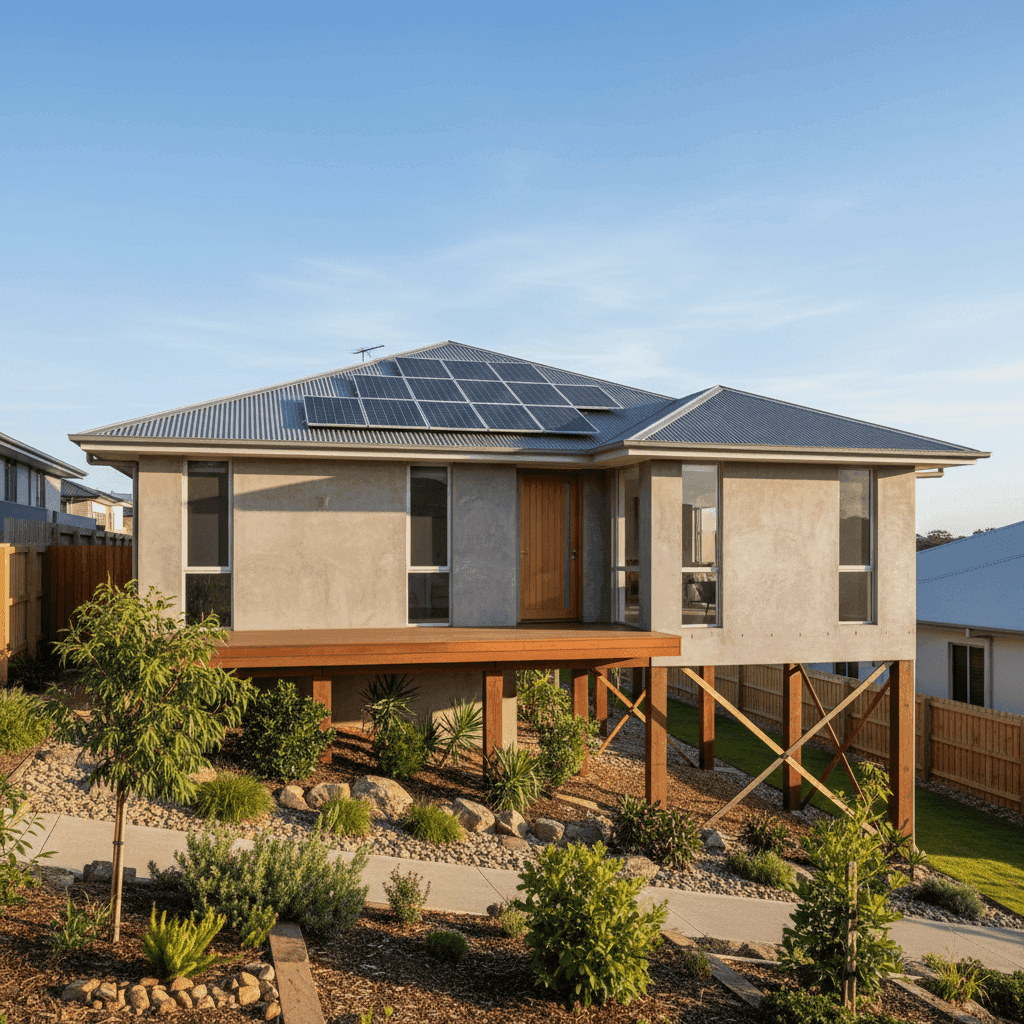
If you own a free standing home in Coffs Harbour, NSW 2450, you already know this coastal city has plenty going for it — stunning beaches, a relaxed lifestyle, and a property market that has attracted buyers from across the country. But with rising rebuild costs and increasingly unpredictable weather on the mid-North Coast, getting the right home and contents insurance at the right price is more important than ever. In this article, we break down a real insurance quote for a 3-bedroom, 3-bathroom home in the area and put it in context against local, state, and national benchmarks.
---
Is This Quote Fair?
The quote in question comes in at $9,048 per year (or $867/month) for combined home and contents cover, with a building sum insured of $935,000 and contents valued at $98,000. Both the building and contents excess are set at $1,000.
Our price rating for this quote is Expensive — Above Average.
To understand why, it helps to look at the numbers in context. The suburb average premium for Coffs Harbour (2450) sits at just $3,745 per year, with a median of $3,793. Even at the 75th percentile — meaning only 25% of quotes in the area are higher — the figure is $4,471. This quote, at $9,048, sits well above that upper band.
That said, a few important caveats apply. The building sum insured of $935,000 is likely higher than many comparable properties in the suburb sample, which will push the premium up considerably. Above-average fittings quality, a larger-than-typical floor area of 153 sqm, and features like ducted climate control and solar panels also add to the insured value. A higher sum insured means more for the insurer to cover — and that's reflected in the price.
Still, even accounting for these factors, homeowners in this situation would be wise to shop around and see whether a more competitive rate is available for the same level of cover.
---
How Coffs Harbour Compares
Putting this quote into a broader context reveals some interesting contrasts across different geographic levels.
| Benchmark | Average Premium | Median Premium |
|---|---|---|
| Coffs Harbour (2450) | $3,745/yr | $3,793/yr |
| NSW | $9,528/yr | $3,770/yr |
| National | $5,347/yr | $2,764/yr |
You can explore the full NSW home insurance data or the national home insurance statistics for a deeper dive.
One figure that stands out immediately is the NSW average of $9,528/yr — which is actually close to this quote. However, the NSW median of $3,770 tells a very different story. The large gap between the NSW average and median suggests that a relatively small number of very high-cost properties (think flood zones, bushfire-prone areas, and high-value homes) are pulling the average up significantly. The same dynamic plays out at the national level, where the average ($5,347) is nearly double the median ($2,764).
Notably, the Clarence Valley LGA average of $31,244/yr is extraordinarily high — a figure almost certainly driven by properties in high-risk flood and storm zones within that broader local government area. Coffs Harbour itself, while part of the mid-North Coast, generally carries lower risk than some of its LGA neighbours, which is reflected in its more moderate suburb-level averages.
Based on 60 quotes sampled in the 2450 postcode, the local data provides a reasonably reliable picture of what most homeowners in the area are paying. At $9,048, this quote is an outlier — but not an inexplicable one given the property's characteristics.
---
Property Features That Affect Your Premium
Several features of this particular home have a meaningful influence on the insurance premium:
Construction year (1953): Older homes can be more expensive to insure because materials and building methods from that era may be harder to source or replicate. Restoring period-era concrete construction to its original standard can carry a premium in terms of labour and materials.
Concrete external walls: Concrete is generally considered a durable and fire-resistant building material, which can work in a homeowner's favour from a risk perspective. However, repairs to concrete structures can be costly, which insurers factor into pricing.
Steel/Colorbond roof: Colorbond roofing is popular across Australia for good reason — it's lightweight, durable, and performs well in a range of weather conditions. Insurers generally view it favourably compared to older roofing materials.
Stump foundation: Homes on stumps (also known as pier or post foundations) are common in coastal and sub-tropical regions of NSW. While they offer good ventilation and can perform well in wet conditions, they may require periodic maintenance and can be more susceptible to certain types of damage, which some insurers price accordingly.
Timber/laminate flooring: These floor types can be vulnerable to water damage and may be costly to replace, particularly if the timber is hardwood or heritage-style.
Above-average fittings quality: High-end fixtures and finishes — think stone benchtops, quality appliances, and premium cabinetry — cost more to replace, and that's reflected in both the sum insured and the premium.
Solar panels and ducted climate control: Both of these inclusions add to the overall insured value of the property. Solar systems in particular can be costly to repair or replace after storm or hail damage.
---
Tips for Homeowners in Coffs Harbour
1. Review your sum insured regularly Building costs have risen sharply across Australia over the past few years. Make sure your sum insured reflects the actual cost to rebuild your home — not its market value. Underinsurance is a significant risk, but over-insuring can mean unnecessarily high premiums. Use a building cost calculator or speak with a quantity surveyor to get an accurate figure.
2. Compare quotes across multiple insurers The gap between the cheapest and most expensive quotes in any given suburb can be substantial. With a 25th percentile of $2,403 and a 75th of $4,471 in Coffs Harbour, there's clearly a wide range on offer. Get a quote through CoverClub to see how different insurers price your specific property.
3. Ask about discounts for security and safety features Some insurers offer discounts for homes with monitored alarm systems, deadbolts, or fire suppression systems. It's worth asking your insurer what measures could reduce your premium without reducing your cover.
4. Consider your excess carefully Both the building and contents excess on this quote are set at $1,000. Choosing a higher excess can reduce your annual premium, but make sure you're comfortable covering that amount out of pocket in the event of a claim. Strike a balance that suits your financial situation.
---
Ready to Find a Better Deal?
Whether your current premium feels too high or you're shopping for cover for the first time, comparing quotes is the smartest first step. CoverClub makes it easy to see how different insurers price your home based on its specific features and location. Start comparing home insurance quotes today and make sure you're getting the right cover at a fair price.