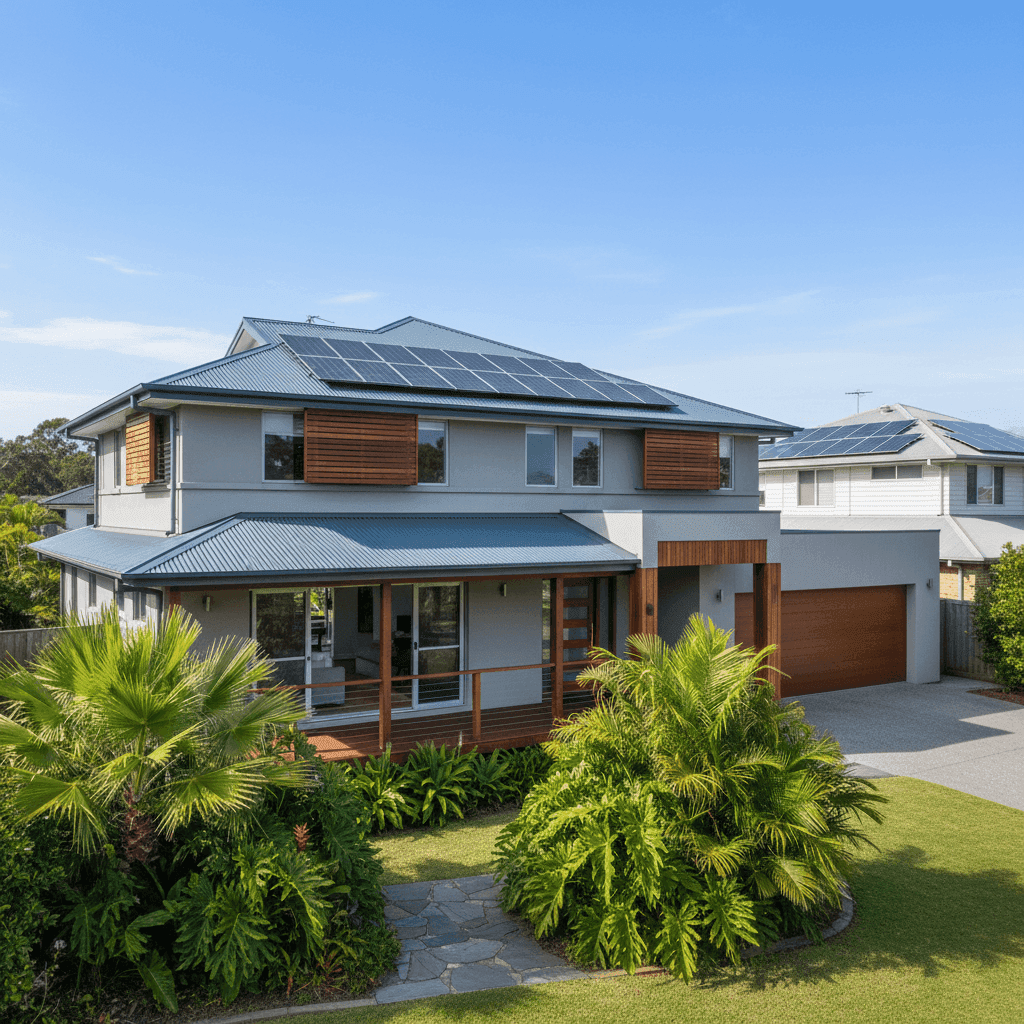
If you own a free standing home in Coffs Harbour, NSW 2450, you've likely noticed that home insurance premiums can vary wildly depending on who you ask — and what they know about your property. This article breaks down a real home and contents insurance quote for a three-bedroom, three-bathroom free standing home in Coffs Harbour, comparing it against suburb, state, and national benchmarks to help you understand whether the price stacks up.
---
Is This Quote Fair?
The annual premium for this property came in at $9,460 per year (or $907/month), covering a building sum insured of $943,000 and contents valued at $142,000, with a $1,000 excess on both building and contents.
Our price rating for this quote is Expensive — Above Average.
To put that in perspective: the suburb average for Coffs Harbour (2450) sits at just $3,745/year, with a median of $3,793. That means this quote is roughly 2.5 times the local average — a significant gap that warrants a closer look.
That said, it's worth noting that the suburb's 75th percentile premium is $4,471/year, meaning even the most expensive quarter of quotes in the area are well below this figure. The $9,460 price point is clearly an outlier relative to local norms, and several property-specific factors are likely driving it upward.
---
How Coffs Harbour Compares
Understanding where your premium sits relative to broader benchmarks is essential for making an informed decision. Here's how the numbers stack up:
| Benchmark | Average Premium | Median Premium |
|---|---|---|
| Coffs Harbour (2450) | $3,745/yr | $3,793/yr |
| NSW State | $9,528/yr | $3,770/yr |
| National | $5,347/yr | $2,764/yr |
| Clarence Valley LGA | $31,244/yr | — |
A few things stand out here. First, the NSW state average of $9,528/year is actually very close to this quote — suggesting that on a statewide basis, this premium isn't as unusual as it first appears. The massive gap between the NSW average and median ($9,528 vs $3,770) tells us that high-value outliers are pulling the state average upward considerably.
Second, the Clarence Valley LGA average of $31,244/year is extraordinarily high — a figure almost certainly driven by properties with very high rebuild values, flood or storm risk exposure, or other significant risk factors in the broader local government area. By comparison, this quote looks relatively modest within that LGA context.
At the national level, the average premium of $5,347/year sits below this quote, though again the national median of $2,764 reflects the fact that many Australian homeowners — particularly those in lower-risk areas — pay considerably less.
The bottom line: this quote is expensive relative to the Coffs Harbour suburb average, broadly in line with the NSW state average, and above the national average. The property's specific characteristics help explain why.
---
Property Features That Affect Your Premium
Several features of this home are likely contributing to the higher-than-average premium. Here's what insurers are likely weighing up:
High building sum insured ($943,000) This is the single biggest driver. At 153 sqm, the above-average fittings quality and the cost to rebuild to the same standard — including any heritage or period considerations for a home built in 1953 — pushes the insured value well above typical homes in the suburb. Insurers price premiums as a percentage of the sum insured, so a higher rebuild cost means a higher premium almost by default.
Age of construction (1953) Homes built over 70 years ago present unique risks for insurers. Older electrical systems, plumbing, and structural elements can be more susceptible to failure, and sourcing materials or tradespeople capable of matching period construction can be significantly more expensive. This adds a loading to the premium.
Stump foundations Homes on stumps — common in older Queensland and northern NSW properties — are more exposed to subfloor moisture, pest ingress, and movement. Insurers view this as a higher-risk foundation type compared to concrete slab, which can contribute to a premium loading.
Timber and laminate flooring While attractive, timber floors are more susceptible to water damage than tiled alternatives, and replacement costs can be substantial — particularly for original hardwood floors in a period home.
Above-average fittings quality Higher-quality kitchens, bathrooms, and fixtures increase the cost to repair or replace following a claim. Insurers factor this into their assessment of the rebuild cost and contents value.
Solar panels Solar panels add to the replacement value of the property and can complicate roof repairs. While they're generally a positive for sustainability, they do add a small loading to premiums.
Ducted climate control Like solar, ducted systems are expensive to repair or replace and contribute to the overall insured value of the home.
On the positive side, concrete external walls are a significant risk mitigant — concrete is highly resistant to fire, wind, and impact damage. Similarly, a steel/Colorbond roof is durable and performs well in storms. The absence of a pool also removes a common liability risk factor.
---
Tips for Homeowners in Coffs Harbour
1. Review your sum insured carefully The $943,000 building sum insured is substantial. Make sure it reflects the actual cost to rebuild your home — not its market value. Overcooking the sum insured is one of the most common reasons premiums run high. Use an independent building cost estimator or speak to a quantity surveyor to verify the figure.
2. Compare multiple quotes — every year Insurers reprice risk differently, and the gap between the cheapest and most expensive quote for the same property can be thousands of dollars. Use CoverClub to compare quotes for your Coffs Harbour property and see what other insurers are offering.
3. Ask about discounts for security and safety upgrades Some insurers offer premium reductions for homes with monitored alarm systems, deadbolts, smoke detectors, and other risk-reduction features. Given the age of this home, ensuring these are up to date could yield savings.
4. Consider your excess strategically A $1,000 excess is fairly standard, but increasing your excess — say, to $2,500 or $5,000 — can meaningfully reduce your annual premium. If you have sufficient savings to cover a higher out-of-pocket cost in the event of a claim, this can be a smart trade-off.
---
Ready to Find a Better Deal?
Whether this quote is the right one for your home or not, it always pays to compare. CoverClub makes it easy to benchmark your premium against real quotes from across the market. Get a home insurance quote today and see how much you could save — or confirm that your current cover is genuinely competitive.
For more data on home insurance pricing in your area, explore the Coffs Harbour suburb stats or browse NSW-wide insurance benchmarks on CoverClub.