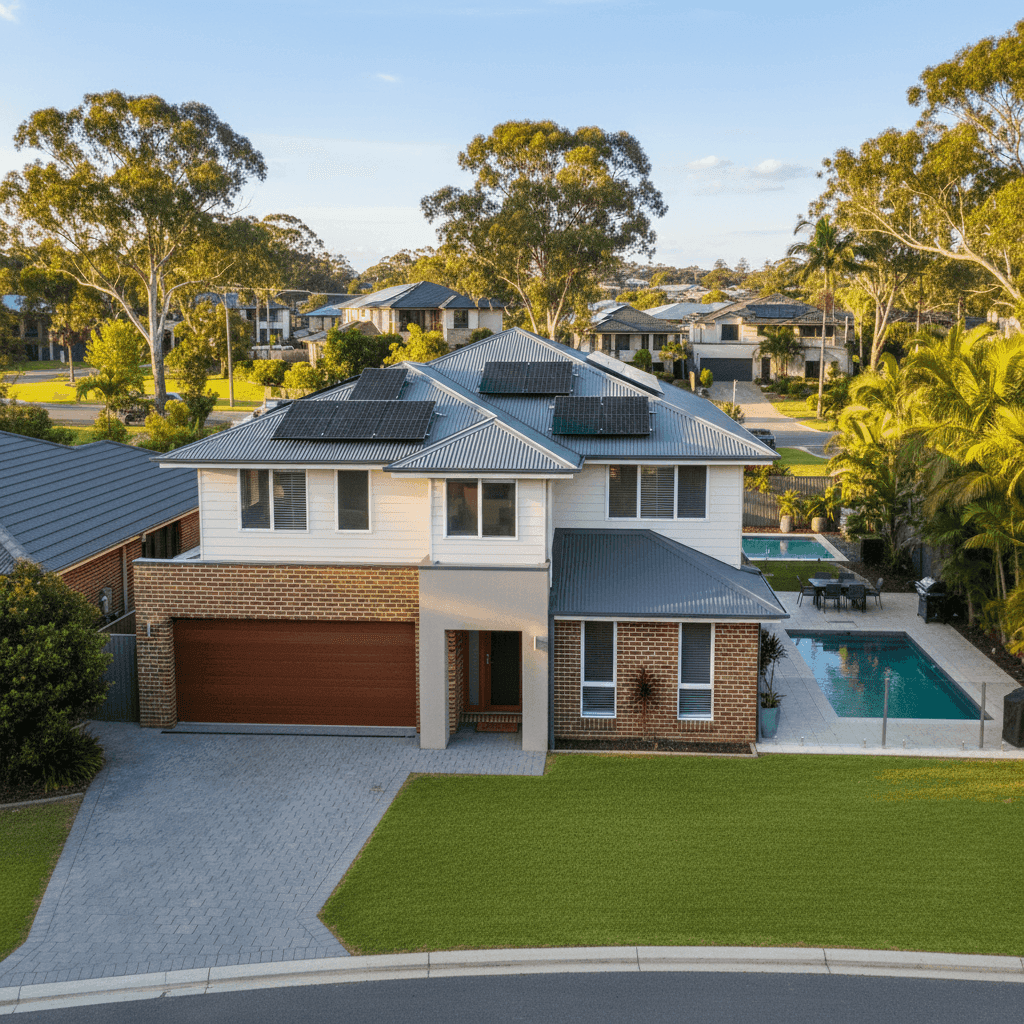
If you own a free standing home in Coffs Harbour, NSW 2450, you've probably noticed that home insurance premiums can vary enormously depending on where you look. This article breaks down a real home and contents insurance quote for a five-bedroom, three-bathroom brick veneer property in Coffs Harbour — and puts it into context against local, state, and national benchmarks so you can judge whether you're getting a fair deal.
---
Is This Quote Fair?
The quote in question comes in at $3,622 per year (or $333 per month) for combined home and contents cover, with a $700,000 building sum insured and $40,000 in contents. Both the building and contents excess are set at $1,000.
Our price rating for this quote is FAIR — around average. That assessment is backed up by the numbers: the suburb average premium for Coffs Harbour 2450 sits at $3,745 per year, and the median is $3,793. This quote lands just below both figures, meaning the policyholder is paying slightly less than what most comparable properties in the area attract. It's not a bargain-basement price, but it's not an outlier on the expensive end either.
To put it plainly: if you received this quote, you're broadly in line with what your neighbours are paying — though there's still meaningful room to do better if you shop around.
---
How Coffs Harbour Compares
Understanding your quote in isolation only tells part of the story. Here's how Coffs Harbour stacks up across different geographic levels, based on data from 60 quotes in the 2450 postcode:
| Benchmark | Average Premium | Median Premium |
|---|---|---|
| Coffs Harbour (2450) | $3,745/yr | $3,793/yr |
| NSW (State) | $9,528/yr | $3,770/yr |
| National | $5,347/yr | $2,764/yr |
A few things stand out here. The NSW state average of $9,528 looks alarming at first glance, but the state median of $3,770 tells a more grounded story — a small number of very high-risk or high-value properties (think flood-prone areas or coastal acreages) pull the average upward significantly. In reality, the typical NSW homeowner pays something much closer to the median. You can explore the full NSW insurance data here.
At the national level, the average of $5,347 is similarly skewed by expensive markets in Queensland and northern Australia. The national median of $2,764 suggests that Coffs Harbour premiums are running somewhat above the typical Australian home — which makes sense given the region's exposure to severe weather events, including heavy rainfall and flooding.
It's also worth noting the 25th to 75th percentile spread for Coffs Harbour: $2,403 to $4,471 per year. This quote sits comfortably within that range, but it also shows that some homeowners in the same suburb are paying considerably less. If you're at the top of that range, it may be time to review your policy.
---
Property Features That Affect Your Premium
Several characteristics of this property influence how insurers price the risk:
Brick veneer construction and Colorbond roof are generally viewed favourably by insurers. Brick veneer offers solid fire resistance and structural durability, while steel Colorbond roofing is resilient, lightweight, and performs well in high-wind conditions. Together, these materials typically attract lower premiums compared to weatherboard or tile-roofed homes.
Slab foundation is another positive signal for insurers — concrete slab construction is less susceptible to subsidence and pest damage than older stumped or pier-and-beam foundations, which can be a factor in some parts of coastal NSW.
Timber and laminate flooring is worth noting from a contents and building perspective. While stylish and common in Australian homes, timber floors can be more susceptible to water damage than tile, which may be factored into the insurer's assessment.
The swimming pool adds a layer of liability and replacement cost to the policy. Pools increase the overall rebuild value of the property and can also attract higher public liability exposure, both of which can nudge premiums upward.
Solar panels are increasingly common on Australian rooftops, but they do add to the insured value of the building. Panels need to be covered for storm, hail, and fire damage, and their replacement cost is non-trivial. Homeowners should confirm that their solar system is explicitly included in their building sum insured.
Construction year of 1985 means this home is around 40 years old. Older homes can carry higher risk profiles due to ageing plumbing, electrical wiring, and roofing materials — even if the structure itself looks sound. Some insurers apply age-related loadings; others don't, so it pays to compare.
The five-bedroom, 235 sqm footprint and standard fittings quality are consistent with a mid-to-upper-range family home. The $700,000 building sum insured works out to roughly $2,979 per sqm, which is a reasonable benchmark for a well-maintained brick veneer home in coastal NSW.
---
Tips for Homeowners in Coffs Harbour
1. Review your building sum insured annually. Construction costs have risen sharply in recent years. A sum insured set a few years ago may no longer reflect the true cost to rebuild your home. Underinsurance is one of the most common — and costly — mistakes homeowners make. Use a building cost calculator or ask your insurer to reassess.
2. Confirm your solar panels and pool are explicitly covered. Don't assume these are automatically included. Read your Product Disclosure Statement (PDS) carefully to verify that your solar system, pool structure, and pool equipment are listed as insured items under your building policy.
3. Shop around at renewal time. Insurers often reserve their best rates for new customers. If you've been with the same provider for several years without comparing, there's a real chance you're paying a loyalty premium. The spread of $2,403 to $4,471 within Coffs Harbour alone shows that significant savings are possible without sacrificing cover quality.
4. Consider your excess settings. Both the building and contents excess on this quote are set at $1,000. Opting for a higher excess — say, $2,000 — can meaningfully reduce your annual premium. Just make sure the excess is an amount you could comfortably cover out of pocket in the event of a claim.
---
Ready to Compare?
Whether this quote looks right for your situation or you think you can do better, the smartest move is to compare. CoverClub makes it easy to see what multiple insurers would charge for your specific property — in minutes, not hours. Get a home insurance quote today and find out if you're paying the right price for the cover you need.