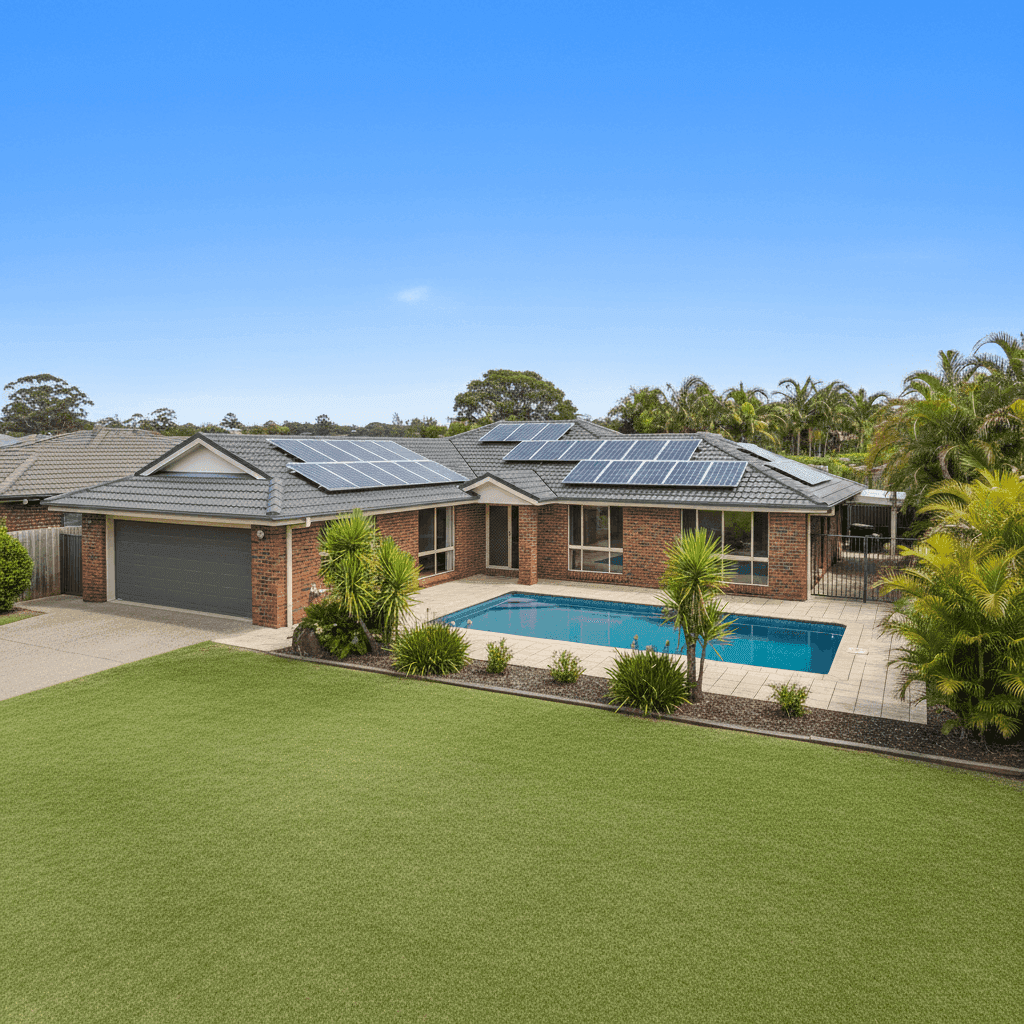
If you own a four-bedroom free standing home in Coffs Harbour, NSW 2450, you're probably curious about what a fair home and contents insurance premium actually looks like. Coffs Harbour sits on the Mid North Coast of New South Wales — a region celebrated for its beaches, hinterland and relaxed lifestyle, but one that also comes with its own unique set of insurance considerations. Based on a recent quote analysis from CoverClub's Coffs Harbour data, we've broken down a real quote for a property in this postcode to help you understand what you're paying for — and whether there's room to do better.
---
Is This Quote Fair?
The quote in question comes in at $2,790 per year (or $279/month) for combined home and contents cover, with a building sum insured of $715,000 and contents valued at $100,000. The building excess sits at $3,000, with a separate $1,000 excess for contents claims.
Our rating for this quote is FAIR — around average for the area. That assessment holds up well under scrutiny. The annual premium of $2,790 is almost exactly in line with the suburb average of $2,819/year, meaning this homeowner is paying a market-rate price rather than being significantly over- or under-charged.
That said, "average" doesn't always mean "best value." The suburb's median premium is $2,079/year — noticeably lower than this quote — which tells us that roughly half of comparable properties in Coffs Harbour are insured for less. The spread is wide, though: the 25th percentile sits at $1,600/year, while the 75th percentile reaches $3,544/year. At $2,790, this quote falls comfortably in the upper-middle range of what locals are paying, which makes sense given the property's size, features and sum insured.
---
How Coffs Harbour Compares
One of the most reassuring findings in this analysis is how favourably Coffs Harbour compares to broader benchmarks. Here's a quick snapshot:
| Benchmark | Average Premium | Median Premium |
|---|---|---|
| Coffs Harbour (suburb) | $2,819/yr | $2,079/yr |
| NSW (state) | $3,801/yr | $3,410/yr |
| National | $2,965/yr | $2,716/yr |
| Clarence Valley LGA | $4,913/yr | — |
The contrast with the Clarence Valley LGA average of $4,913/year is particularly striking. While Coffs Harbour falls within the broader Coffs Harbour LGA rather than Clarence Valley, the comparison illustrates how dramatically premiums can vary even within the same region of NSW — often driven by flood mapping, storm history and proximity to waterways.
Compared to the NSW state average of $3,801/year, this quote represents a meaningful saving of over $1,000 annually. And against the national average of $2,965/year, it comes in slightly below — a positive sign for Coffs Harbour homeowners who might have expected coastal premiums to be higher.
The relatively modest local premiums likely reflect the fact that Coffs Harbour is not classified as a cyclone risk area, unlike many coastal postcodes further north in Queensland or the Northern Territory. This single factor can dramatically reduce insurer risk assessments and, in turn, the premiums they charge.
---
Property Features That Affect Your Premium
Every property is different, and insurers price risk based on a detailed combination of construction type, location, size and special features. Here's how the key characteristics of this property factor into the premium:
Brick Veneer Walls & Tiled Roof Brick veneer is one of the most common — and well-regarded — construction types for Australian homes. It offers solid fire resistance and durability, which insurers generally view favourably. Combined with a tiled roof (also considered a lower-risk roofing material compared to Colorbond or older materials like fibro), this property's construction profile is likely helping to keep the premium competitive.
Concrete Slab Foundation A slab foundation is standard for homes of this era and is generally considered low-risk from a subsidence and moisture perspective in the Coffs Harbour climate. It's a neutral-to-positive factor for insurers.
Built in 2001 At around 24 years old, this home sits in a comfortable middle ground — newer than many older weatherboard properties that attract higher premiums, but established enough that any early construction issues would have already surfaced. Homes built after the major building code updates of the late 1990s often benefit from improved structural standards.
Swimming Pool A pool adds liability exposure and increases the replacement cost of the property, both of which contribute to a higher premium. It's a worthwhile feature to disclose accurately — underinsuring a property with a pool can leave you significantly out of pocket after a major claim.
Solar Panels Solar panels are increasingly common on Australian rooftops, and most insurers now factor them into building cover. They add to the overall sum insured and can be a point of contention in storm or hail claims, so it's worth confirming your policy explicitly covers them — including the inverter and mounting hardware.
Ducted Climate Control Ducted air conditioning systems are a significant fixed asset and are typically covered under building insurance. Like solar, it's important to ensure your sum insured accounts for the full replacement cost of the system.
214 sqm Building Size At 214 square metres, this is a comfortably sized family home. Larger homes cost more to rebuild, and the $715,000 sum insured reflects a rebuild cost estimate appropriate for a property of this size and specification in regional NSW.
---
Tips for Homeowners in Coffs Harbour
Whether you're reviewing an existing policy or shopping for the first time, here are some practical steps to make sure you're getting the right cover at the right price:
- Check your sum insured annually. Building costs in regional NSW have risen sharply in recent years. A sum insured that was accurate three years ago may now fall well short of your actual rebuild cost. Use a building cost calculator or speak to a local builder to sense-check your figure.
- Review your excess settings. This quote carries a $3,000 building excess — on the higher end. A higher excess typically lowers your premium, but make sure you could comfortably cover that amount out of pocket after a storm or fire. If cash flow is a concern, a lower excess with a slightly higher premium may be the smarter trade-off.
- Confirm your solar panels and pool are explicitly covered. Not all standard policies automatically extend to solar panel systems or pool equipment. Read the Product Disclosure Statement (PDS) carefully, or ask your insurer directly, to avoid nasty surprises at claim time.
- Compare quotes at renewal — every year. The insurance market shifts constantly. Loyalty doesn't always pay, and the insurer who offered the best deal two years ago may no longer be competitive. Running a fresh comparison at renewal takes minutes and could save you hundreds.
---
Compare Home Insurance Quotes in Coffs Harbour
Understanding how your premium stacks up is the first step — but comparing your options is where the real savings happen. CoverClub makes it easy to see quotes from multiple insurers side by side, tailored to your specific property. Whether you're in Coffs Harbour or anywhere else in Australia, you can get a home insurance quote in minutes and make a genuinely informed decision. For more local data, explore the full Coffs Harbour insurance statistics on our suburb page.