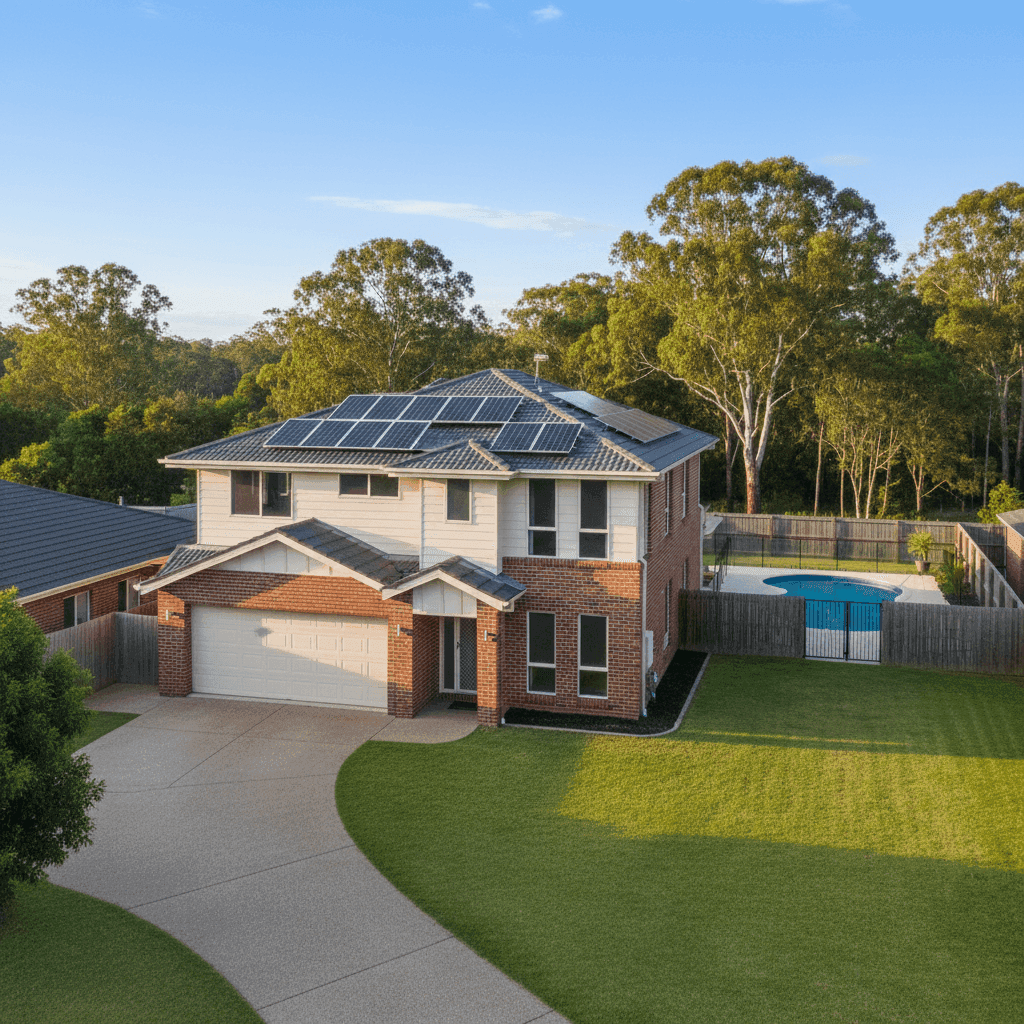
If you own a free standing home in Collingwood Park, QLD 4301, you already know this western Brisbane suburb offers a relaxed lifestyle with good value for money — but how does your home insurance premium stack up? This article breaks down a real home and contents insurance quote for a four-bedroom, three-bathroom brick veneer home in the area, compares it against local, state, and national benchmarks, and offers practical tips to help you get the best deal.
---
Is This Quote Fair?
The quote in question comes in at $1,806 per year (or $176 per month) for combined home and contents cover, with a building sum insured of $831,000 and $50,000 in contents cover. The building excess is $3,000 and the contents excess is $1,000.
Our price rating for this quote is FAIR — Around Average. That's a reasonable result, but it's worth unpacking what "around average" actually means in context.
Within the Collingwood Park suburb, the median premium sits at $1,702 per year, meaning this quote is only marginally above the midpoint — roughly $104 more than the typical quote in the area. At the same time, the suburb average is $2,250 per year, which is pulled upward by higher-end quotes in the top half of the distribution. The fact that this premium sits well below the suburb average is a positive sign.
What's also encouraging is where this quote falls in the broader spread. The 75th percentile for Collingwood Park is $3,394 per year, meaning 75% of quotes in the suburb are cheaper — but also that a quarter of homeowners are paying nearly double this amount. At $1,806, this property is comfortably in the lower half of the local pricing range.
In short: this isn't the cheapest quote available in the suburb, but it's a solid result that reflects a well-priced policy relative to what most Collingwood Park homeowners are paying.
---
How Collingwood Park Compares
To truly appreciate this quote, it helps to zoom out and look at the bigger picture. Here's how Collingwood Park stacks up against broader benchmarks:
| Benchmark | Average Premium | Median Premium |
|---|---|---|
| Collingwood Park (4301) | $2,250/yr | $1,702/yr |
| Ipswich LGA | $2,722/yr | — |
| Queensland | $4,547/yr | $3,931/yr |
| National | $2,965/yr | $2,716/yr |
The contrast with Queensland as a whole is striking. The state average premium of $4,547 per year is more than double what this Collingwood Park homeowner is paying — a reflection of the enormous insurance burden carried by higher-risk areas in Far North Queensland, coastal flood zones, and cyclone-prone regions. Collingwood Park, sitting inland in the Ipswich corridor, benefits from a comparatively benign risk profile.
Even against the national average of $2,965 per year, this quote looks competitive. The Ipswich LGA average of $2,722 per year also sits well above this quote, suggesting the property's specific characteristics are working in the homeowner's favour.
You can explore the full breakdown of local pricing data on the Collingwood Park suburb stats page, which includes percentile ranges based on real quotes collected in the area.
---
Property Features That Affect Your Premium
Every home is different, and insurers weigh up a range of property characteristics when calculating your premium. Here's how the features of this particular home influence its pricing:
Brick Veneer Construction Brick veneer walls are generally viewed favourably by insurers. They offer solid fire resistance and reasonable structural integrity, which can translate to lower premiums compared to timber-framed or clad homes. This is one of the more premium-friendly features of this property.
Slab Foundation A concrete slab foundation is standard for homes of this era in Queensland and is generally considered low-risk from an insurance perspective. Unlike homes on stumps or piers, slab foundations have fewer potential failure points and are less susceptible to certain types of subsidence claims.
Timber and Laminate Flooring While attractive and common in homes of this vintage, timber and laminate flooring can be more expensive to replace after a water or flood event compared to tile. This may have a modest upward influence on the contents or building replacement cost estimate.
Swimming Pool A pool adds to the replacement cost of the property and introduces a liability consideration. Insurers factor in the cost of pool reinstatement as part of the building sum insured, so it's important to ensure your coverage adequately reflects this — particularly given the $831,000 building sum insured on this quote.
Solar Panels Solar panels are now a standard feature on many Queensland homes, but they do add to the insured value of the building. They're also vulnerable to hail and storm damage. Ensuring your policy explicitly covers solar panels — and that the sum insured accounts for their replacement cost — is essential.
Built in 1986 Homes from the mid-1980s can attract slightly higher premiums due to ageing electrical systems, plumbing, and roofing materials. However, well-maintained homes of this era are generally insurable at competitive rates, particularly when built with durable materials like brick veneer.
No Cyclone Risk Collingwood Park falls outside designated cyclone risk zones, which is a meaningful premium advantage in a state where cyclone levies and risk loadings can add hundreds — or even thousands — of dollars to annual premiums in coastal and northern areas.
---
Tips for Homeowners in Collingwood Park
1. Review your building sum insured regularly With a sum insured of $831,000 on a 214 sqm home, it's worth checking whether this figure accurately reflects current construction costs. Building costs in South East Queensland have risen significantly in recent years. Underinsurance is one of the most common — and costly — mistakes homeowners make. Use a building replacement cost calculator or speak with a local builder to sense-check the figure annually.
2. Consider raising your excess to lower your premium This quote carries a $3,000 building excess, which is already on the higher end. If you're comfortable self-insuring smaller claims, a higher excess can meaningfully reduce your annual premium. Just make sure you have that amount readily accessible in case you need to make a claim.
3. Don't overlook your pool and solar in your sum insured Both your swimming pool and solar panel system should be explicitly covered under your building policy. Check the product disclosure statement (PDS) to confirm how each is treated, and ensure the replacement value of both is reflected in your sum insured. Solar systems in particular can be costly to replace if damaged by hail — a real risk in the Ipswich region.
4. Compare quotes at renewal time Even a "fair" quote can become uncompetitive over time as insurers adjust their pricing models. The spread of premiums in Collingwood Park — from $1,356 at the 25th percentile to $3,394 at the 75th — shows just how much variation exists in the market. Shopping around at renewal could save you hundreds of dollars without reducing your level of cover.
---
Ready to Compare?
Whether you're renewing your existing policy or shopping for cover on a new purchase, comparing quotes is the smartest move you can make. At CoverClub, we make it easy to see how your premium stacks up and find competitive options tailored to your property. Get a home insurance quote today and see what the market has to offer for your Collingwood Park home.