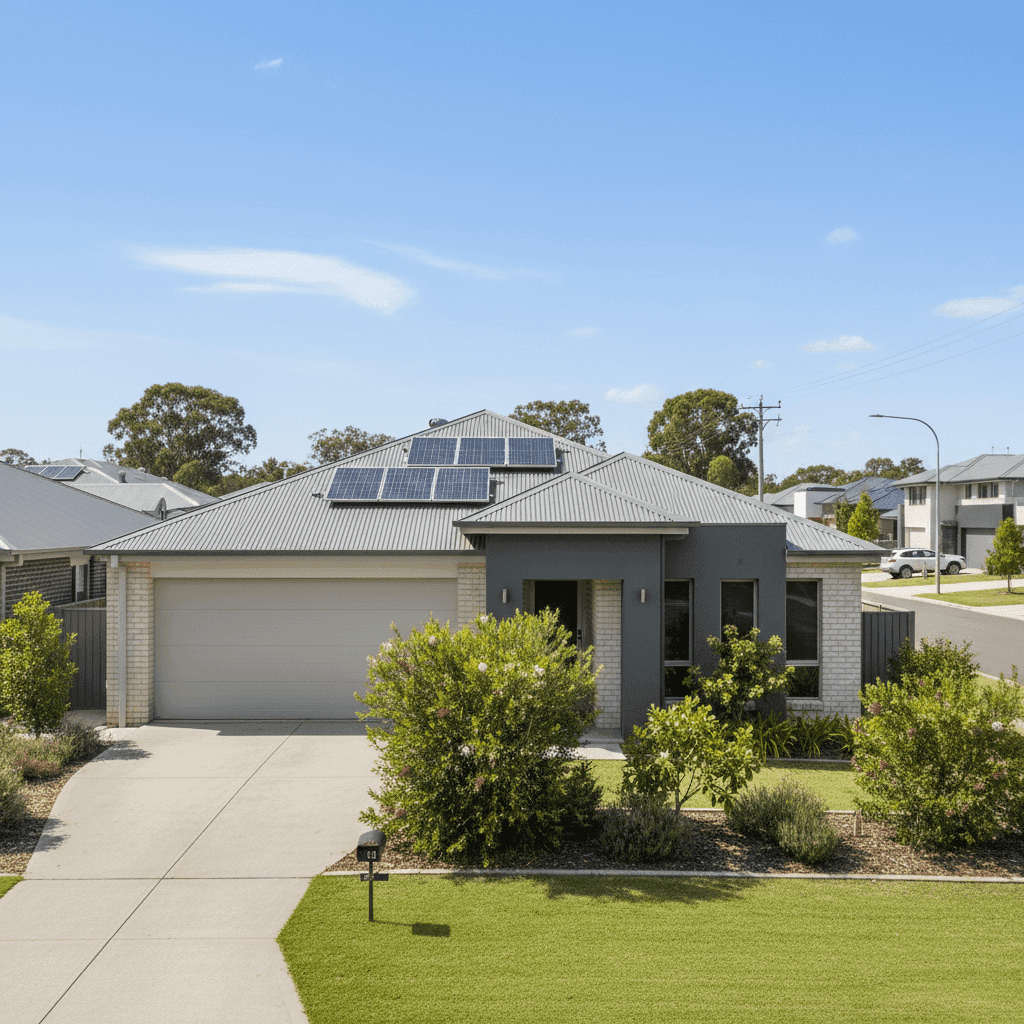
Collingwood Park, a residential suburb in the City of Ipswich, has grown steadily as one of south-east Queensland's more affordable family-friendly communities. But affordable housing doesn't always mean affordable insurance — and for homeowners with a free-standing property here, understanding what drives your premium is just as important as finding a competitive rate.
This article breaks down a real home and contents insurance quote for a four-bedroom, two-bathroom free-standing home in Collingwood Park (postcode 4301), comparing it against local, state, and national benchmarks to help you decide whether you're getting a fair deal.
---
Is This Quote Fair?
The quote in question comes in at $1,781 per year (or $174/month), covering a building insured for $596,000 and contents valued at $30,000, each with a $1,000 excess. Our price rating for this quote is FAIR — around average.
That rating holds up well under scrutiny. The suburb average premium for Collingwood Park sits at $2,250 per year, meaning this quote is roughly $469 below the local average — a meaningful saving. It does sit slightly above the suburb median of $1,702/yr, which tells us that while more than half of quotes in the area come in cheaper, this one is still well within a reasonable range for the coverage on offer.
The wide spread between the suburb's 25th percentile ($1,356/yr) and 75th percentile ($3,394/yr) is worth noting. It reflects just how much individual property characteristics, insurer pricing models, and coverage selections can vary — even within the same postcode. A quote landing comfortably between those two markers, as this one does, is a solid outcome.
---
How Collingwood Park Compares
To put this quote in broader context, here's how Collingwood Park stacks up against Queensland and national benchmarks:
| Benchmark | Average Premium | Median Premium |
|---|---|---|
| Collingwood Park (4301) | $2,250/yr | $1,702/yr |
| Queensland (State) | $4,547/yr | $3,931/yr |
| National | $2,965/yr | $2,716/yr |
The contrast with Queensland's state average is striking. At $4,547/yr, the QLD average is more than 2.5 times higher than this particular quote — a reflection of the enormous insurance burden carried by higher-risk parts of the state, particularly cyclone-prone coastal and far-north Queensland regions.
Notably, the LGA average for Ipswich is $8,901/yr — an eye-catching figure that is almost certainly skewed by a small number of very high-risk or high-value properties within the broader council area. It underscores why suburb-level data, rather than LGA-wide figures, gives a much more meaningful picture for Collingwood Park homeowners.
Even against the national average of $2,965/yr, this quote looks competitive. Collingwood Park's median premium of $1,702/yr sits well below the national median of $2,716/yr, suggesting the suburb generally attracts reasonable insurance pricing — good news for residents shopping around.
---
Property Features That Affect Your Premium
Several characteristics of this property work in the homeowner's favour from an insurance pricing perspective:
Brick veneer construction with a Colorbond roof is one of the most insurer-friendly combinations in Australia. Brick veneer offers solid fire and impact resistance, while steel/Colorbond roofing is durable, low-maintenance, and performs well in storms. Compared to weatherboard or tiled roofs, this pairing typically attracts lower premiums.
Slab foundation is another positive. Homes built on concrete slabs carry less risk of subsidence and are generally viewed more favourably than those on stumps or piers, particularly in areas with reactive soils.
Constructed in 2023, this is a near-new home. Newer builds benefit from modern construction standards, updated electrical and plumbing systems, and compliance with current building codes — all factors that reduce the likelihood of claims and can translate to lower premiums.
Solar panels are an increasingly common feature on Australian homes, but they do add some complexity to insurance. Panels represent a capital asset that may or may not be covered under your building policy, so it's worth confirming with your insurer exactly what's included — particularly for damage caused by storms or electrical faults.
Ducted climate control adds to the replacement cost of the home, which is partly reflected in the $596,000 building sum insured. Ensuring this figure accurately accounts for all fixed inclusions — including the ducted system — is important to avoid being underinsured.
No pool and no cyclone risk zone both work in this property's favour. Pools introduce liability considerations, while cyclone-rated areas in QLD can dramatically inflate premiums. Being outside the cyclone risk zone is a significant advantage for Collingwood Park homeowners.
---
Tips for Homeowners in Collingwood Park
1. Review your building sum insured regularly. Construction costs have risen sharply in recent years. A home built in 2023 may already have a replacement cost that differs from its original estimate. Use a building cost calculator or consult a quantity surveyor to make sure $596,000 still reflects realistic rebuild costs — underinsurance can leave you significantly out of pocket after a major claim.
2. Confirm solar panel coverage with your insurer. Ask specifically whether your solar panels are covered under the building policy, what events are included (e.g. storm, fire, accidental damage), and whether inverter failure is covered. Not all policies treat solar the same way.
3. Don't overlook contents coverage. A $30,000 contents sum may be sufficient for some households, but it's worth doing a room-by-room estimate of your belongings. Furniture, appliances, clothing, electronics, and white goods can add up quickly — especially in a four-bedroom home.
4. Compare quotes at renewal time. Insurance loyalty rarely pays. Even if your current premium feels reasonable, running a comparison before each renewal can reveal meaningfully cheaper options for equivalent coverage. The spread in Collingwood Park — from $1,356 at the 25th percentile to $3,394 at the 75th — shows just how much prices vary between insurers for similar properties.
---
Ready to Compare?
Whether you're reviewing an existing policy or shopping for the first time, comparing quotes is the best way to make sure you're not overpaying. Get a home insurance quote at CoverClub and see how your premium stacks up against the latest data for Collingwood Park and beyond.