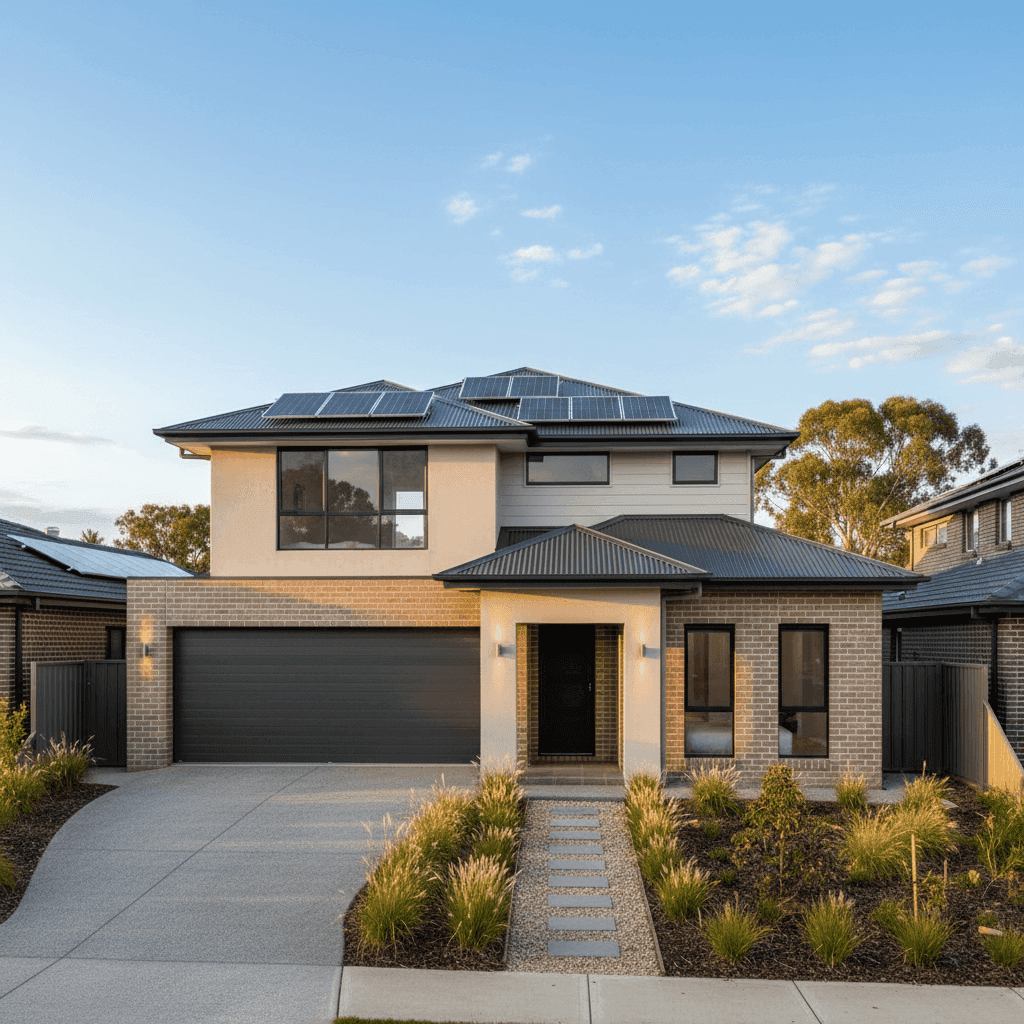
If you own a free standing home in Collingwood Park, QLD 4301, you've probably wondered whether you're paying a fair price for home insurance — or leaving money on the table. This article breaks down a real home and contents insurance quote for a four-bedroom property in the suburb, and puts the numbers in context against local, state, and national benchmarks. Whether you're reviewing your current policy or shopping around for the first time, here's what the data tells us.
---
Is This Quote Fair?
The quote in question comes in at $1,821 per year (or $178/month) for combined home and contents cover, with a building sum insured of $596,000 and contents valued at $50,000. Both the building and contents excess sit at $1,000.
Our price rating for this quote is FAIR — Around Average, and the data backs that up. Within the Collingwood Park suburb, the average premium sits at $2,250/yr, meaning this quote is roughly $429 below the local average — a meaningful saving. However, it does sit above the suburb's median of $1,702/yr, which suggests there's a reasonable spread of pricing in the area and that cheaper options may exist for some property profiles.
In short: this isn't a bargain-basement deal, but it's also far from overpriced. For a newly built, well-appointed four-bedroom home with solar panels and ducted climate control, paying just under $1,821/yr is a respectable outcome.
---
How Collingwood Park Compares
To truly understand whether this quote is competitive, it helps to zoom out and look at the broader picture. Here's how Collingwood Park stacks up against Queensland and the rest of the country:
| Benchmark | Average Premium | Median Premium |
|---|---|---|
| Collingwood Park (4301) | $2,250/yr | $1,702/yr |
| Queensland | $4,547/yr | $3,931/yr |
| National | $2,965/yr | $2,716/yr |
| Ipswich LGA | $8,901/yr | — |
The contrast is striking. Queensland homeowners pay some of the highest insurance premiums in the country — the state average of $4,547/yr is more than 50% above the national average of $2,965/yr. This is largely driven by the elevated risk of extreme weather events across much of the state, including cyclones, flooding, and severe storms.
What makes Collingwood Park stand out is how relatively affordable it is compared to both the state and the Ipswich LGA as a whole. The LGA average of $8,901/yr is extraordinary — a figure heavily skewed by high-risk flood-prone pockets within the Ipswich region. Collingwood Park's suburb average of $2,250/yr is dramatically lower, suggesting insurers view this particular pocket as considerably less exposed to catastrophic risk.
You can explore the full breakdown of local pricing data on the Collingwood Park insurance stats page, or compare it against the Queensland state overview and national averages.
---
Property Features That Affect Your Premium
Every home is different, and insurers weigh up a range of property characteristics when calculating your premium. Here's how the features of this particular property are likely influencing the quote:
Newly Built (2023)
A construction year of 2023 is a significant positive. Modern homes are built to current Australian Standards, meaning improved structural integrity, better fire resistance, and compliance with up-to-date building codes. Insurers typically reward newer builds with lower premiums, all else being equal.
Brick Veneer Walls & Colorbond Roof
Brick veneer is one of the most common — and insurer-friendly — wall materials in Australia. It offers solid fire resistance and durability. Paired with a steel Colorbond roof, this home benefits from a roofing material that handles heat, wind, and rain exceptionally well. Colorbond is also resistant to corrosion and doesn't crack or warp, which can reduce the likelihood of weather-related claims.
Slab Foundation
A concrete slab foundation is generally considered low-risk by insurers. It's less susceptible to subsidence and pest damage compared to raised timber stumps, and it's a very common choice for modern Queensland homes.
Timber/Laminate Flooring
While attractive and practical, timber and laminate flooring can be more susceptible to water damage than tiles. This is a minor factor, but worth noting if you experience a burst pipe or appliance leak — make sure your contents cover adequately addresses floor coverings.
Solar Panels
Solar panels are an increasingly common feature on Australian homes, but they do add to the replacement cost of the property. It's important to confirm with your insurer that your solar system is included within your building sum insured of $596,000, as some policies treat panels as a separate item.
Ducted Climate Control
Ducted air conditioning systems are expensive to repair or replace. Ensuring your building sum insured accounts for the full cost of the system is essential — and worth double-checking with your insurer.
No Pool, Not in a Cyclone Risk Zone
The absence of a swimming pool removes a common liability and maintenance risk from the equation. And while Collingwood Park sits in South East Queensland, it falls outside the designated cyclone risk zone — another factor that keeps premiums more manageable compared to properties further north.
---
Tips for Homeowners in Collingwood Park
1. Review Your Building Sum Insured Annually
With construction costs rising across Australia, the cost to rebuild your home can increase significantly year on year. A sum insured of $596,000 for a 214 sqm newly built home may be appropriate today, but it's worth recalculating every year to avoid being underinsured. Many insurers offer online calculators to help.
2. Confirm Solar Panels Are Covered
As mentioned above, solar panels can be a grey area in some policies. Contact your insurer directly to confirm whether your system is covered under the building component of your policy and up to what value. If not, you may need to arrange separate cover or request a policy endorsement.
3. Shop Around at Renewal Time
Even with a FAIR-rated quote, the 25th percentile for Collingwood Park sits at $1,356/yr — meaning some homeowners with similar properties are paying noticeably less. It's always worth comparing a few quotes before renewing. Use CoverClub to compare options in minutes.
4. Consider Your Excess Strategically
Both the building and contents excesses on this policy are set at $1,000. A higher excess typically lowers your annual premium, which can make sense if you have a solid emergency fund and are unlikely to make small claims. Conversely, if cash flow is tight, a lower excess provides more predictable out-of-pocket costs at claim time.
---
Ready to Compare?
Whether this quote matches your own situation or you're simply curious about what other insurers might offer, it pays to compare. CoverClub makes it easy to see how your home insurance premium stacks up — and to find a better deal if one exists. Get a home insurance quote today and see what's available for your Collingwood Park property.