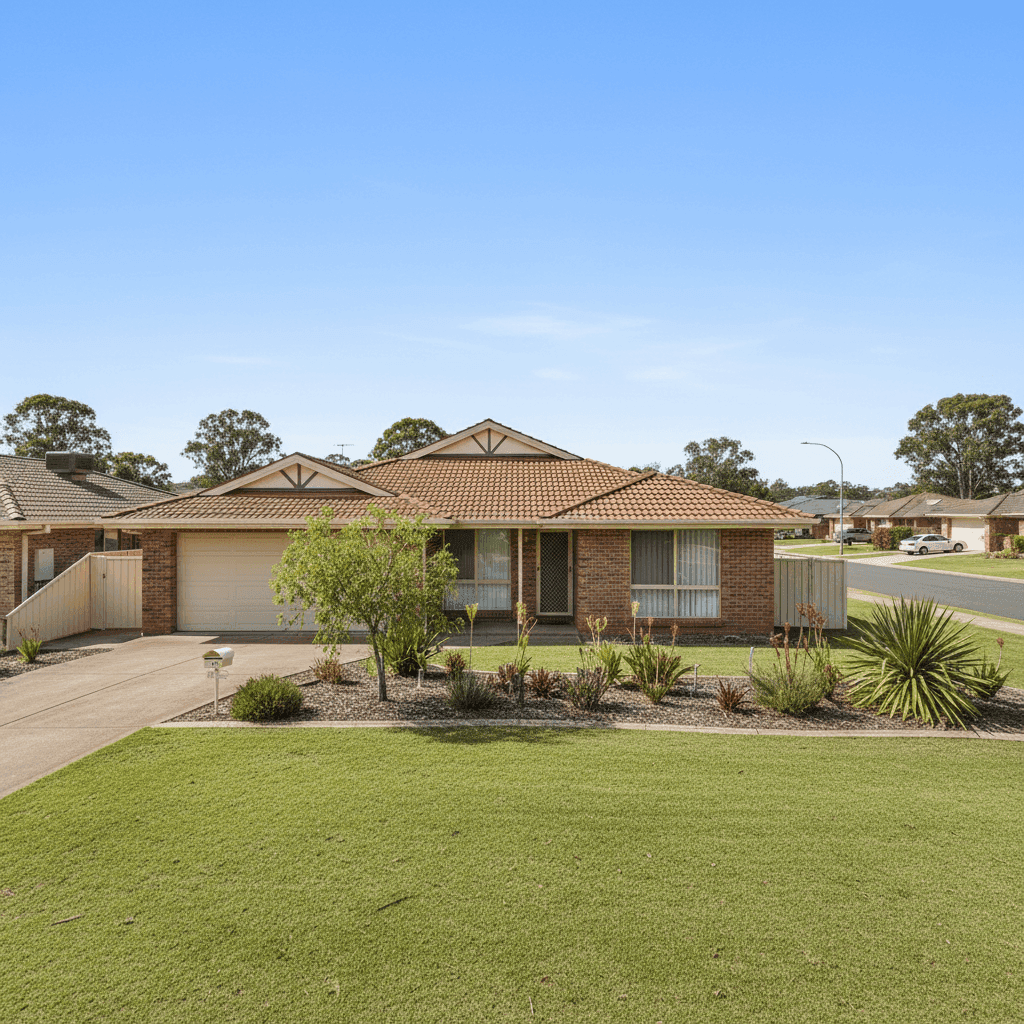
If you own a free standing home in Collingwood Park, QLD 4301, you're likely aware that home insurance costs can vary enormously depending on your property's features, location, and the insurer you choose. This article takes a close look at a recent building insurance quote for a three-bedroom, two-bathroom brick veneer home in this western Brisbane suburb — and puts it in context against local, state, and national benchmarks.
---
Is This Quote Fair?
The quote in question comes in at $1,631 per year (or $156 per month) for building-only cover, with a $1,000 building excess and a sum insured of $320,000. Our price rating for this quote is FAIR — Around Average.
That rating reflects a realistic assessment: the premium sits below the suburb average of $1,844/yr and also below the suburb median of $1,734/yr, which means this homeowner is paying less than the majority of comparable properties in Collingwood Park. It's not the cheapest quote available in the area — the 25th percentile sits at $1,426/yr — but it's comfortably within normal range and well clear of the upper end, where premiums climb past $2,037/yr at the 75th percentile.
In short, this is a reasonable premium for the property type and location. There may be room to shave costs further by adjusting the excess or shopping around, but there's no red flag suggesting this homeowner is being overcharged.
---
How Collingwood Park Compares
The numbers become particularly interesting when you zoom out beyond the suburb level.
| Benchmark | Average | Median |
|---|---|---|
| Collingwood Park (56 quotes) | $1,844/yr | $1,734/yr |
| QLD State | $9,129/yr | $3,903/yr |
| National | $5,347/yr | $2,764/yr |
| Ipswich LGA | $8,901/yr | — |
At first glance, Queensland's average premium of $9,129/yr looks alarming — but this figure is heavily skewed by high-risk areas in Far North Queensland and coastal zones prone to cyclones and flooding. The state median of $3,903/yr is a more grounded comparison point, and even that is significantly higher than what Collingwood Park homeowners are typically paying.
The Ipswich LGA average of $8,901/yr tells a similar story: the LGA-wide figure is pulled up by higher-risk pockets within the region. Collingwood Park, sitting at a suburb median of $1,734/yr, appears to be one of the more affordable corners of the Ipswich area for home insurance purposes.
Nationally, the median premium of $2,764/yr also exceeds what most Collingwood Park residents are paying — a sign that this suburb benefits from a relatively benign risk profile compared to many parts of the country.
You can explore the full data for this suburb at the Collingwood Park insurance stats page, compare it against the QLD state overview, or see how it stacks up on the national stats page.
---
Property Features That Affect Your Premium
Every insurer assesses risk differently, but the physical characteristics of a home play a significant role in determining the premium. Here's how this property's features factor in:
Brick Veneer Walls Brick veneer is one of the most common external wall materials in Australian suburban homes, and insurers generally view it favourably. It offers solid fire resistance and durability, which can help keep premiums lower than more combustible materials like weatherboard or cladding.
Tiled Roof A tiled roof is another relatively low-risk feature from an insurer's perspective. Tiles are durable, fire-resistant, and widely used — meaning repair costs are predictable and materials are readily available. This contrasts with metal roofing, which can carry different risk profiles depending on the region.
Slab Foundation A concrete slab foundation is standard for homes of this era and is generally considered stable and low-maintenance. It doesn't carry the same subsidence or moisture risks associated with older raised timber stumps.
Construction Year: 1994 A home built in 1994 is well past the point of being a "new build," but it's also not old enough to attract the premium loading that can come with pre-1980s construction. Building codes in the early 1990s were reasonably robust, and the property is unlikely to have significant structural concerns from an insurer's standpoint.
Timber/Laminate Flooring This is worth noting for contents insurance purposes (though this quote is building-only). For building cover, internal flooring materials have minimal impact on the premium.
Ducted Climate Control The presence of a ducted climate control system adds to the overall rebuild cost of the home, which is reflected in the sum insured. It's a fixed installation and is typically covered under building insurance — so it's important the sum insured accounts for its replacement value.
No Pool, No Solar Panels The absence of a pool and solar panels simplifies the risk profile. Both can add complexity and cost to a policy, so their absence is a minor premium-positive factor.
---
Tips for Homeowners in Collingwood Park
1. Check Your Sum Insured Regularly A sum insured of $320,000 for a 130 sqm home may be appropriate today, but building costs have risen sharply in recent years. Make sure your sum insured reflects current construction costs — underinsurance is one of the most common and costly mistakes homeowners make. Use a building cost calculator or ask your insurer to review your coverage annually.
2. Consider a Higher Excess to Lower Your Premium The current excess is set at $1,000. If you have a financial buffer and are unlikely to make small claims, increasing your excess to $1,500 or $2,000 could meaningfully reduce your annual premium. Just make sure you can comfortably cover the excess amount if you do need to claim.
3. Don't Assume Loyalty Pays Off Many insurers offer introductory discounts that quietly disappear at renewal. It's worth comparing your renewal quote against the market every year — even if your current insurer has treated you well. A few minutes of comparison could save you hundreds.
4. Understand What "Building Only" Covers Building-only cover protects the physical structure of your home, including permanent fixtures like the ducted air conditioning system, but it does not cover your belongings. If you rent out the property or have a separate contents policy elsewhere, this may be fine — but owner-occupiers should consider whether combined building and contents cover makes more sense for their situation.
---
Ready to Compare?
Whether you're reviewing your current policy or shopping for the first time, comparing quotes is the smartest way to make sure you're getting fair value. Get a home insurance quote at CoverClub and see how your premium stacks up against the market in seconds — no obligation, no jargon.