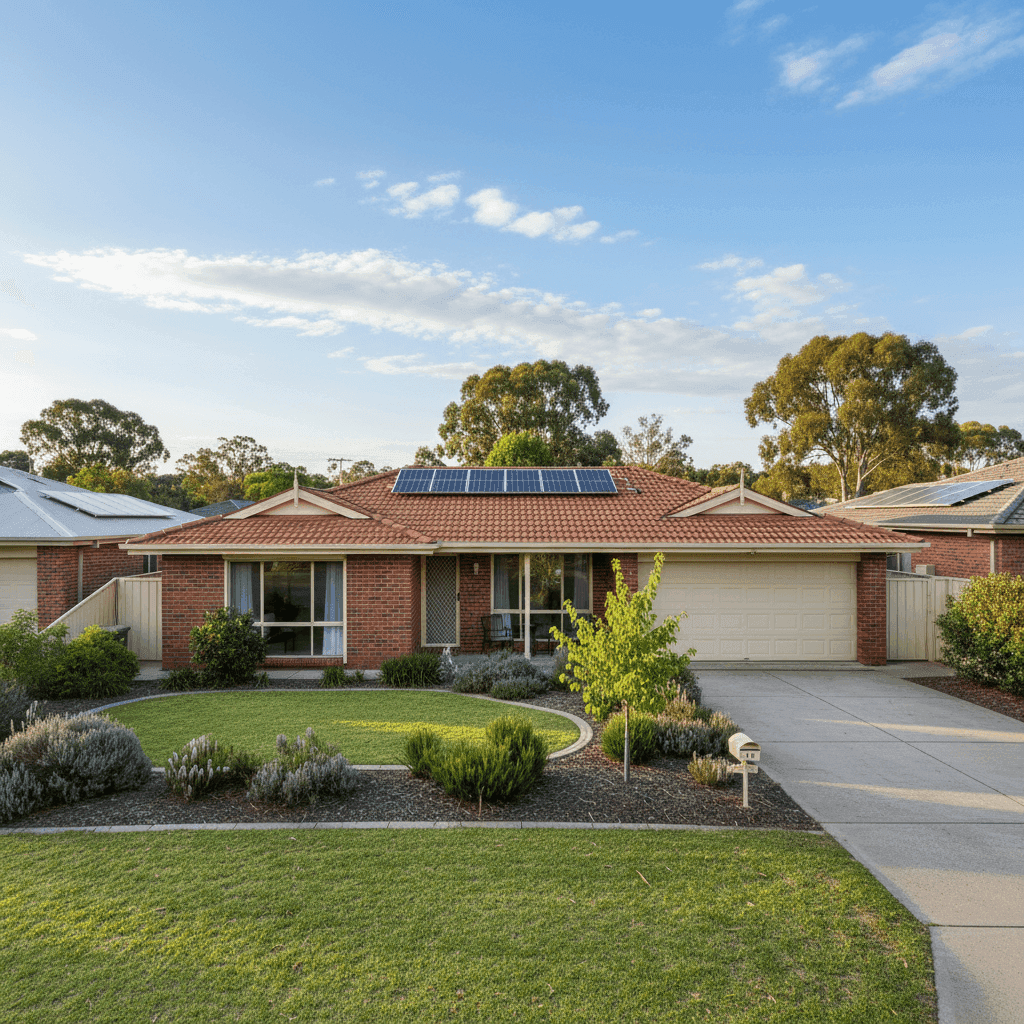
If you own a free standing home in Conder, ACT 2906, you're likely paying close attention to the cost of home insurance — and for good reason. Premiums across Australia have climbed sharply in recent years, making it more important than ever to understand whether your quote is genuinely competitive or quietly costing you more than it should. This article breaks down a real home insurance quote for a four-bedroom, two-bathroom brick veneer home in Conder, compares it against ACT and national benchmarks, and offers practical advice for homeowners in the area.
---
Is This Quote Fair?
The quote in question comes in at $1,747 per year (or $172/month) for combined home and contents cover, with a $645,000 building sum insured and $50,000 in contents cover. Both the building and contents excess sit at $500.
Based on CoverClub's pricing analysis, this quote is rated CHEAP — below average for this type of property and location. That's genuinely good news. In a market where insurers have been steadily repricing risk upward, landing a below-average premium on a comprehensive home and contents policy is a result worth recognising.
The rating reflects not just the raw dollar figure, but how it sits relative to what other homeowners in similar circumstances are paying. For a 214 sqm home built in 1990 with standard fittings, solar panels, and ducted climate control, this premium represents solid value.
---
How Conder Compares
To put this quote in proper context, here's how it stacks up against broader market data:
| Benchmark | Premium |
|---|---|
| This quote | $1,747/yr |
| ACT average | $2,203/yr |
| ACT median | $2,112/yr |
| LGA (Unincorporated ACT) average | $2,172/yr |
| National average | $2,965/yr |
| National median | $2,716/yr |
This quote sits $365 below the ACT median and a striking $969 below the national average — a meaningful saving by any measure. Compared to the LGA average of $2,172, the homeowner in this example is saving approximately $425 annually.
It's worth noting that no suburb-level comparison data is currently available for Conder specifically, which makes state and LGA benchmarks the most relevant reference points. You can explore broader ACT home insurance statistics or national home insurance data to see how premiums vary across the country. As more data becomes available, suburb-specific insights for Conder will appear on the Conder stats page.
The ACT as a whole tends to sit well below the national average — a reflection of the territory's relatively low exposure to extreme weather events like cyclones, severe flooding, and coastal storm surge that push premiums higher in other states. Conder, located in the southern suburbs of Canberra, benefits from this lower-risk profile.
---
Property Features That Affect Your Premium
Several characteristics of this property play a meaningful role in determining the premium:
Brick Veneer Walls & Tiled Roof Brick veneer construction with a tiled roof is generally well-regarded by insurers. Brick offers solid fire resistance and structural durability, while tiles are a low-maintenance, long-lasting roofing material. Together, these features typically attract more favourable pricing compared to properties with timber cladding or metal roofing in bushfire-prone areas.
Slab Foundation A concrete slab foundation is standard for homes of this era in the ACT and is generally considered low-risk. It reduces concerns around subsidence and underfloor moisture damage that can affect older pier-and-beam constructions.
Construction Year: 1990 At around 35 years old, this home is well past its new-build phase but not yet in the territory of ageing infrastructure concerns. Homes of this vintage are generally well-understood by insurers, provided they've been maintained. It's worth ensuring your building sum insured reflects current replacement costs, as construction prices have risen considerably since this home was built.
Solar Panels The presence of solar panels adds a modest layer of complexity to a home insurance policy. Panels represent a capital asset that can be damaged by hail, storm, or fire, and not all policies automatically include them in building cover. It's important to confirm with your insurer that your solar system is explicitly covered under your building sum insured.
Ducted Climate Control Ducted heating and cooling systems are a significant fixed asset within the home. As a built-in system, it should be captured under building cover rather than contents — but it's worth double-checking with your insurer to avoid any gaps.
Standard Fittings Standard-quality fittings mean there are no high-end finishes or bespoke fixtures inflating the replacement cost. This generally keeps building sums insured — and therefore premiums — more predictable and proportionate.
No Pool, No Cyclone Risk The absence of a pool removes a common liability and maintenance risk factor. And as Canberra is well outside any cyclone risk zone, there's no cyclone-specific loading applied to this premium — unlike homeowners in northern Queensland or Western Australia who often face significant surcharges.
---
Tips for Homeowners in Conder
1. Review your building sum insured regularly Construction costs in the ACT have risen substantially over the past few years. A sum insured of $645,000 may have been appropriate when the policy was first set up, but it's worth running a check against a current building cost calculator to ensure you're not underinsured. Being underinsured at claim time can leave you significantly out of pocket.
2. Confirm solar panel coverage explicitly Ask your insurer directly: are your solar panels covered under the building sum insured? If so, is there a sub-limit? Some policies treat panels as a separate item or exclude storm damage. Getting clarity on this now avoids nasty surprises after a hailstorm.
3. Don't set and forget your contents value $50,000 in contents cover is a reasonable starting point, but it's easy for the value of household possessions to creep up over time — new appliances, furniture, electronics, and clothing all add up. Consider doing a room-by-room stocktake every couple of years to make sure your contents sum is still accurate.
4. Compare at renewal, every year Even if you're on a below-average premium today, insurers adjust their pricing models regularly. The best way to stay competitive is to compare quotes at renewal rather than rolling over automatically. A few minutes on CoverClub can quickly reveal whether your current insurer is still offering good value — or whether a better deal is available elsewhere.
---
Find a Better Deal on Home Insurance
Whether you're a first-time buyer in Conder or a long-time homeowner looking to reduce costs, comparing quotes is one of the simplest ways to take control of your insurance spend. CoverClub makes it easy to see how your current premium stacks up and explore alternatives — all in one place. Get a home insurance quote today and find out if you could be paying less.