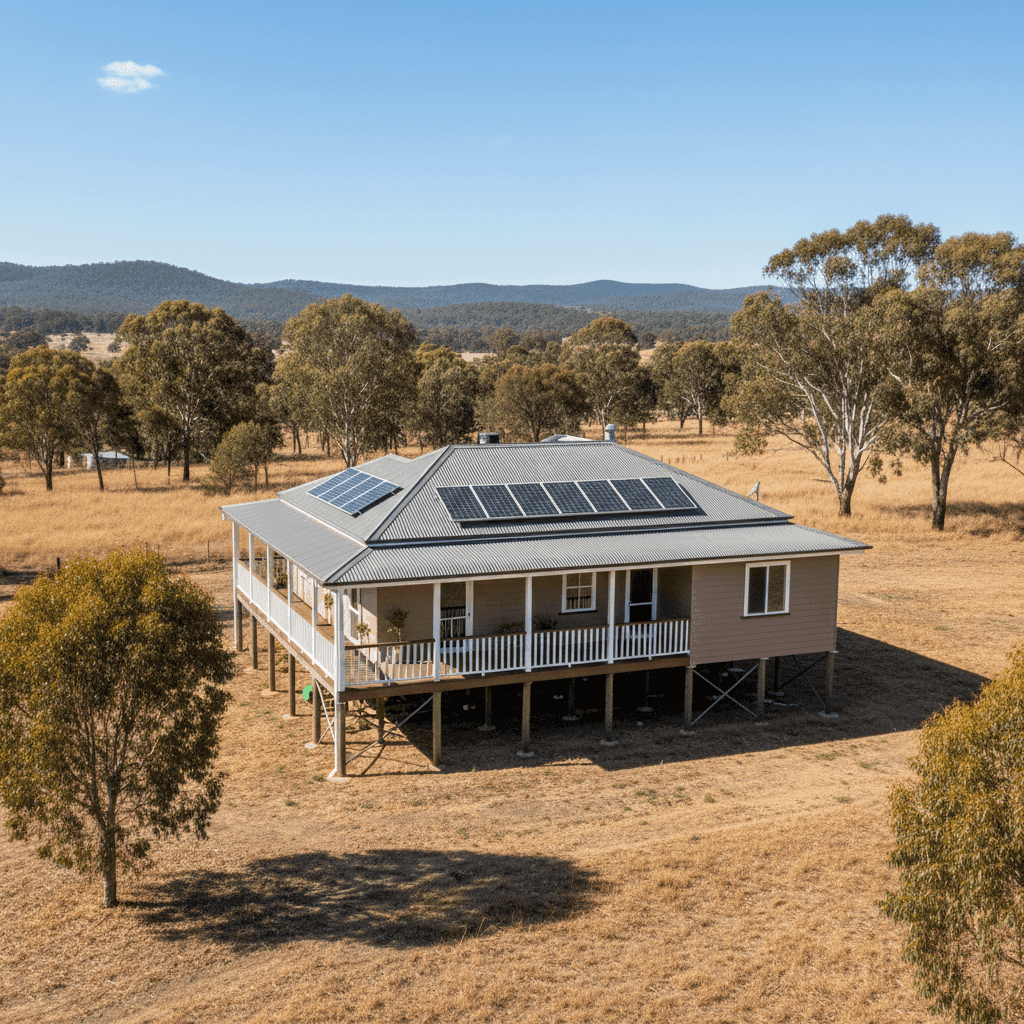
If you own a free standing home in Coneac, NSW 2422, you're likely aware that finding the right home and contents insurance can feel like navigating unfamiliar territory. Tucked within the Walcha Local Government Area in the Upper Hunter region of New South Wales, Coneac is a rural locality where property characteristics — from elevated stumps to weatherboard cladding — can have a meaningful impact on what you pay. This article breaks down a real insurance quote for a 3-bedroom, 2-bathroom home in Coneac and puts the numbers into context so you can make a more informed decision.
---
Is This Quote Fair?
The quote we're analysing comes in at $3,544 per year (or $356/month) for combined home and contents cover, with a building sum insured of $683,000 and contents valued at $90,000. The building excess is set at $3,000, and the contents excess at $1,000.
Based on our pricing data, this quote is rated CHEAP — meaning it sits below the average for comparable properties. That's genuinely good news for the homeowner. In a market where premiums have been climbing steadily due to extreme weather events, supply chain pressures on rebuilding costs, and broader inflationary trends, securing a below-average rate is worth recognising.
That said, "cheap" doesn't automatically mean "right." It's still important to scrutinise what the policy covers, whether the sum insured is adequate, and whether the excess levels are workable in the event of a claim.
---
How Coneac Compares
Let's put the $3,544 annual premium in perspective by looking at the broader data landscape.
| Benchmark | Annual Premium |
|---|---|
| This Quote | $3,544 |
| LGA (Walcha) Average | $2,935 |
| NSW State Median | $3,770 |
| NSW State Average | $9,528 |
| National Median | $2,764 |
| National Average | $5,347 |
A few things stand out here. The NSW state average of $9,528 is extraordinarily high — a figure heavily skewed by expensive coastal and flood-prone properties across the state. The more meaningful comparison is the NSW median of $3,770, which represents the midpoint of what NSW homeowners actually pay. Our quote of $3,544 sits just below that median, confirming the "cheap" rating.
Interestingly, the Walcha LGA average is $2,935 — lower than this quote. This could reflect a mix of factors: smaller homes, lower sum insured amounts, or properties with fewer risk features in the broader LGA. Given that this property carries a $683,000 building sum insured and $90,000 in contents, a modest premium uplift above the LGA average is entirely reasonable.
Compared to the national average of $5,347, this quote represents a saving of over $1,800 per year — a meaningful figure by any measure.
For a deeper look at how Coneac properties are priced, visit our Coneac suburb insurance stats page. You can also explore NSW-wide insurance data or the national insurance benchmarks for broader context.
---
Property Features That Affect Your Premium
Every home tells a story through its features, and insurers read that story carefully when calculating risk. Here's how the characteristics of this particular Coneac property likely influence the premium:
Weatherboard Timber Walls
Weatherboard construction is common in older rural NSW homes and carries a higher fire risk rating compared to brick veneer or double brick. Timber is also more susceptible to termite damage and general wear. Insurers typically apply a loading to weatherboard homes, so it's worth ensuring your policy explicitly covers timber-specific risks.
Steel/Colorbond Roof
On the plus side, a Colorbond steel roof is viewed favourably by most insurers. It's durable, low-maintenance, resistant to ember attack, and performs well in high-wind conditions — all of which can help moderate your premium compared to older tile or asbestos roofing.
Elevated on Stumps (At Least 1 Metre)
Being elevated by at least one metre on stumps is a double-edged sword. On one hand, it provides excellent flood resilience — water can flow beneath the home rather than through it. On the other hand, elevated homes can be more vulnerable to high winds getting underneath the structure, and the stumps themselves require periodic inspection and maintenance. Insurers assess this on balance, and in a region like Walcha, the flood mitigation benefit often weighs in the homeowner's favour.
Solar Panels
The presence of solar panels adds to the insured value of the property and introduces some additional risk (fire from inverter faults, storm damage to panels). It's important to confirm your policy explicitly covers solar panel damage and that the replacement value is factored into your sum insured.
1988 Construction
Homes built in the late 1980s sit in an interesting zone — old enough to have some wear-related risk, but generally not so old as to trigger the premium surcharges associated with pre-1970s construction. Electrical and plumbing systems from this era may be approaching the end of their serviceable life, so keeping up with maintenance is both a safety and insurance consideration.
Rural Location
Rural properties in NSW often benefit from lower premium bases due to reduced theft and vandalism risk. However, they can face higher costs in the event of a claim due to the distance tradespeople need to travel, which can affect rebuild and repair timelines.
---
Tips for Homeowners in Coneac
1. Review your building sum insured regularly At $683,000, the building sum insured for this property needs to keep pace with rising construction costs. Rebuild costs in regional NSW have increased significantly in recent years. Use a building cost calculator or speak with a quantity surveyor to ensure you're not underinsured — a common and costly mistake.
2. Maintain your stumps and subfloor Elevated homes on stumps require periodic inspections. Timber stumps can rot or be affected by termites, while concrete stumps can crack over time. Proactively maintaining the subfloor structure not only protects your home but also demonstrates to insurers that the property is well cared for.
3. Document your contents thoroughly With $90,000 in contents cover, it's worth keeping an up-to-date home inventory — photos, receipts, and serial numbers for valuables. Store this documentation in the cloud or off-site so it's accessible if the property is damaged. This makes claims faster and reduces the risk of disputes.
4. Ask about discounts for security and fire safety Even in a rural setting, installing a monitored alarm system, smoke detectors, or a water tank for fire suppression may qualify you for premium discounts with some insurers. It's always worth asking — the savings can add up over time.
---
Compare Your Options with CoverClub
Whether you're renewing your current policy or shopping around for the first time, it pays to compare. CoverClub makes it easy to see how different insurers price your specific property, so you're not leaving money on the table. Get a home insurance quote today and find out if you could be paying less — or getting more cover — for your Coneac home.