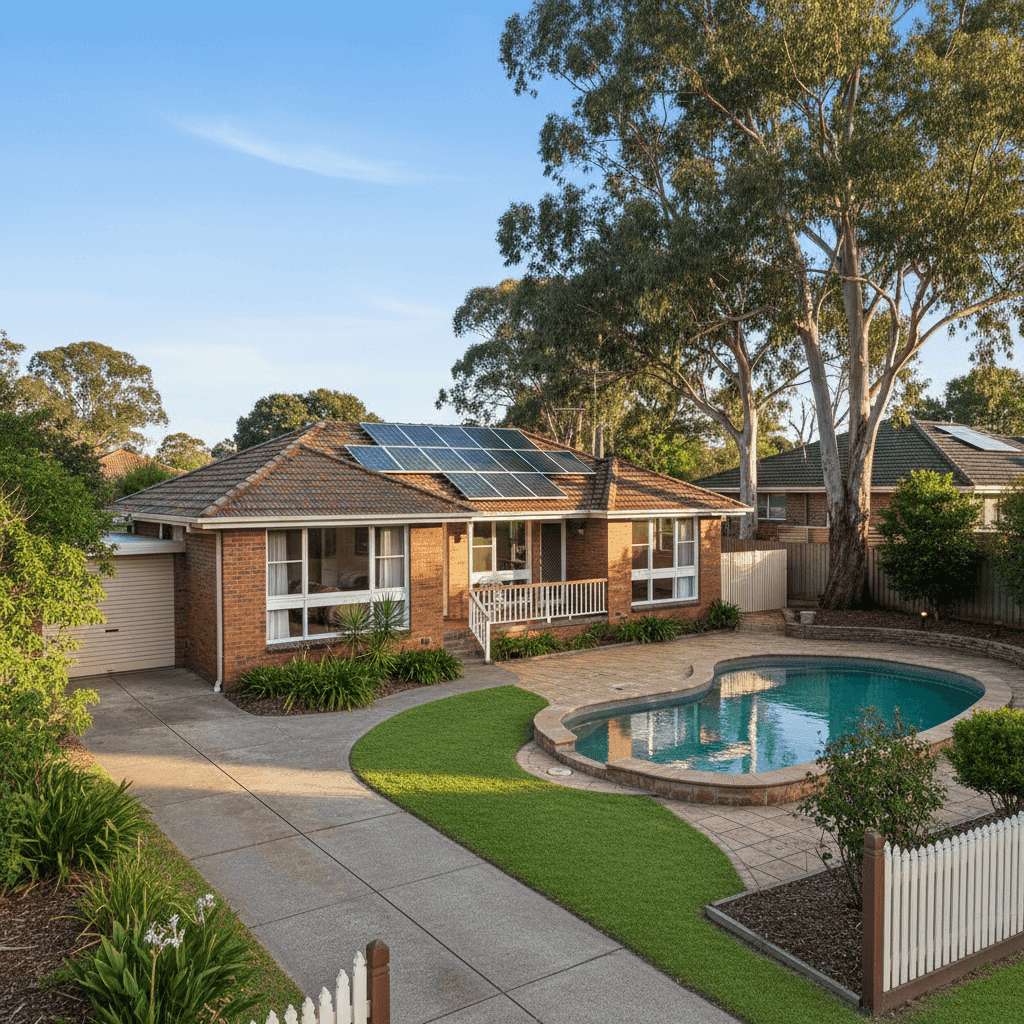
If you own a free standing home in Constitution Hill, NSW 2146, you're likely well aware that finding the right home insurance at a fair price takes a bit of research. This suburb, nestled within the Cumberland local government area in Western Sydney, is a well-established residential pocket filled largely with brick homes built during the post-war and mid-century boom. To help you benchmark your own policy, we've taken a close look at a real quote for a four-bedroom, two-bathroom home in the area — and the results are worth paying attention to.
The quote in question covers Home and Contents insurance, with a building sum insured of $520,000 and contents valued at $100,000. The annual premium comes in at $1,756 per year (or $168 per month), with a $1,000 excess applying to both building and contents claims.
---
Is This Quote Fair?
In short: yes — and then some. CoverClub's pricing analysis rates this quote as CHEAP, meaning it sits below average relative to comparable policies. For a combined home and contents policy covering over half a million dollars in building value plus $100,000 in contents, that's a genuinely competitive result.
To put it in perspective, the NSW state average premium is $9,528 per year, and the state median sits at $3,770 per year. At $1,756, this quote comes in at less than half the state median — a significant saving that most homeowners would be very happy with.
Nationally, the picture is similar. The national average is $5,347 per year, with a national median of $2,764 per year. Again, this quote comfortably undercuts both figures. You can explore how NSW premiums compare to the rest of Australia or dive into the national home insurance statistics for broader context.
It's worth noting that averages can be skewed by high-risk properties, large homes, and premium suburbs — so the median is often the more useful benchmark for typical homeowners. Even so, this quote beats both the average and the median at every level of comparison.
---
How Constitution Hill Compares
While suburb-level data for Constitution Hill isn't currently available in our database, we do have solid LGA-level figures to work with. The Cumberland LGA average premium is $2,285 per year — and this quote at $1,756 comes in $529 below that local benchmark, representing a saving of roughly 23%.
For the latest suburb-specific trends as they become available, keep an eye on the Constitution Hill insurance stats page.
Western Sydney suburbs like Constitution Hill tend to attract moderate premiums overall. The area doesn't sit in a cyclone risk zone, and while parts of Greater Sydney can be exposed to storm and flood risk, Constitution Hill's elevation and inland position generally work in homeowners' favour when it comes to natural hazard pricing.
---
Property Features That Affect Your Premium
Every home is different, and insurers assess a range of property characteristics when calculating your premium. Here's how the specific features of this property are likely influencing the quote:
Brick Veneer Walls & Tiled Roof
Brick veneer is one of the most common construction types in Australian suburbia, and insurers generally view it favourably. It offers solid fire resistance and durability. Combined with a tiled roof — another widely accepted, low-risk roofing material — this home presents a relatively standard risk profile that won't attract loading from most insurers.
Built in 1975
Homes from this era are well and truly past the "new build" stage, which means some insurers may apply age-related considerations around plumbing, wiring, and roofing. That said, a 1975 brick veneer home is hardly ancient by Australian standards, and many have been well-maintained or partially renovated over the decades.
Pole Foundations
The home sits on pole (or stump) foundations, which is worth noting. This style of foundation can be more susceptible to movement, pest activity, and moisture-related damage than a concrete slab. Some insurers factor this in, though it's not necessarily a significant loading — particularly in a stable, non-flood-prone area.
Swimming Pool
A pool on the property adds to the overall replacement cost and can introduce liability considerations. It's important to ensure your sum insured accounts for the pool structure, surrounding paving, and any associated equipment such as pumps and filtration systems.
Solar Panels
Solar panels are an increasingly common feature in Australian homes, and most modern home insurance policies cover them as a fixed fixture of the building. However, it's always worth confirming with your insurer that your panels — and any battery storage system — are explicitly included in your building sum insured.
Ducted Climate Control
A ducted air conditioning system represents a meaningful portion of a home's fixed assets. Like solar panels, it should be included in your building sum insured calculation. At $520,000, this policy appears to account for these features reasonably well for a 139 sqm home.
Standard Fittings
With standard-grade fittings throughout, this home avoids the premium loadings that can come with high-end or bespoke finishes. Homes with luxury kitchens, imported tiles, or custom joinery can cost significantly more to rebuild — and insurers price accordingly.
---
Tips for Homeowners in Constitution Hill
Whether you're renewing your existing policy or shopping around for the first time, here are four practical steps to make sure you're getting the best deal:
- Review your sum insured annually. Building costs have risen sharply across Australia in recent years. A sum insured that was adequate two or three years ago may no longer cover a full rebuild today. Use a building cost calculator or speak with a quantity surveyor to stay on top of this figure.
- Check what's included for your pool and solar panels. Not all policies treat these features the same way. Some may require them to be listed separately or have specific sub-limits. Read your Product Disclosure Statement (PDS) carefully, or call your insurer to confirm coverage.
- Consider your excess strategically. A $1,000 excess is fairly standard, but opting for a higher excess can reduce your annual premium meaningfully. If you have a solid emergency fund and are unlikely to make small claims, a higher excess could be a smart trade-off.
- Don't auto-renew without comparing. Even if your current premium looks competitive, the market changes every year. Spending 10–15 minutes comparing quotes could uncover a better deal — or at least give you peace of mind that you're already on a good policy.
---
Ready to Compare Home Insurance in Constitution Hill?
Whether this quote looks similar to your own or you're starting from scratch, CoverClub makes it easy to compare home and contents insurance options tailored to your property. Get a quote today and see how much you could save — or confirm that your current policy is already giving you great value.
For more data on insurance costs across New South Wales, visit our NSW insurance statistics hub, or check the national overview to see how your state stacks up.