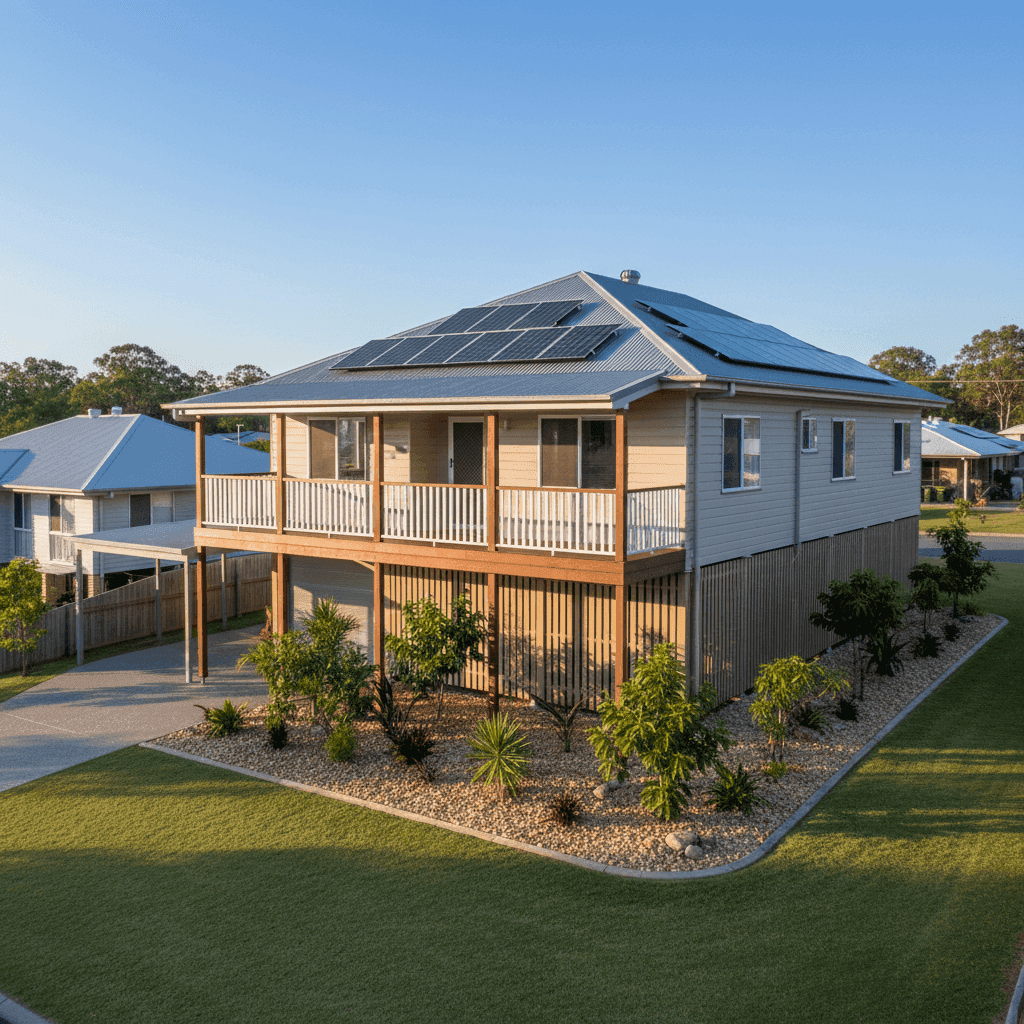
Getting a handle on what you should be paying for home insurance in Queensland can feel like a moving target — premiums vary wildly depending on your postcode, your property's construction, and the level of cover you choose. This article takes a close look at a real building insurance quote for a three-bedroom free standing home in Cooloola Cove, QLD 4580, and puts the numbers into context against suburb, state, and national benchmarks.
---
Is This Quote Fair?
The short answer: yes — and then some. This quote came in at $2,131 per year (or $189 per month) for building-only cover on a 130 sqm weatherboard home with a sum insured of $356,000. CoverClub's pricing engine rates this as CHEAP, meaning it sits well below the average for comparable properties in the area.
To put that in perspective, the suburb average premium in Cooloola Cove is $5,353 per year, and the median sits at $4,633 per year. Even the 25th percentile — meaning the cheapest quarter of quotes in the suburb — comes in at $3,437 per year. This quote beats all of those benchmarks comfortably, landing at roughly 60% below the suburb average.
The building excess is set at $5,000, which is on the higher end. Opting for a higher excess is a common way to reduce your annual premium, and it's likely contributing to the competitive price here. If you'd prefer a lower out-of-pocket cost in the event of a claim, it's worth requesting quotes with a reduced excess to see how that affects your premium.
---
How Cooloola Cove Compares
Understanding the local insurance landscape helps you judge whether a quote represents genuine value. Here's how Cooloola Cove stacks up:
| Benchmark | Premium |
|---|---|
| This Quote | $2,131/yr |
| Suburb Average (Cooloola Cove) | $5,353/yr |
| Suburb Median | $4,633/yr |
| Suburb 25th Percentile | $3,437/yr |
| LGA Average (Fraser Coast) | $4,810/yr |
| QLD State Average | $9,129/yr |
| QLD State Median | $3,903/yr |
| National Average | $5,347/yr |
| National Median | $2,764/yr |
(Suburb data based on 14 quotes collected via CoverClub)
A few things stand out here. The QLD state average of $9,129 per year is extraordinarily high — a reflection of the significant flood, storm, and cyclone risk that affects many parts of Queensland. Cooloola Cove itself sits in a relatively more manageable risk zone (it is not classified as a cyclone risk area), which helps explain why local premiums trend lower than the state average.
That said, the national average of $5,347 per year is still more than double this quote, and even the national median of $2,764 per year is higher. By almost any measure, this is a competitively priced policy.
You can explore more local pricing data on the Cooloola Cove insurance stats page.
---
Property Features That Affect Your Premium
Every insurer assesses risk differently, but certain property characteristics consistently influence what you'll pay. Here's how the features of this particular home come into play:
Weatherboard timber walls are generally considered a moderate-to-higher risk construction type compared to brick or rendered masonry. Timber is more susceptible to fire spread, pest damage, and moisture-related deterioration over time. Some insurers price this in with higher premiums, so finding a competitive quote for a weatherboard home is a solid outcome.
Steel/Colorbond roofing is well regarded by insurers. It's durable, low-maintenance, and performs well in storms and high winds — a meaningful consideration in coastal Queensland. It's likely working in this homeowner's favour.
Stump foundations are common in Queensland, particularly in older and coastal properties. They allow for airflow beneath the home and can reduce flood damage in minor inundation events, but they can also introduce risk around structural movement or pest access. Insurers typically factor this into their assessment.
Vinyl flooring is generally considered a neutral-to-positive factor — it's water-resistant and relatively inexpensive to replace compared to hardwood or carpet, which can keep contents claims lower (though this is a building-only policy).
Solar panels are worth noting. While they add value to the property, they can also increase the sum insured needed to cover replacement costs. It's worth confirming with your insurer that solar panels are explicitly included in your building cover, as some policies treat them separately or have specific conditions attached.
Construction year (2002) places this home in a period where building codes were reasonably modern, which is generally viewed positively by underwriters compared to pre-1980s construction.
---
Tips for Homeowners in Cooloola Cove
1. Review your sum insured regularly At $356,000, this policy's sum insured should reflect the full cost of rebuilding your home from scratch — not its market value. Building costs have risen sharply in recent years, so it's worth getting a professional building replacement cost estimate every couple of years to avoid being underinsured.
2. Confirm solar panel coverage As mentioned above, solar panels can be a grey area in building policies. Ask your insurer directly whether your system is covered under the building policy, what the replacement value included is, and whether storm or hail damage to panels is included.
3. Consider whether building-only cover is enough This policy covers the structure but not your belongings. If you own furniture, appliances, electronics, or other valuables, a combined building and contents policy may offer better overall protection. It's worth running a comparison to see what the cost difference looks like.
4. Weigh up your excess carefully A $5,000 building excess is a meaningful financial commitment if you need to make a claim. If that level of out-of-pocket expense would be a stretch, compare quotes with a lower excess (such as $1,000 or $2,500) — the premium difference may be less than you expect.
---
Compare Quotes and Find Your Best Rate
Home insurance pricing in Queensland can vary enormously between providers, even for identical properties. The quote analysed here is a strong result, but the only way to know if you're getting the best deal is to compare. CoverClub makes it easy to see multiple quotes side by side, so you can weigh up price, cover features, and excess levels all in one place.
Get a home insurance quote for your Cooloola Cove property →