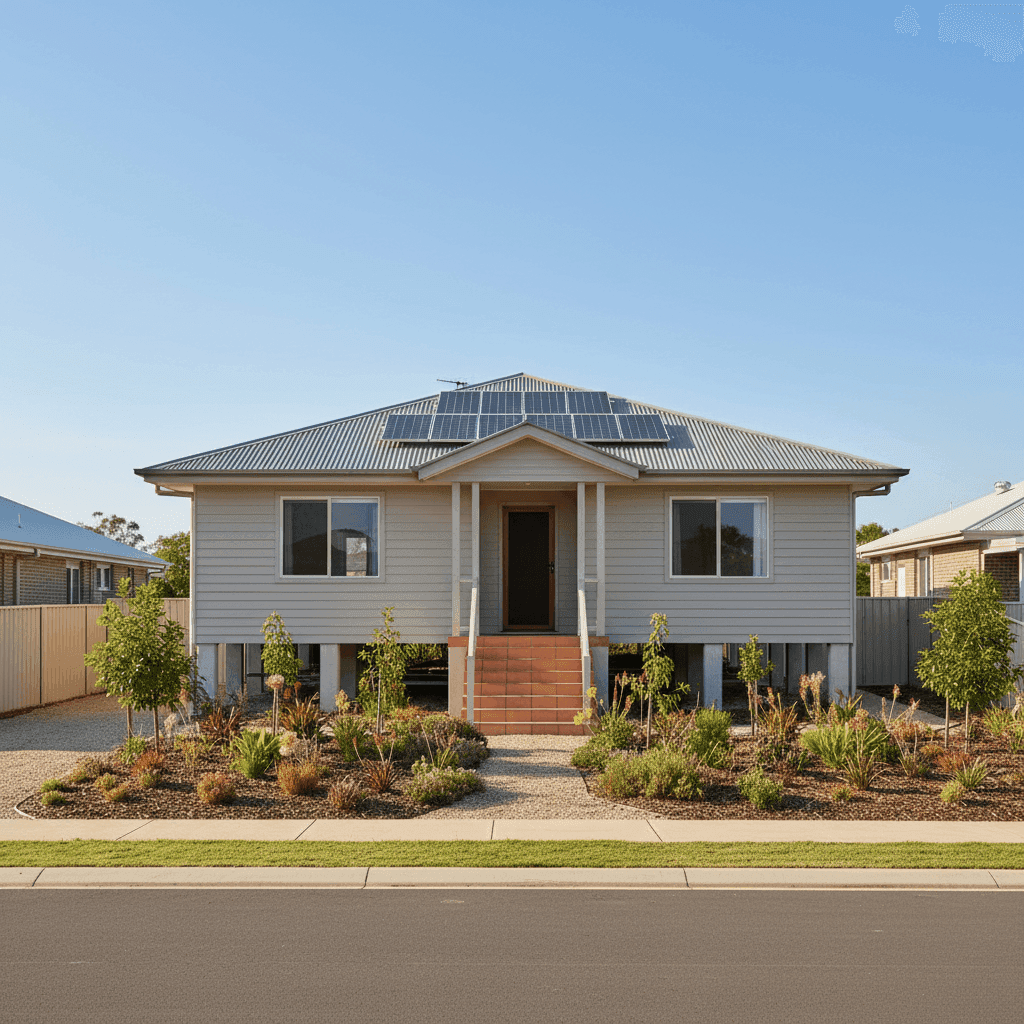
Cooloola Cove is a quiet residential suburb tucked along the shores of Lake Tin Can in Queensland's Fraser Coast region. It's a popular spot for families and retirees alike, offering a relaxed coastal lifestyle — but like many Queensland properties, homes here come with their own set of insurance considerations. This article takes a close look at a recent home and contents insurance quote for a three-bedroom, free-standing home in Cooloola Cove (QLD 4580), and breaks down whether it represents good value, how local risks shape premiums, and what homeowners in the area can do to keep costs in check.
---
Is This Quote Fair?
The annual premium for this property came in at $3,399 per year (or $319/month), covering a building sum insured of $550,000 and $50,000 in contents — both with a $1,000 excess. Our pricing model rates this quote as CHEAP, meaning it sits below the average for the Cooloola Cove area.
To put that in perspective, the suburb average premium is $5,353/year, and the median sits at $4,633/year. This quote falls just below the 25th percentile of $3,437/year, meaning roughly 75% of comparable quotes in the area come in higher. That's a genuinely strong result.
It's worth noting that insurance pricing is highly individualised. Factors like the insurer chosen, the specific coverage inclusions, the property's construction, and the level of excess all influence the final figure. A lower premium doesn't automatically mean lesser cover — but it does mean this homeowner is worth double-checking their policy document to ensure nothing important has been excluded.
---
How Cooloola Cove Compares
Understanding your premium in context is one of the most useful things you can do as a homeowner. Here's how this quote stacks up across different benchmarks:
| Benchmark | Premium |
|---|---|
| This Quote | $3,399/yr |
| Cooloola Cove Suburb Average | $5,353/yr |
| Cooloola Cove Suburb Median | $4,633/yr |
| Cooloola Cove 25th Percentile | $3,437/yr |
| Fraser Coast LGA Average | $4,810/yr |
| QLD State Average | $9,129/yr |
| QLD State Median | $3,903/yr |
| National Average | $5,347/yr |
| National Median | $2,764/yr |
A few things stand out here. First, Queensland's state average of $9,129/year is extraordinarily high compared to the national average of $5,347 — a reflection of the state's significant exposure to cyclones, flooding, and severe storms, which push premiums up dramatically in high-risk postcodes. Cooloola Cove, while not classified as a cyclone risk area, still sits in a region that can experience intense rainfall and storm activity.
The Fraser Coast LGA average of $4,810/year is a more relevant local benchmark, and this quote beats it comfortably. Compared to QLD-wide data, this property is well-positioned. You can also explore national home insurance trends to see how Queensland compares to other states.
It's also worth noting that the suburb sample size here is 14 quotes — a relatively small dataset. As more quotes are collected for the 4580 postcode, these averages will become increasingly reliable.
---
Property Features That Affect Your Premium
Every home is different, and insurers price risk based on a range of physical characteristics. Here's how the features of this particular property are likely influencing the premium:
Weatherboard timber walls are one of the more significant risk factors for insurers. Timber is more susceptible to fire, termite damage, and general wear compared to brick or rendered masonry. This typically pushes premiums upward, so it's notable that this quote still came in below the suburb average despite this construction type.
Steel/Colorbond roofing is generally viewed favourably by insurers. It's durable, lightweight, and performs well in high-wind events — an important consideration in coastal Queensland. Colorbond roofs also tend to have lower maintenance costs over time.
Stump foundations (also known as stumped or raised foundations) are common in Queensland, particularly in older homes and those in flood-prone or termite-active areas. They allow airflow beneath the home and can reduce flood damage risk, but they also introduce some vulnerability to structural movement and pest access. Insurers factor this in when assessing risk.
Solar panels are increasingly common on Australian rooftops, and most home insurance policies cover them as a fixed building feature. However, it's always worth confirming that your policy explicitly includes solar panel cover — for both damage to the panels themselves and any liability arising from them.
Ducted climate control adds to the overall replacement value of the home, which is reflected in the building sum insured. Ensuring your sum insured accurately accounts for these built-in systems is important to avoid being underinsured.
Tiled flooring throughout the home is a low-risk feature from an insurer's perspective — tiles are durable, fire-resistant, and easy to replace compared to carpet or timber flooring.
The 2006 construction year places this home in a relatively modern bracket for the area, meaning it was built to more recent building codes, which generally improves its risk profile.
---
Tips for Homeowners in Cooloola Cove
Whether you're renewing your policy or shopping around for the first time, here are four practical steps to help you get the best outcome:
- Review your building sum insured regularly. Construction costs have risen significantly in recent years. A sum insured of $550,000 may have been appropriate when the policy was first taken out, but it's worth getting a current rebuild cost estimate to make sure you're not underinsured. Many insurers offer online calculators to help.
- Check your policy's timber and pest cover. Weatherboard homes on stumps can be more vulnerable to termite activity. Not all home insurance policies cover pest damage — in fact, most don't. Speak to your insurer about what's included, and consider a standalone pest protection plan if needed.
- Confirm solar panel coverage explicitly. While most modern policies include solar panels as part of the building cover, the extent of that cover (including inverters and mounting hardware) can vary. Ask your insurer directly, or check the Product Disclosure Statement (PDS).
- Consider a higher excess to reduce your premium. This quote already carries a $1,000 excess on both building and contents. If you have a financial buffer and rarely make small claims, opting for a higher excess (say, $2,000) can meaningfully reduce your annual premium — potentially saving hundreds of dollars per year.
---
Compare Your Own Quote
Whether this quote reflects your situation or not, the most important thing is making sure you're not paying more than you need to for the cover you actually need. Premiums in Queensland can vary enormously between insurers — sometimes by thousands of dollars for the same property.
Get a home insurance quote through CoverClub to see how your current premium stacks up and whether there are better options available for your Cooloola Cove home.