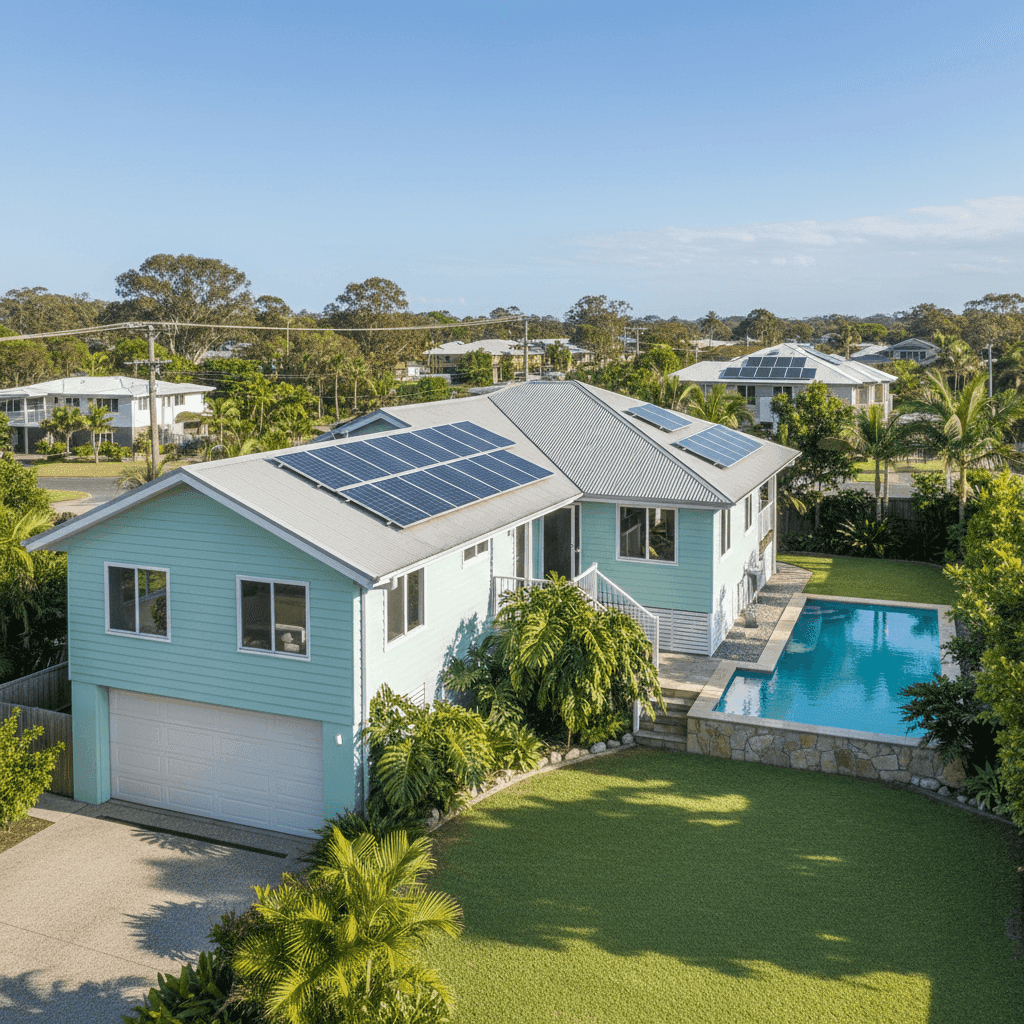
Coolum Beach is one of the Sunshine Coast's most sought-after coastal suburbs — a relaxed beachside community that attracts families, retirees, and sea-changers alike. But living close to the coast comes with its own insurance considerations, and understanding what you're paying — and why — can make a real difference to your household budget. In this article, we analyse a recent home and contents insurance quote for a four-bedroom, three-bathroom free standing home in Coolum Beach (postcode 4573) and break down how it stacks up against local, state, and national benchmarks.
---
Is This Quote Fair?
The quote in question comes in at $4,060 per year (or $389/month) for combined home and contents cover, with a building sum insured of $872,000 and contents valued at $102,000. Both the building and contents excess are set at $1,000.
Our price rating for this quote is FAIR — Around Average, and the data backs that up. The suburb average premium for Coolum Beach sits at $4,101 per year, meaning this quote lands just $41 below what most comparable properties in the area are paying. That's a negligible difference — essentially right on the money.
The suburb median, however, tells a slightly different story at $3,699 per year. The median is often a more reliable indicator of what a "typical" homeowner pays, as it's less influenced by outlier quotes at the high end. At $4,060, this quote sits above the median but comfortably within the 25th–75th percentile range of $3,171 to $4,347. In other words, it's not a bargain, but it's not overpriced either — it's a reasonable market rate for this property profile.
---
How Coolum Beach Compares
To put this quote in proper context, it helps to zoom out and look at the broader picture. You can explore the full breakdown on the Coolum Beach insurance stats page.
| Benchmark | Average Premium | Median Premium |
|---|---|---|
| Coolum Beach (suburb) | $4,101/yr | $3,699/yr |
| Queensland (state) | $9,129/yr | $3,903/yr |
| Australia (national) | $5,347/yr | $2,764/yr |
| Noosa LGA | $18,770/yr | — |
A few things stand out here. The Queensland state average of $9,129 per year looks alarming at first glance, but the median of $3,903 tells a more grounded story. Queensland's average is heavily skewed by high-risk postcode areas — think cyclone-prone Far North Queensland and flood-affected inland regions — which drag the mean well above what most coastal southeast Queensland homeowners actually pay. You can dig into the full QLD insurance data here.
The Noosa LGA average of $18,770 per year is a striking figure, but again, this is likely distorted by a small number of very high-value or high-risk properties within the local government area. Coolum Beach sits within Noosa LGA, but its own suburb-level data paints a far more moderate picture.
Nationally, the average home insurance premium across Australia is $5,347/yr, with a median of $2,764. The national median being lower than Coolum Beach's reflects the fact that many lower-risk, lower-value properties across the country bring that figure down — particularly in regional and inland areas with minimal natural hazard exposure.
For a coastal Queensland property of this size and value, $4,060 per year is a competitive outcome.
---
Property Features That Affect Your Premium
Several characteristics of this property have a meaningful impact on what insurers charge. Understanding these can help you anticipate your premium and identify where there may be room to negotiate or adjust.
Weatherboard timber walls are one of the more significant rating factors here. Timber-clad homes are generally considered higher risk than brick veneer or full brick construction, primarily due to greater susceptibility to fire and, to some extent, storm damage. Insurers typically apply a loading to weatherboard homes, which contributes to a higher base premium.
Steel/Colorbond roofing is actually a positive factor. Colorbond is durable, lightweight, and performs well in high-wind conditions — a key consideration in coastal Queensland. It's generally viewed more favourably by insurers than older tile roofs, which can crack or lift in severe weather.
Concrete slab foundation is another tick in the right column. Slab foundations are stable, resistant to movement, and less susceptible to the kind of subsidence or termite damage that can affect homes on stumps or timber piers.
Timber and laminate flooring can influence contents claims — these floor types are more vulnerable to water damage than tiles, which is worth keeping in mind when assessing your contents sum insured.
The swimming pool adds a modest loading to most home insurance policies, as it represents an additional liability and structural feature to insure. Similarly, solar panels are increasingly common on Queensland homes and most insurers now include them under building cover, though it's always worth confirming this with your insurer explicitly.
At 214 square metres, this is a reasonably sized home, and the $872,000 building sum insured reflects the cost to rebuild — not the market value of the property. Getting this figure right is critical: underinsuring your home can leave you significantly out of pocket after a major claim.
---
Tips for Homeowners in Coolum Beach
1. Review your building sum insured annually. Construction costs have risen sharply in recent years, and what it cost to rebuild your home three years ago may be well below today's rates. Use a building calculator or ask your insurer to reassess the replacement cost — not the market value — of your home each year.
2. Confirm solar panel cover is included. With panels on the roof, make sure your policy explicitly covers them under the building section. Some older policies or budget products treat solar systems as an optional extra or exclude damage from specific causes. It's a quick question that could save you thousands.
3. Compare quotes before your renewal date. Most insurers apply automatic renewals, and loyalty rarely pays in insurance. Set a reminder 30 days before your renewal and use a comparison tool to check whether the market has moved. Even a FAIR-rated quote can sometimes be improved with a little shopping around.
4. Consider your excess level carefully. A $1,000 excess is standard, but increasing it — say, to $1,500 or $2,000 — can reduce your annual premium meaningfully. If you have a solid emergency fund and your home is well-maintained, a higher excess is often a sensible trade-off.
---
Compare Your Own Quote
Whether you're a first-time buyer or a long-time Coolum Beach local, it pays to know where your premium sits relative to the market. CoverClub makes it easy to get a home insurance quote and see how your property compares to others in your suburb, your state, and across Australia. Knowledge is your best tool when it comes to getting fair value on your cover.