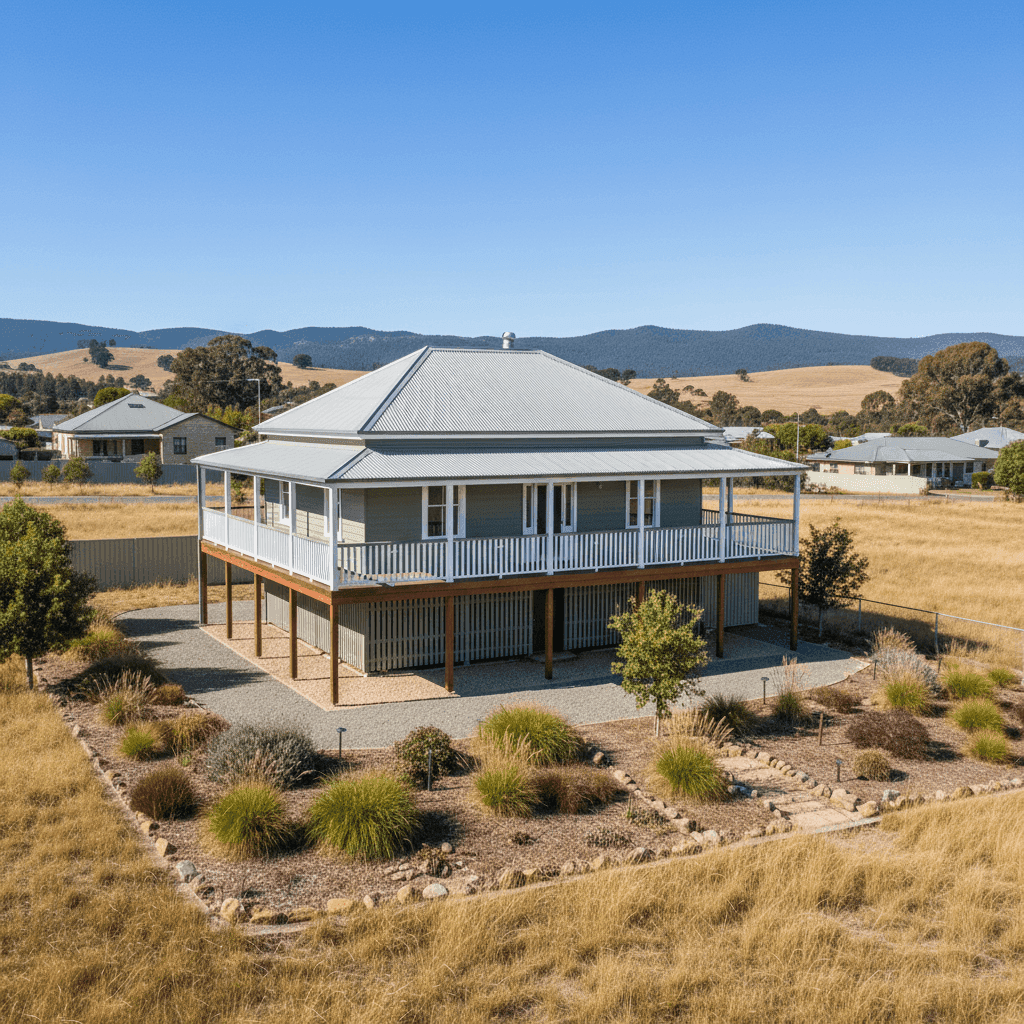
If you own a freestanding home in Cooma, NSW 2630, you've probably wondered whether the premium sitting in your inbox is reasonable — or whether you're paying more than you should. Cooma is a charming high-country town in the Snowy Mountains region, and like many regional NSW properties, homes here come with a unique mix of characteristics that can meaningfully influence what insurers charge. In this article, we break down a real building-only insurance quote for a 2-bedroom freestanding home in Cooma and put the numbers in context using suburb, state, and national data.
---
Is This Quote Fair?
The quote in question comes in at $2,258 per year (or $216/month) for building-only cover, with a building sum insured of $275,000 and a building excess of $5,000. Our price rating for this quote is FAIR — around average.
That "fair" rating isn't a rubber stamp of approval — it simply means this premium sits within a normal range for the suburb. It's not a bargain, but it's not an outlier either. Given the property's specific characteristics (more on those below), the pricing is broadly in line with what insurers typically charge for similar homes in the area.
One thing worth noting: the $5,000 building excess is on the higher end. A higher excess generally lowers your premium, so if you were to reduce that excess, you'd likely see the annual cost rise. It's a trade-off worth thinking about — particularly if the property is your primary residence and an unexpected claim could leave you significantly out of pocket.
---
How Cooma Compares
To put this quote in perspective, here's how it stacks up against Cooma suburb averages, NSW state figures, and national benchmarks:
| Benchmark | Average Premium | Median Premium |
|---|---|---|
| Cooma (2630) | $2,162/yr | $2,061/yr |
| NSW (State) | $9,528/yr | $3,770/yr |
| National | $5,347/yr | $2,764/yr |
| Bega Valley LGA | $3,100/yr | — |
At $2,258/yr, this quote sits just above the Cooma suburb average of $2,162 and above the suburb median of $2,061 — which is consistent with the "fair/around average" rating. It's well below the NSW state average of $9,528, though that figure is heavily skewed by high-value properties and higher-risk coastal and urban areas across the state. Compared to the NSW median of $3,770, Cooma looks quite affordable.
Nationally, the median sits at $2,764 — meaning this quote is actually below the national median, which is a positive sign. It also comes in below the Bega Valley LGA average of $3,100, suggesting Cooma's inland location provides some pricing advantage over coastal parts of the region.
The suburb sample used for comparison includes 36 quotes, which is a reasonable dataset for a regional town of Cooma's size. The wide spread between the 25th percentile ($1,452/yr) and 75th percentile ($2,720/yr) tells us there's meaningful variation in what homeowners here pay — largely driven by differences in property age, construction type, and individual risk factors.
---
Property Features That Affect Your Premium
Several characteristics of this particular property have a direct bearing on what insurers charge. Understanding them helps you make sense of the number on the page.
Fibro Asbestos Walls
This is arguably the most significant rating factor for this property. Homes built with fibro asbestos (common in Australian construction from the 1940s through to the early 1980s) attract higher premiums because of the cost and complexity involved in repairs or rebuilding. If asbestos-containing materials are damaged, specialist contractors and strict safety protocols are required — and that adds up quickly. With a construction year of 1957, this property falls squarely within the era when fibro asbestos was widely used.
Age of Construction (1957)
Older homes generally carry higher insurance premiums. Plumbing, electrical wiring, and structural elements may not meet modern standards, and the cost to rebuild using compliant materials is often higher than newer equivalents. A 1957-built home is nearly 70 years old — something underwriters factor into their risk assessments.
Elevated Foundation (Stumps, Raised by at Least 1m)
Homes on stumps elevated by at least a metre have some advantages — better airflow, reduced moisture risk, and some protection from minor flooding. However, they can also be more expensive to repair after storm or earthquake events, as the subfloor structure adds complexity. In Cooma's alpine climate, where frost and ground movement are real considerations, this is a relevant factor.
Steel/Colorbond Roof
On the positive side, a Colorbond steel roof is generally viewed favourably by insurers. It's durable, fire-resistant, and handles the heavy snowfalls that Cooma occasionally experiences better than some alternatives. This likely helps moderate the premium.
Ducted Climate Control
The presence of ducted climate control adds to the replacement value of the home and is factored into the sum insured calculation. In Cooma's cold winters and warm summers, climate control is a practical necessity — but it does contribute to the overall insured value.
No Pool, No Solar Panels
The absence of a pool and solar panels keeps things simpler from an underwriting perspective, removing two common sources of additional premium loading.
---
Tips for Homeowners in Cooma
1. Review your sum insured regularly Building costs have risen significantly in recent years, and $275,000 may or may not be sufficient to fully rebuild a 130 sqm home in Cooma today. Get a current building replacement cost estimate — not the market value of the property — and make sure your sum insured reflects that figure. Being underinsured can be costly when it matters most.
2. Consider your excess carefully The $5,000 building excess on this policy is high. While it reduces the annual premium, it means you'd need to cover the first $5,000 of any claim yourself. If a Cooma winter brings a burst pipe or storm damage, that out-of-pocket cost adds up. Compare what the premium looks like at a $1,000 or $2,500 excess to find the right balance for your budget.
3. Get an asbestos management plan If your home has fibro asbestos walls, it's worth having a licensed asbestos assessor inspect the property and provide a management plan. Not only does this protect your health and safety, but it can also help you understand the true scope of any future repair or renovation costs — and ensure your insurer is fully informed about the property's condition.
4. Compare quotes before renewal Insurers don't always reward loyalty. With a spread of $1,452 to $2,720 in this suburb alone, there's real money to be saved by shopping around. Use a comparison tool to see what multiple insurers would charge for the same level of cover before automatically renewing.
---
Ready to Compare?
Whether you're reviewing an existing policy or shopping for cover on a new purchase, it pays to see the full market. Get a home insurance quote at CoverClub and instantly compare premiums from multiple insurers — so you can make a confident, informed decision about protecting your Cooma home.