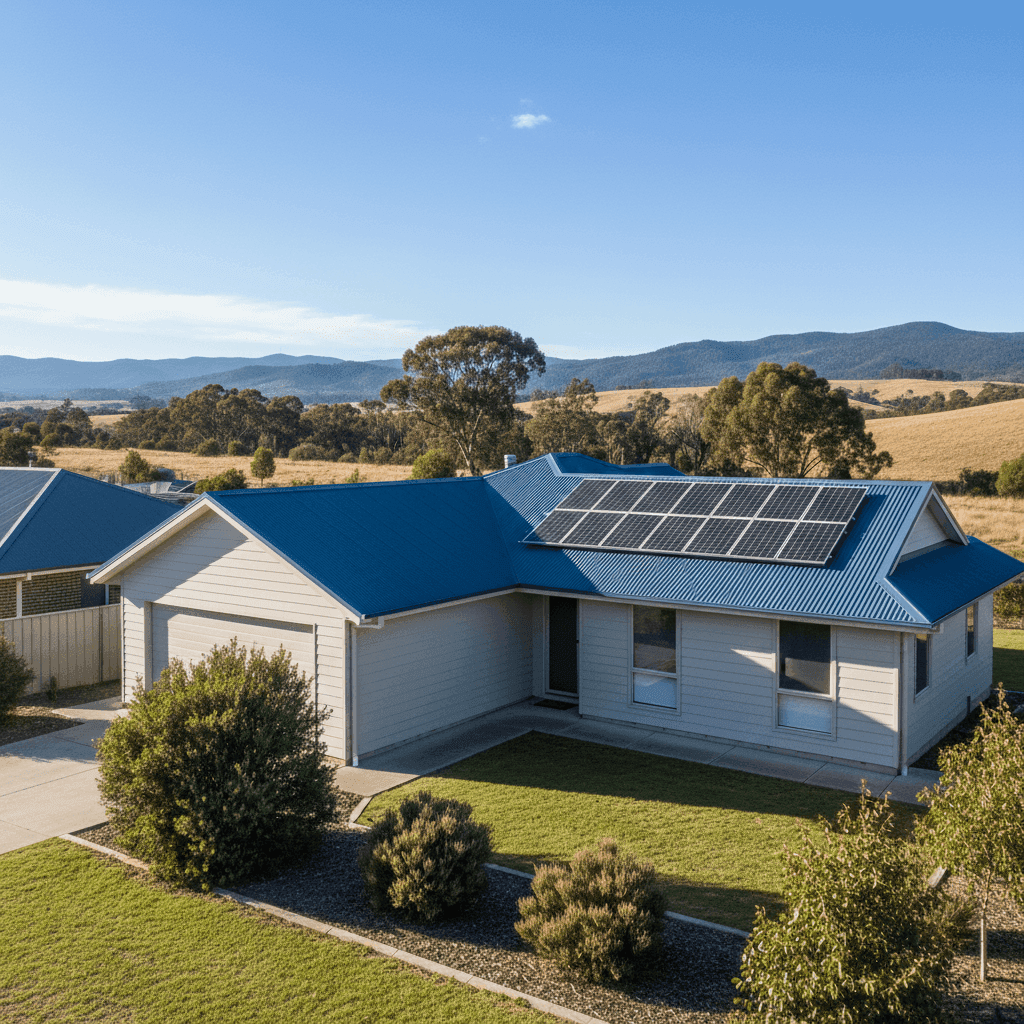
Cooma, nestled in the Snowy Monaro region of New South Wales, is a town known for its crisp alpine climate, rich history, and relaxed country lifestyle. It's also a place where savvy homeowners are increasingly turning to comparison tools to make sure they're not overpaying on home insurance. This article breaks down a real home and contents insurance quote for a three-bedroom free standing home in Cooma (postcode 2630), examining how it measures up against local, state, and national benchmarks — and what property features are likely driving the price.
---
Is This Quote Fair?
The short answer: yes — and then some.
This quote comes in at $1,287 per year (or roughly $122 per month), covering both building (sum insured: $618,000) and contents ($50,000). Based on CoverClub's pricing data, this quote is rated CHEAP — meaning it sits comfortably below the average for comparable properties in the area.
To put that into perspective:
- The suburb average for Cooma (2630) is $2,201/yr, and the median sits at $1,882/yr
- Even the 25th percentile — the cheapest quarter of quotes in the suburb — comes in at $1,365/yr
- This quote, at $1,287/yr, falls below the suburb's 25th percentile, making it genuinely competitive
That's a saving of over $900 per year compared to what the average Cooma homeowner is paying. Over five years, that's more than $4,500 back in your pocket — not small change.
The building excess is set at $4,000 and the contents excess at $1,000. A higher excess is one of the most effective levers for reducing your annual premium, and it appears this policy has used that strategy to good effect. Just make sure you're comfortable covering that amount out of pocket in the event of a claim.
---
How Cooma Compares
When you zoom out beyond the suburb, the value of this quote becomes even clearer. You can explore the full data on the Cooma suburb insurance stats page.
| Benchmark | Annual Premium |
|---|---|
| This Quote | $1,287 |
| Cooma (2630) Suburb Average | $2,201 |
| Cooma (2630) Suburb Median | $1,882 |
| Cooma 25th Percentile | $1,365 |
| Cooma 75th Percentile | $2,804 |
| NSW State Average | $3,801 |
| NSW State Median | $3,410 |
| National Average | $2,965 |
| National Median | $2,716 |
| LGA (Bega Valley) Average | $2,863 |
The NSW state average of $3,801/yr is nearly three times the cost of this quote — a stark reminder of just how much premiums can vary based on location, property type, and insurer. Coastal and flood-prone areas of NSW tend to push state averages up significantly, so inland towns like Cooma often benefit from comparatively lower risk profiles.
At the national level, the average sits at $2,965/yr. This quote is less than half that figure — a remarkable outcome for a home and contents policy covering over $668,000 in combined value.
The LGA average for Bega Valley ($2,863/yr) also sits well above this quote, further reinforcing that this is an unusually competitive premium for the region.
---
Property Features That Affect Your Premium
Several characteristics of this property are likely contributing to its favourable premium. Here's a closer look at what insurers typically consider:
Hardiplank / Hardiflex Cladding
The external walls are clad in Hardiplank Hardiflex — a fibre cement product widely regarded by insurers as a durable and fire-resistant cladding material. Unlike timber weatherboard, Hardiflex doesn't rot, warp, or ignite easily, which can translate to lower premiums compared to more vulnerable wall materials.
Steel / Colorbond Roof
A Colorbond steel roof is one of the most insurer-friendly roofing choices in Australia. It's resistant to fire, wind, and hail, and has a long lifespan with relatively low maintenance requirements. Insurers tend to view this favourably, particularly in areas that experience significant temperature swings — something Cooma residents know well.
Slab Foundation
Concrete slab foundations are generally considered stable and low-risk by underwriters. Unlike homes on stumps or piers, slab homes are less susceptible to subsidence and pest damage, both of which can complicate claims and push premiums higher.
Solar Panels
This property has solar panels installed. While solar adds value to a home, it also adds a layer of complexity for insurers — panels can be damaged by hail, high winds, or fire, and replacement costs can be significant. It's worth confirming with your insurer that your solar system is explicitly covered under your policy, as some standard policies may not automatically include it.
Construction Year: 1950
Older homes — particularly those built before modern building codes — can attract higher premiums due to the potential for outdated wiring, plumbing, or structural materials. A 1950s build is worth keeping an eye on. Regular maintenance and documented upgrades (such as updated electrical systems) can help manage this risk factor.
No Pool, No Ducted Climate Control
The absence of a swimming pool removes a common liability risk, and no ducted climate control system means fewer mechanical components that could fail or cause water damage. Both factors help keep the risk profile — and the premium — lean.
---
Tips for Homeowners in Cooma
Whether you're reviewing an existing policy or shopping around for the first time, here are some practical steps Cooma homeowners can take to get better value from their home insurance.
1. Review your sum insured regularly Building costs have risen sharply in recent years. Make sure your sum insured reflects what it would actually cost to rebuild your home today — not what you paid for it. Underinsurance is one of the most common and costly mistakes Australian homeowners make.
2. Confirm solar panels are covered If you have solar panels, ask your insurer directly whether they're included in your building cover and up to what value. Some policies treat them as standard inclusions; others require an endorsement or separate item. Don't assume.
3. Consider your excess carefully This policy carries a $4,000 building excess — which is on the higher side. While it helps reduce the annual premium, it means you'd need to cover that amount before your insurer steps in. Make sure you have that buffer available, and revisit whether a lower excess might be worth the modest premium increase.
4. Compare quotes at renewal time Insurance markets shift constantly, and loyalty doesn't always pay. Use a comparison tool like CoverClub at each renewal to ensure you're still getting a competitive rate. Given the wide spread of premiums in Cooma — from $1,365 at the 25th percentile to $2,804 at the 75th — there's clearly significant variation between insurers for similar properties.
---
Ready to Compare Your Own Quote?
Whether you're in Cooma or anywhere else in Australia, CoverClub makes it easy to see how your current premium stacks up. Get a home insurance quote today and find out if you're paying more than you need to. With data drawn from thousands of real quotes, you'll have the context to make a genuinely informed decision.