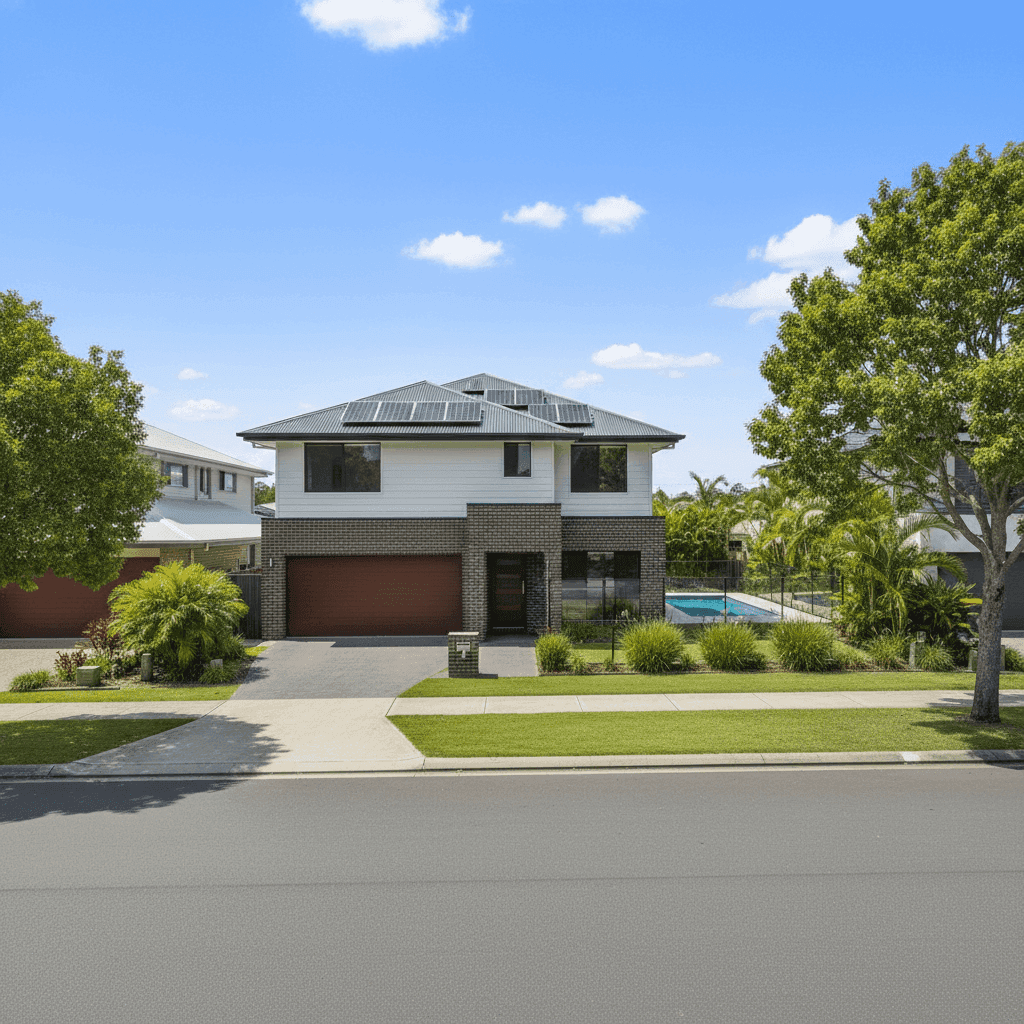
Coomera, nestled in the northern corridor of the Gold Coast, has grown rapidly into one of South East Queensland's most popular family suburbs. With its mix of modern estates, good schools, and easy motorway access, it's no surprise that well-appointed free standing homes are common here. But with that lifestyle comes the responsibility of protecting your biggest asset — and home insurance costs in the region can vary significantly. In this article, we take a close look at a recent home and contents insurance quote for a three-bedroom, three-bathroom free standing home in Coomera (QLD 4209) and break down whether it represents fair value.
---
Is This Quote Fair?
The annual premium for this property came in at $4,898 per year (or $463/month), covering a building sum insured of $942,000 and contents valued at $137,000. Both the building and contents excess are set at $1,000.
Our price rating for this quote is Expensive — Above Average.
To put that in context: the average home insurance premium among quotes we've recorded for Coomera sits at just $1,795 per year, with a median of $1,581. This quote is more than 2.7 times the suburb average, which is a significant gap that warrants a closer look.
That said, it's important not to compare apples with oranges. The building sum insured of $942,000 is a substantial figure — well above what many standard homes in the suburb are insured for. A higher sum insured naturally drives premiums upward, as does the inclusion of several premium features on this property (more on that below). The excess levels of $1,000 each are fairly standard and won't be a major factor in the price difference.
So while the quote is above average for Coomera, the property's characteristics go a long way toward explaining the gap. The real question is whether you could find equivalent cover for less — and that's where comparison shopping becomes essential.
---
How Coomera Compares
Understanding where a quote sits relative to broader benchmarks helps you gauge whether you're being overcharged or simply paying for a more complex risk profile.
| Benchmark | Premium |
|---|---|
| This Quote | $4,898/yr |
| Coomera Suburb Average | $1,795/yr |
| Coomera Suburb Median | $1,581/yr |
| Coomera 25th Percentile | $1,100/yr |
| Coomera 75th Percentile | $2,245/yr |
| Gold Coast LGA Average | $8,161/yr |
| QLD State Average | $9,129/yr |
| QLD State Median | $3,903/yr |
| National Average | $5,347/yr |
| National Median | $2,764/yr |
(Based on 28 quotes recorded for the Coomera area. [View full suburb stats →](https://coverclub.com.au/stats/QLD/4209/coomera))
A few things stand out from this comparison:
- Relative to the suburb, this quote is expensive. Most Coomera homes are insured for considerably less, though those properties may also carry lower sums insured and fewer features.
- Relative to the Gold Coast LGA average of $8,161/yr, this quote is actually below average — suggesting that larger or higher-risk properties in the broader Gold Coast region attract even steeper premiums.
- Relative to the QLD state average of $9,129/yr, this quote looks quite reasonable. Queensland's insurance market is heavily influenced by flood and cyclone risk in northern parts of the state, which inflates the statewide figures considerably. You can explore Queensland-wide insurance data here.
- Against the national average of $5,347/yr, this quote is modestly below average, suggesting it's broadly competitive when viewed through a national lens. See national home insurance benchmarks →
The takeaway: this quote is expensive for Coomera specifically, but not out of step with what comparable properties attract across the Gold Coast and Queensland more broadly.
---
Property Features That Affect Your Premium
Several characteristics of this property have a direct bearing on the premium. Here's how each one plays a role:
Double Brick External Walls Double brick construction is generally viewed favourably by insurers — it's robust, fire-resistant, and durable. In some cases this can help moderate premiums compared to lighter construction types like timber or clad weatherboard.
Steel/Colorbond Roof Colorbond roofing is a popular choice in Queensland and is typically well-regarded by insurers for its durability and resistance to wind and hail. It tends to perform better in storm events than older tiled roofs, which can reduce claim risk.
Slab Foundation A concrete slab foundation is standard for homes built in this era and region. It presents minimal additional risk from an underwriting perspective and is generally a neutral factor in premium calculations.
Timber and Laminate Flooring While attractive, timber and laminate flooring can be more costly to repair or replace after water damage events compared to tiles. Insurers may factor this in when assessing contents or internal fixtures coverage.
Swimming Pool Pools add to the replacement cost of the property and introduce additional liability considerations. They also require specific coverage inclusions, which can contribute to a higher premium.
Solar Panels Solar panel systems represent a significant asset — often worth $8,000–$20,000 or more. Ensuring they're covered under your building policy (which they typically are when fixed to the roof) adds to the overall sum insured and can influence premiums accordingly.
Ducted Climate Control Ducted air conditioning systems are expensive to repair or replace and are generally considered part of the building's fixed fixtures. Their inclusion increases the effective replacement value of the home.
Building Size: 153 sqm At 153 square metres, this is a mid-sized home. The building sum insured of $942,000 equates to roughly $6,157 per square metre — a figure that reflects high-quality finishes and the cost of features like the pool, solar, and ducted HVAC rather than just the structural shell.
No Cyclone Risk Coomera falls outside designated cyclone risk zones, which is a meaningful advantage. Properties in cyclone-prone parts of Queensland — particularly north of Bundaberg — can attract dramatically higher premiums. This property avoids that loading entirely.
---
Tips for Homeowners in Coomera
1. Review your sum insured carefully A building sum insured of $942,000 is substantial. Make sure it reflects the true cost to rebuild — not the market value of the land and property. Overinsuring inflates your premium unnecessarily, while underinsuring leaves you exposed. Consider using a building cost calculator or consulting a quantity surveyor.
2. Compare quotes from multiple insurers The gap between the cheapest and most expensive quotes in Coomera is significant — from $1,100 at the 25th percentile to $2,245 at the 75th. For a property with this profile, the spread could be even wider. Get a comparison quote at CoverClub →
3. Ask about bundling discounts Many insurers offer a discount when you combine home and contents insurance under a single policy. This quote already covers both, but it's worth confirming you're receiving any applicable multi-policy discount.
4. Check what's covered for your pool and solar panels Not all policies automatically include full cover for pools, solar panel systems, or ducted HVAC as standard. Read the Product Disclosure Statement (PDS) carefully to confirm these features are included — and to what limit.
---
Ready to Find a Better Deal?
Whether you're renewing your current policy or shopping around for the first time, comparing quotes is the single most effective way to make sure you're not overpaying. CoverClub makes it easy to benchmark your premium against real data from your suburb and beyond.