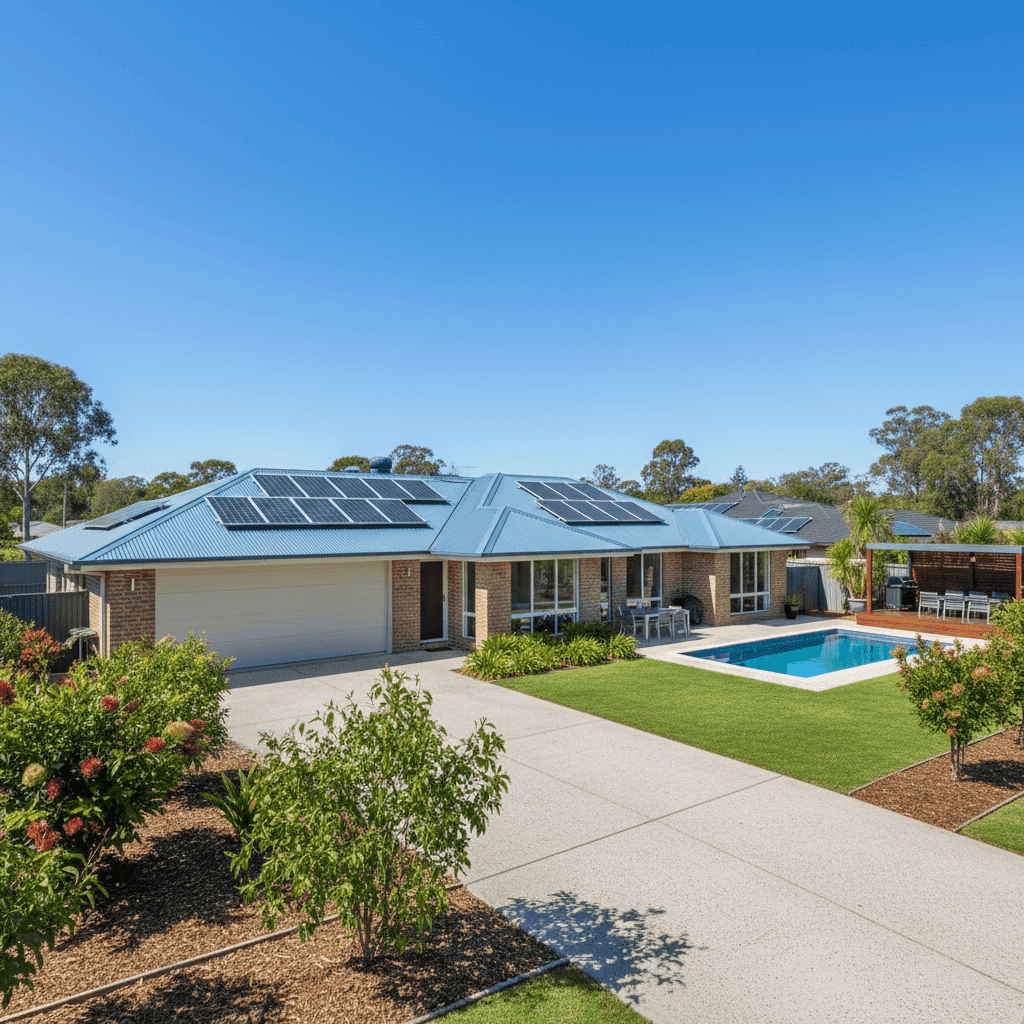
If you own a free standing home in Coominya, QLD 4311, you're likely well aware that insurance costs can vary dramatically depending on your property's features, location, and the level of cover you choose. Nestled in the Lockyer Valley region of South East Queensland, Coominya is a semi-rural suburb where properties tend to be larger and more feature-rich than the typical metropolitan home — and that can have a real impact on what you pay for home and contents insurance.
This article breaks down a recent quote of $4,835 per year (or $503/month) for a 4-bedroom, 2-bathroom free standing home in Coominya, and puts it in context against suburb, state, and national benchmarks so you can judge whether it's a fair deal.
---
Is This Quote Fair?
The short answer: yes — this quote looks very competitive. CoverClub has rated this premium as CHEAP (Below Average), meaning it sits well below what most comparable homeowners in the area are paying.
For a combined home and contents policy covering a building sum insured of $844,000 and contents valued at $52,000, an annual premium of $4,835 is a strong result. The building excess is set at $3,000 — which is on the higher side and is likely one of the reasons the premium is kept down. The contents excess of $500 is more standard. If you'd prefer a lower building excess, expect your premium to rise accordingly.
At the national level, the average home insurance premium sits at $5,347 per year, with a median of $2,764. This quote comes in below the national average, which is a positive sign — especially given the relatively high sum insured on the building.
---
How Coominya Compares
The pricing picture in Coominya is a little unusual, largely due to the small sample size of data available (just 8 quotes in our dataset). That said, the numbers are still instructive.
| Benchmark | Premium |
|---|---|
| This Quote | $4,835/yr |
| Suburb Average (Coominya) | $150,539/yr |
| Suburb Median (Coominya) | $29,538/yr |
| Suburb 25th Percentile | $21,626/yr |
| Suburb 75th Percentile | $37,081/yr |
| LGA Average (Lockyer Valley) | $11,404/yr |
| QLD State Average | $9,129/yr |
| QLD State Median | $3,903/yr |
| National Average | $5,347/yr |
| National Median | $2,764/yr |
The suburb average of $150,539 is heavily skewed by outliers — a common issue when working with small datasets — so the median of $29,538 is a more reliable reference point. Against that figure, this quote of $4,835 is remarkably affordable.
Even compared to the QLD state average of $9,129, this premium is nearly half the cost. The Lockyer Valley LGA average of $11,404 further reinforces just how competitive this quote is. You can explore more detailed Coominya-specific statistics here.
It's worth noting that Queensland as a whole tends to attract higher-than-average premiums due to elevated weather-related risks, including flooding, storms, and hail events. The fact that this property is not in a cyclone risk area helps keep costs down compared to properties in Far North Queensland.
---
Property Features That Affect Your Premium
Several characteristics of this property play a meaningful role in determining the final premium. Here's how each feature stacks up from an insurer's perspective:
Brick Veneer Walls Brick veneer is generally viewed favourably by insurers. It offers solid fire resistance and structural durability, which can contribute to lower premiums compared to timber-framed or weatherboard homes.
Steel/Colorbond Roof Colorbond roofing is highly regarded in the Australian insurance market. It's lightweight, durable, and performs well in high-wind and hail events — all of which reduce the likelihood of costly claims.
Slab Foundation A concrete slab foundation is one of the more straightforward foundation types from an insurer's perspective. It carries fewer risks than stumped or suspended floors, particularly in areas prone to ground movement.
Tile Flooring Tiles are a durable, low-maintenance flooring choice that tends to be less susceptible to water damage than carpet or timber floors — a small but positive factor.
Above Average Fittings Above average fittings — think quality kitchen appliances, premium fixtures, and upgraded finishes — increase the replacement cost of the home, which is reflected in the higher building sum insured of $844,000. This is an important reason to ensure your sum insured is accurate; underinsurance is a serious risk.
Swimming Pool Pools add value to a property but also introduce liability considerations. Most home insurance policies include public liability cover, which is particularly relevant for pool owners given the potential for accidents involving guests or visitors.
Solar Panels Solar panels are increasingly common on Australian homes, but they do add to the replacement cost of the building. Ensuring your sum insured accounts for the reinstallation of solar panels is essential — many homeowners overlook this.
1998 Construction A home built in 1998 is relatively modern in the context of Australian housing stock. It's likely to comply with building standards that predate some of the more significant code upgrades of the 2000s, but it's generally considered a lower-risk era of construction compared to older homes.
---
Tips for Homeowners in Coominya
1. Review your sum insured regularly With a building sum insured of $844,000 and above average fittings, solar panels, and a pool, it's critical to revisit this figure each year. Building costs in regional Queensland have risen significantly in recent years, and being underinsured at claim time can be financially devastating.
2. Consider the trade-off on your building excess The $3,000 building excess on this policy is relatively high. While it helps keep the annual premium down, it means you'll need to cover the first $3,000 of any building claim out of pocket. If that feels uncomfortable, ask your insurer what the premium difference would be at a $1,000 or $2,000 excess.
3. Check your pool and solar are properly covered Confirm with your insurer that your swimming pool structure and solar panel system are explicitly included in your building cover. Some policies have exclusions or sub-limits for these features, so it pays to read the Product Disclosure Statement carefully.
4. Compare quotes annually Even if you're happy with your current premium, the insurance market shifts constantly. Loyalty doesn't always pay in insurance — running a fresh comparison at renewal time is one of the easiest ways to ensure you're still getting value.
---
Compare Home Insurance Quotes in Coominya
Whether you're reviewing your existing policy or shopping around for the first time, CoverClub makes it easy to compare home and contents insurance quotes tailored to your property. Don't settle for the first price you're offered — get a quote at CoverClub and see what's available for your Coominya home today.