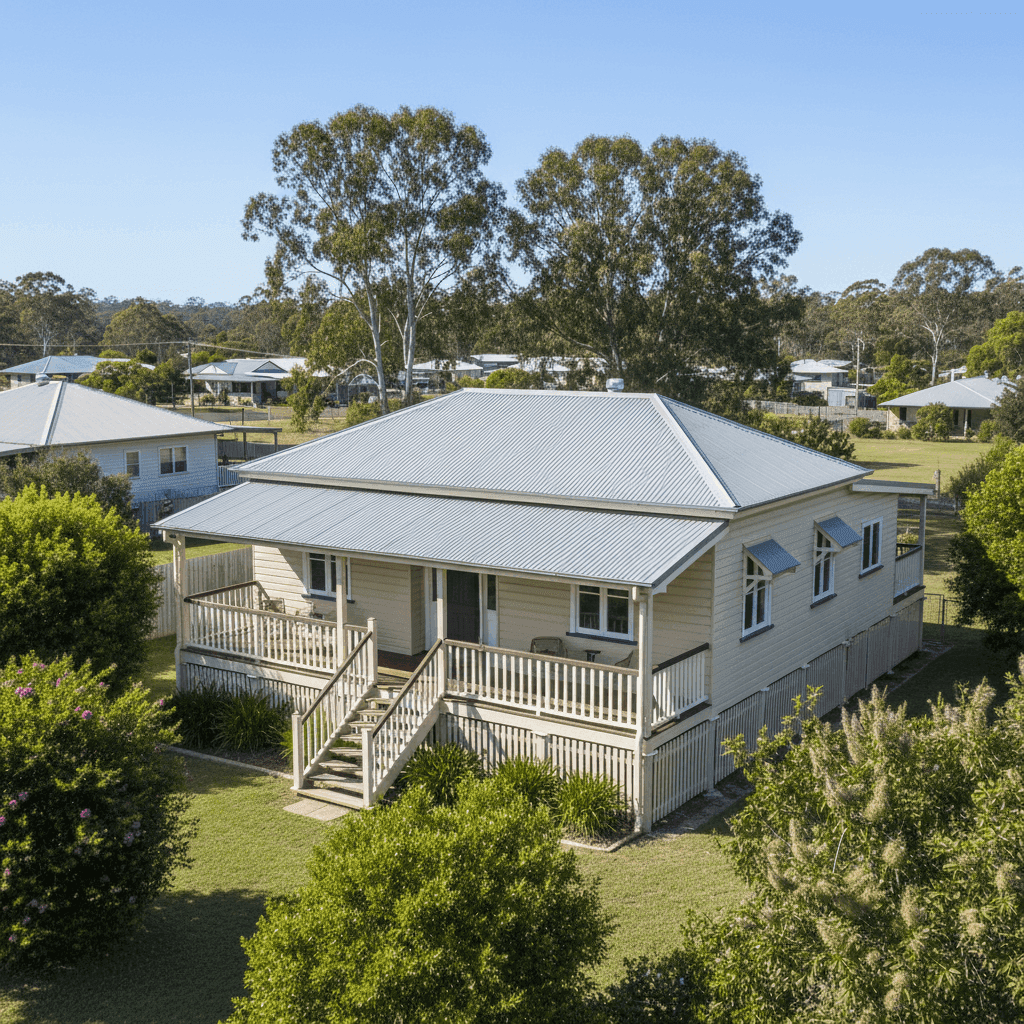
If you own a free standing home in Coominya, QLD 4311, you've probably noticed that home insurance can feel like a moving target. Premiums vary enormously depending on your property's age, construction, location risk profile, and the level of cover you choose. This article breaks down a real home and contents insurance quote for a four-bedroom, two-bathroom weatherboard home in Coominya — and puts it into context against suburb, state, and national benchmarks — so you can judge whether your own premium stacks up.
---
Is This Quote Fair?
The quote in question comes in at $9,513 per year (or $905 per month) for combined home and contents cover, with a building sum insured of $851,000 and contents valued at $109,000. Both the building and contents excess are set at $1,000.
CoverClub's pricing engine rates this quote as CHEAP — below average for the area. That's genuinely good news for the homeowner. Given that Coominya sits in the Lockyer Valley region — an area that has experienced significant flood and storm events in recent years — landing a premium below the local average is a meaningful outcome.
To put it plainly: this is a competitive result for a property of this size, age, and construction type in a regional Queensland postcode that carries real weather risk.
---
How Coominya Compares
Understanding where your premium sits relative to the broader market is one of the most useful things you can do as a homeowner. Here's how this quote measures up:
| Benchmark | Premium |
|---|---|
| This quote | $9,513/yr |
| Coominya suburb median | $29,538/yr |
| Coominya suburb average | $150,539/yr |
| Coominya 25th–75th percentile | $21,626–$37,081/yr |
| Lockyer Valley LGA average | $11,404/yr |
| QLD state average | $9,129/yr |
| QLD state median | $3,903/yr |
| National average | $5,347/yr |
| National median | $2,764/yr |
Note: The Coominya suburb sample size is 8 quotes, so the suburb-level figures — particularly the average, which is heavily skewed — should be interpreted with some caution. A small sample means a single high-risk or high-value property can pull the average dramatically upward.
A few things stand out here. First, this quote sits well below the suburb median of $29,538, which places it firmly in the cheaper end of what locals are paying. Second, it's also slightly above the QLD state average of $9,129 — though this is expected given that the state average encompasses a wide range of properties, including lower-risk metropolitan homes. Third, compared to the national average of $5,347, this quote is higher, but that gap reflects Queensland's elevated exposure to severe weather events relative to many other states.
You can explore more local pricing data on the Coominya suburb stats page.
---
Property Features That Affect Your Premium
Several characteristics of this particular property have a direct bearing on what insurers charge. Understanding them helps you see why your premium lands where it does — and what might shift it in future.
Weatherboard Timber Walls
Weatherboard construction is common in older Queensland homes and is generally considered a higher-risk material by insurers compared to brick veneer or full brick. Timber is more susceptible to fire, rot, and storm damage, which can push premiums upward. That said, well-maintained weatherboard homes in good condition can still attract competitive quotes.
Steel / Colorbond Roof
Colorbond roofing is actually viewed favourably by many insurers. It's durable, fire-resistant, and handles Queensland's harsh UV and storm conditions well. Compared to older tile or fibro roofing, a Colorbond roof can work in your favour at renewal time.
Elevated Foundation (At Least 1 Metre)
This is one of the most significant factors for a Coominya property. Being elevated by at least one metre provides meaningful protection against flood inundation — a real concern in the Lockyer Valley, which has been impacted by major flood events. Insurers take elevation into account when assessing flood risk, and this feature likely contributes to the relatively competitive premium achieved here.
Construction Year: 1976
At nearly 50 years old, this home is considered an older dwelling. Older properties can attract higher premiums due to the cost of replacing period-appropriate materials and the potential for outdated wiring, plumbing, or structural elements. Keeping up with maintenance and documenting any upgrades can help manage this risk factor.
Ducted Climate Control
The presence of ducted climate control adds to the insured value of the building's fixed fittings and services. It's a meaningful inclusion in the building sum insured and is correctly factored into the cover here.
Building Size: 235 sqm
At 235 square metres, this is a substantial family home. The building sum insured of $851,000 reflects current construction costs in regional Queensland, where rebuilding costs have risen sharply in recent years due to labour and materials inflation.
---
Tips for Homeowners in Coominya
Whether you're renewing your policy or shopping around for the first time, here are four practical steps worth taking.
1. Review your sum insured annually. Construction costs in Queensland have increased significantly since 2020. If your building sum insured hasn't been updated to reflect current rebuild costs, you could be underinsured — meaning a total loss payout might not cover the full cost of rebuilding. Use an independent building cost calculator or ask your insurer how they determine the figure.
2. Document your home's flood mitigation features. If your home is elevated, has flood-resilient flooring, or has other features that reduce inundation risk, make sure your insurer knows about them. Some insurers will adjust your premium or excess when you can demonstrate lower flood exposure.
3. Don't auto-renew without comparing. The insurance market in Queensland is competitive, and loyalty doesn't always pay. Premium increases at renewal are common, and a quick comparison can reveal meaningful savings — especially if your risk profile hasn't changed.
4. Consider your excess strategically. A $1,000 excess is reasonable, but increasing your excess voluntarily (where your insurer allows it) can reduce your annual premium. Just make sure the excess amount is something you could genuinely afford to pay in the event of a claim.
---
Ready to Compare?
Whether this quote looks like a great deal or a prompt to shop around, the smartest move is always to see what else is available. Get a home insurance quote at CoverClub and find out in minutes how your current premium stacks up against the broader market. With transparent pricing data and suburb-level benchmarks, CoverClub makes it easy to know whether you're getting a fair deal — or paying more than you should.