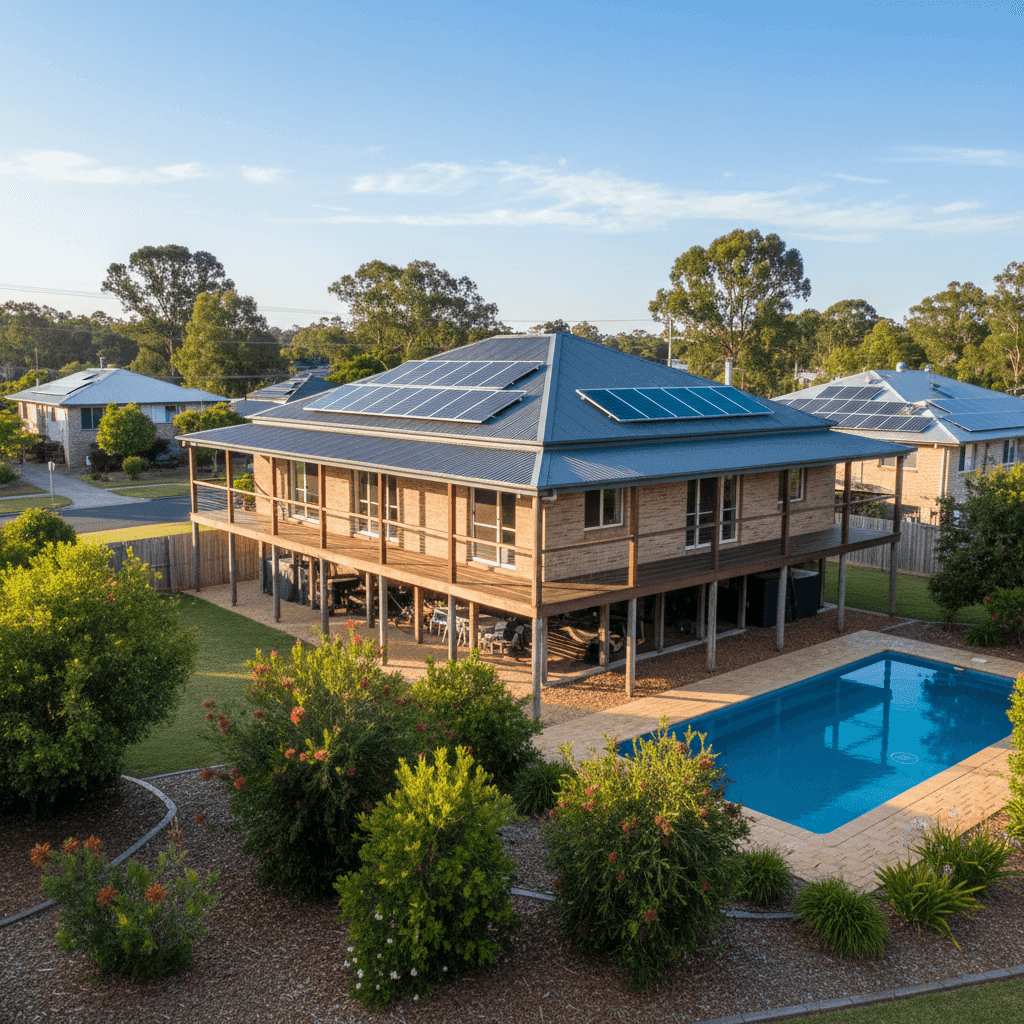
Cooperabung is a quiet rural locality on the Mid North Coast of New South Wales, sitting within the Nambucca Valley Local Government Area. It's the kind of place where properties tend to be generous in size, well-built, and set among natural surroundings — but those same characteristics can have a significant impact on what you pay for home insurance. This article breaks down a real home and contents insurance quote for a four-bedroom, three-bathroom free standing home in Cooperabung, examines whether the premium is reasonable, and offers practical guidance for local homeowners looking to get better value on their cover.
---
Is This Quote Fair?
The quote in question comes in at $8,876 per year (or $869/month) for a combined home and contents policy. The building is insured for $1,420,000, with $110,000 in contents cover, and both the building and contents excess are set at $2,000.
Our price rating for this quote is Expensive — Above Average. That's not a label we apply lightly, and it's worth understanding what's driving it.
Compared to the NSW state average of $3,801/year, this premium is more than double what most New South Wales homeowners pay. Against the national average of $2,965/year, it's nearly three times the typical cost Australians pay for home and contents insurance. Even when you account for the elevated sum insured — $1,420,000 for the building alone is well above average — the premium still sits at the higher end of the spectrum.
That said, "expensive" doesn't necessarily mean "wrong." Several features of this property create genuine risk factors that insurers price accordingly. The question is whether the homeowner is getting competitive value, or whether shopping around could yield meaningful savings.
---
How Cooperabung Compares
Without suburb-level data specific to postcode 2441, we can draw on the broader LGA and state context to understand where Cooperabung sits. You can explore available local data on the Cooperabung insurance stats page.
Here's how the benchmarks stack up:
| Benchmark | Average Premium |
|---|---|
| This Quote | $8,876/yr |
| Nambucca Valley LGA Average | $5,445/yr |
| NSW State Average | $3,801/yr |
| NSW State Median | $3,410/yr |
| National Average | $2,965/yr |
| National Median | $2,716/yr |
Even within the Nambucca Valley LGA — which already carries a higher-than-average premium — this quote sits 63% above the local average. The LGA average of $5,445/year already reflects the elevated risk profile of properties in this region, including flood-prone areas, rural fire risk, and the general cost of insuring larger rural and semi-rural homes. The fact that this quote exceeds even that benchmark is a signal that homeowners should absolutely seek comparison quotes before renewing.
---
Property Features That Affect Your Premium
Several characteristics of this property have a direct bearing on the cost of insurance. Understanding them helps explain the premium — and may highlight areas where savings are possible.
Elevated Construction on Stumps
The home is elevated by at least one metre on a stump foundation, which is common in flood-prone or moisture-prone regions of coastal NSW. Elevated homes can attract higher premiums due to the increased cost of repairs, particularly for flooring, underfloor structures, and access during a claim.
Double Brick Walls and Colorbond Roof
Double brick construction is generally viewed favourably by insurers — it's durable, fire-resistant, and structurally sound. A steel Colorbond roof is similarly regarded as a robust, low-maintenance material. These features may offer some premium offset, but they also reflect a high-quality build that costs more to repair or replace, which is factored into the $1,420,000 sum insured.
Large Building Footprint (286 sqm)
At 286 square metres, this is a substantial home. Rebuild costs scale with size, and a larger footprint means higher material and labour costs in the event of a total loss — directly influencing the sum insured and, in turn, the premium.
Swimming Pool
Pools add liability risk and are an additional asset to insure. Most insurers include pool cover within the building policy, but the presence of a pool can nudge premiums upward.
Solar Panels
Solar panel systems are increasingly common on Australian homes, but they represent a significant asset — often worth $10,000–$30,000 or more. Insurers typically cover panels as part of the building, and their replacement cost is factored into the sum insured.
Ducted Climate Control
Ducted air conditioning systems are expensive to repair or replace and are treated as part of the building's fixed assets. Their inclusion in the building sum insured contributes to the overall premium.
Timber and Laminate Flooring
Timber and laminate floors are more susceptible to water damage than tile alternatives, and more expensive to restore. Given the elevated construction and the region's proximity to flood-risk areas, this is a relevant consideration for insurers.
---
Tips for Homeowners in Cooperabung
1. Review Your Sum Insured Carefully
At $1,420,000, the building sum insured is substantial. It's worth getting an independent building replacement cost estimate to ensure you're neither underinsured nor paying premiums on an inflated figure. Use a quantity surveyor or an online rebuild calculator as a starting point.
2. Compare Quotes Annually — Don't Auto-Renew
The gap between this premium and both the LGA and state averages suggests there may be competitive alternatives available. Insurance pricing varies significantly between providers, and loyalty rarely pays. Comparing quotes at renewal time is one of the most effective ways to reduce your premium.
3. Consider Your Excess Level
Both the building and contents excesses are set at $2,000. Opting for a higher voluntary excess — say, $2,500 or $3,000 — can meaningfully reduce your annual premium. Just ensure you can comfortably cover the excess amount out of pocket if you need to make a claim.
4. Confirm What's Included for Pools and Solar
Given the presence of both a swimming pool and solar panels, confirm with your insurer exactly what is and isn't covered. Some policies have specific sub-limits or exclusions for solar panels, and pool liability cover can vary. Knowing your policy inside out avoids nasty surprises at claim time.
---
Ready to Compare?
If you're a homeowner in Cooperabung or the surrounding Mid North Coast region, it pays to shop around. CoverClub makes it easy to compare home and contents insurance quotes from multiple Australian insurers in one place — so you can be confident you're getting the right cover at a competitive price.
Get a home insurance quote today at CoverClub and see how much you could save.