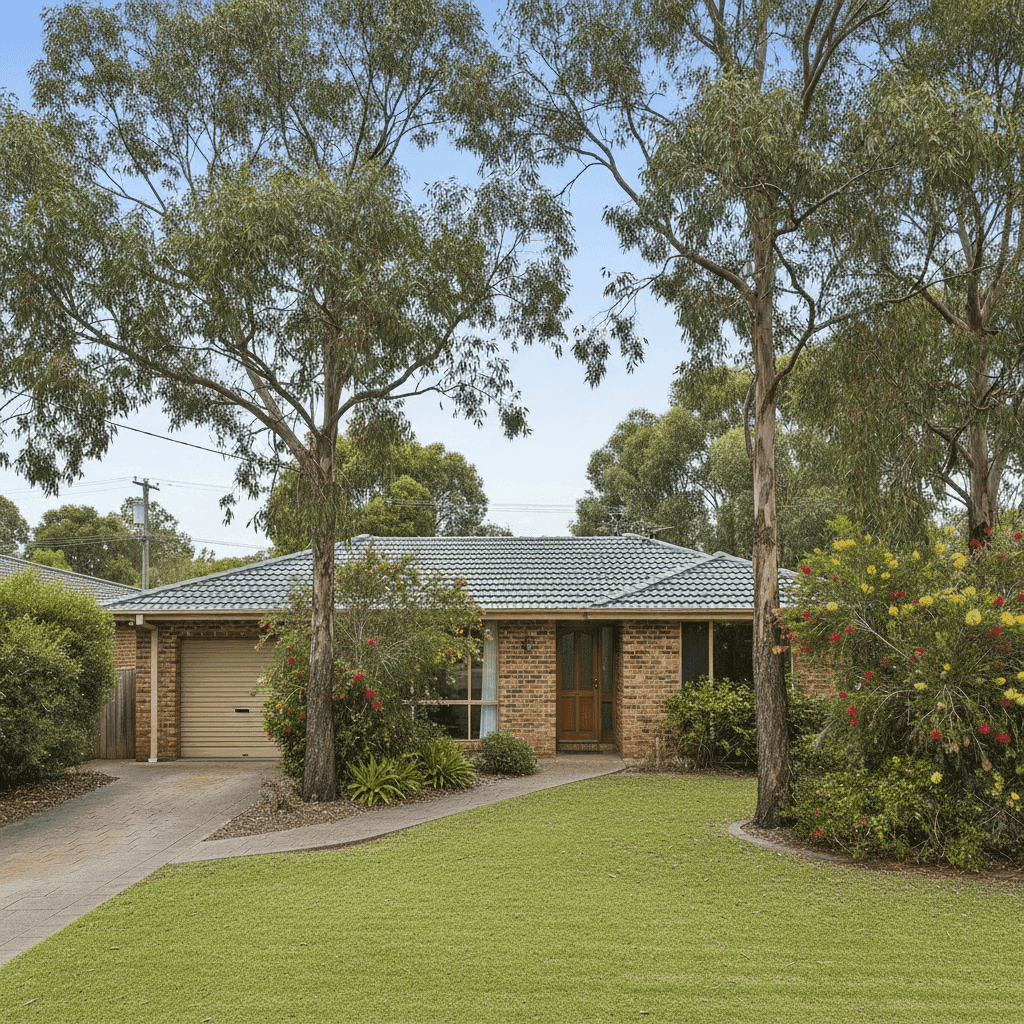
If you own a free standing home in Cooranbong, NSW 2265, you've probably wondered whether you're paying a fair price for building insurance — or quietly overpaying without realising it. Nestled in the Lake Macquarie local government area, Cooranbong is a leafy, semi-rural suburb that attracts families and tree-changers alike. But like any suburb, its insurance costs are shaped by a unique mix of local risk factors, property characteristics, and market competition.
In this article, we break down a recent building-only insurance quote of $1,805 per year for a 3-bedroom, brick veneer home in Cooranbong — and put it under the microscope against suburb, state, and national benchmarks.
---
Is This Quote Fair?
The short answer: yes, broadly speaking. This quote has been rated Fair (Around Average), which means it sits comfortably within the typical range for the area — not a bargain, but not a cause for alarm either.
At $1,805 per year (or $176/month), the premium lands just below the Cooranbong suburb average of $1,913/yr and also under the suburb median of $1,866/yr. In fact, it falls between the 25th percentile ($1,721/yr) and the 75th percentile ($1,938/yr), which confirms it's sitting squarely in the middle of the market for this postcode.
For a building sum insured of $400,000 — a reasonable figure for a 130 sqm home built in 1976 — this works out to roughly $0.45 per $1,000 of cover per year, which is a reasonable rate given the property's age and construction type.
The building excess is set at $2,000, which is on the higher end of the standard range. A higher excess typically helps bring the premium down, so if you're comparing quotes, keep an eye on how excess levels differ between policies — a lower premium isn't always better value if it comes with a steep excess.
---
How Cooranbong Compares
To understand whether this quote represents good value, it helps to zoom out and look at the broader picture.
| Benchmark | Premium |
|---|---|
| This quote | $1,805/yr |
| Cooranbong suburb average | $1,913/yr |
| Cooranbong suburb median | $1,866/yr |
| LGA (Cessnock) average | $2,462/yr |
| NSW state average | $9,528/yr |
| NSW state median | $3,770/yr |
| National average | $5,347/yr |
| National median | $2,764/yr |
The figures above tell a compelling story. Cooranbong homeowners are paying significantly less than the broader NSW state average of $9,528/yr — though it's worth noting that NSW state averages are heavily skewed by high-risk and high-value properties, particularly in flood-prone or coastal areas. The state median of $3,770/yr is a more useful reference point, and this quote sits well below that figure.
Compared to the national median of $2,764/yr, Cooranbong's pricing looks quite competitive. The suburb's average of $1,913/yr is nearly $850 less than the national median — a meaningful difference that reflects the area's relatively lower risk profile compared to many parts of Australia.
Interestingly, the Cessnock LGA average of $2,462/yr is noticeably higher than the Cooranbong suburb average. This suggests that risk and pricing can vary considerably even within the same local government area, reinforcing the importance of suburb-level comparisons rather than relying on broad regional figures.
---
Property Features That Affect Your Premium
Every property is different, and insurers weigh up a range of physical characteristics when calculating your premium. Here's how the key features of this particular home factor in:
- Brick veneer walls: Brick veneer is one of the most common external wall types in Australia and is generally viewed favourably by insurers. It offers solid fire resistance and durability, which can contribute to more competitive premiums compared to timber-clad homes.
- Tiled roof: Like brick veneer, a tiled roof is a well-regarded construction type. Tiles are durable and perform well in most weather conditions, though they can be more expensive to repair after hail events. Overall, this is a neutral-to-positive factor for pricing.
- Stump foundation: Homes on stumps (also known as pier foundations) are common in older Australian properties and can be more vulnerable to movement, subsidence, or damage from moisture and pests over time. Insurers may factor this in, particularly for a home built in 1976.
- Construction year (1976): Older homes can attract slightly higher premiums due to the potential for ageing infrastructure — think older wiring, plumbing, and roofing materials. However, a well-maintained 1976 home in a low-risk suburb like Cooranbong is unlikely to face significant loading on this basis alone.
- 130 sqm building size: This is a modest footprint, which generally keeps rebuild costs — and therefore premiums — lower than larger properties.
- No pool, no solar panels, no ducted climate control: The absence of these features simplifies the risk profile. Pools add liability considerations, solar panels increase roof complexity, and ducted systems can be costly to repair or replace. Not having them is a small but genuine advantage when it comes to keeping premiums manageable.
---
Tips for Homeowners in Cooranbong
Whether you're renewing your policy or shopping around for the first time, here are some practical steps to make sure you're getting the best deal.
- Review your sum insured annually. Construction costs have risen sharply in recent years, and a sum insured that was adequate two or three years ago may no longer cover a full rebuild. Use an online building cost calculator or speak with a quantity surveyor to make sure $400,000 still reflects realistic rebuild costs for your home.
- Consider your excess carefully. This quote carries a $2,000 building excess. While a higher excess reduces your premium, it also means more out-of-pocket costs if you need to make a claim. Think about what you could comfortably afford to pay in the event of damage, and adjust your excess accordingly.
- Check for bushfire and storm risk. Cooranbong and the surrounding Lake Macquarie area can be affected by bushfire risk and occasional severe storms. Make sure your policy covers storm damage, fallen trees, and bushfire — and check whether any specific exclusions or conditions apply to your property.
- Compare at least three quotes before renewing. Loyalty doesn't always pay in insurance. Premiums can vary significantly between providers for the same level of cover, and the market changes year to year. Using a comparison tool like CoverClub makes it easy to see what multiple insurers would charge for your specific property.
---
Ready to Compare?
Whether this quote stacks up or you think there's room to do better, the smartest move is to compare. At CoverClub, you can enter your property details and instantly see how quotes from multiple insurers compare — all in one place, with no obligation. Get your personalised home insurance quote today and make sure you're not paying more than you need to for your Cooranbong home.