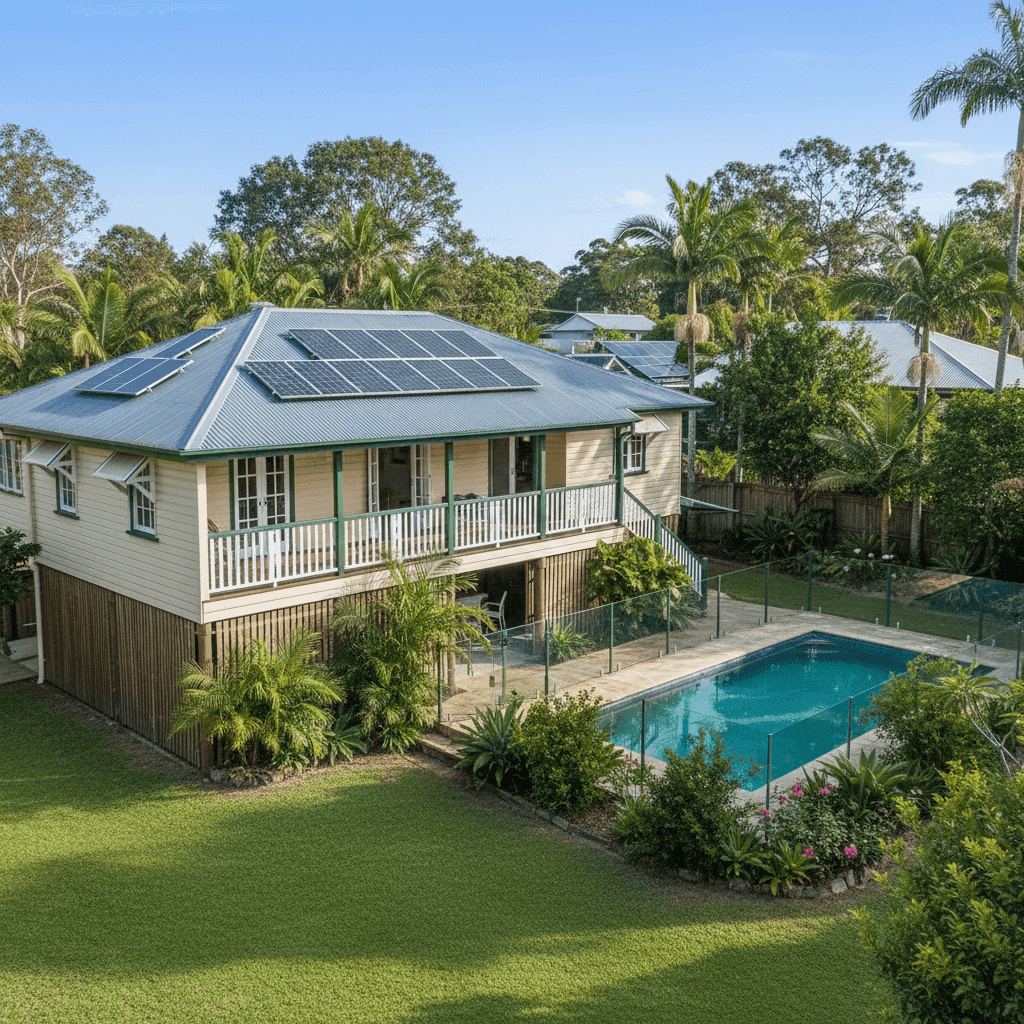
Nestled in the lush hinterland behind the Noosa region, Cooroibah is a quiet, leafy suburb in Queensland's postcode 4565. It's home to a mix of character properties and modern builds — many sitting on generous blocks with all the extras that make Queensland living so appealing. This article breaks down a real building insurance quote for a four-bedroom free standing home in Cooroibah, examines how it stacks up against local, state, and national benchmarks, and offers practical guidance for homeowners in the area.
---
Is This Quote Fair?
The quote in question comes in at $3,765 per year (or $354/month) for building-only cover on a 214 sqm weatherboard home, with a $1,000 building excess and a sum insured of $734,000.
Our price rating for this quote is FAIR — Around Average, and the data backs that up. Within Cooroibah itself, the suburb average sits at $3,933/year, meaning this quote is actually tracking slightly below the local average — a modest but welcome saving of around $168 annually. It also falls comfortably within the middle band of the market, sitting between the 25th percentile ($2,637/yr) and the 75th percentile ($4,574/yr) for the suburb.
In plain terms: this isn't a bargain-basement price, but it's not an outlier either. For a property with this profile — timber construction, stumps foundation, a pool, and solar panels — landing near the suburb average is a reasonable outcome.
---
How Cooroibah Compares
To put this quote in broader context, it helps to look beyond the suburb. Here's how the numbers line up:
| Benchmark | Average Premium | Median Premium |
|---|---|---|
| Cooroibah (suburb) | $3,933/yr | $2,996/yr |
| Queensland (state) | $9,129/yr | $3,903/yr |
| National | $5,347/yr | $2,764/yr |
| Noosa LGA | $18,770/yr | — |
A few things stand out immediately. The Noosa LGA average of $18,770/year is extraordinarily high — this figure is heavily influenced by coastal and waterfront properties within the LGA that carry significant flood, storm surge, and cyclone-adjacent risk. Cooroibah, being inland, sits in a far more favourable risk position than many of its LGA neighbours.
The Queensland state average of $9,129/year is also dramatically higher than this quote, though the state median of $3,903/year tells a more nuanced story. Queensland's average is pulled upward by high-risk coastal and far-north postcodes — areas prone to cyclones, flooding, and storm damage. Cooroibah is not classified as a cyclone risk area, which is a meaningful factor keeping premiums more manageable here.
Compared to the national average of $5,347/year, this quote is about 30% cheaper. Against the national median of $2,764/year, it's somewhat higher — but that's consistent with Queensland's elevated baseline risk compared to southern states.
You can explore more local data on the Cooroibah suburb stats page, the Queensland state overview, or the national home insurance statistics.
---
Property Features That Affect Your Premium
Several characteristics of this property have a direct bearing on what insurers charge. Understanding them helps you anticipate costs — and potentially address them.
Weatherboard Timber Walls
Weatherboard construction is common in Queensland, particularly in homes built before and around the early 2000s. However, timber-framed and clad homes are generally considered higher risk than brick veneer or double brick by insurers — they're more susceptible to fire spread and can be more costly to repair or replace. This likely contributes to a moderate uplift in premium compared to a masonry equivalent.
Steel / Colorbond Roof
Colorbond roofing is a popular and practical choice in Queensland's climate. It performs well in heat and rain, and insurers generally view it favourably. It's durable, relatively low-maintenance, and less prone to storm damage than older tile alternatives — a mild positive for your premium.
Stumps Foundation
Homes on stumps (also called raised or high-set homes) are a Queensland classic, offering natural ventilation and some protection from surface water. From an insurance perspective, the foundation type itself isn't typically a major premium driver, but it does affect rebuild costs and complexity, which flows through to the sum insured.
Swimming Pool
A pool adds to the sum insured calculation and introduces some liability considerations. It's a factor insurers account for, and it's important to ensure your building cover adequately includes pool structures, fencing, and associated equipment.
Solar Panels
With 214 sqm of roof space and solar panels installed, there's meaningful equipment value to protect. Many standard building policies cover fixed solar systems as part of the building, but it's worth confirming this with your insurer — particularly for inverters and mounting systems, which can be costly to replace after storm or hail events.
2007 Construction
A build year of 2007 puts this home in a relatively modern bracket. Post-2000 construction in Queensland generally meets higher building code standards, which can positively influence risk assessments. The home is unlikely to have the ageing wiring or plumbing issues that affect older properties.
---
Tips for Homeowners in Cooroibah
1. Review your sum insured regularly With a sum insured of $734,000 for a 214 sqm home, it's important to ensure this figure reflects current rebuild costs — not market value. Construction costs have risen significantly in recent years. Underinsurance is one of the most common and costly mistakes homeowners make. Use an independent building cost calculator or speak to a quantity surveyor to validate your figure annually.
2. Confirm solar panels are covered As solar systems age or are upgraded, their replacement value changes. Check your policy wording explicitly for solar panel coverage, including storm, hail, and accidental damage. If your panels aren't clearly covered, ask your insurer about adding them or consider a specialist policy.
3. Shop around — even a "fair" price can be beaten A FAIR rating means you're around the market average, but that doesn't mean there isn't a better deal available. With premiums varying significantly across insurers for the same property, comparing quotes can realistically save hundreds of dollars per year without reducing your level of cover.
4. Understand what's excluded for pools and outbuildings Pools, fencing, garden sheds, and other structures are treated differently across policies. Some insurers include them automatically up to a limit; others require you to specify them. Review your policy schedule carefully to avoid nasty surprises at claim time.
---
Compare Your Home Insurance with CoverClub
Whether you're renewing your current policy or shopping around for the first time, CoverClub makes it easy to see how your premium compares and find a better deal. Get a home insurance quote today and see what Cooroibah homeowners are actually paying — so you can make a confident, informed decision.