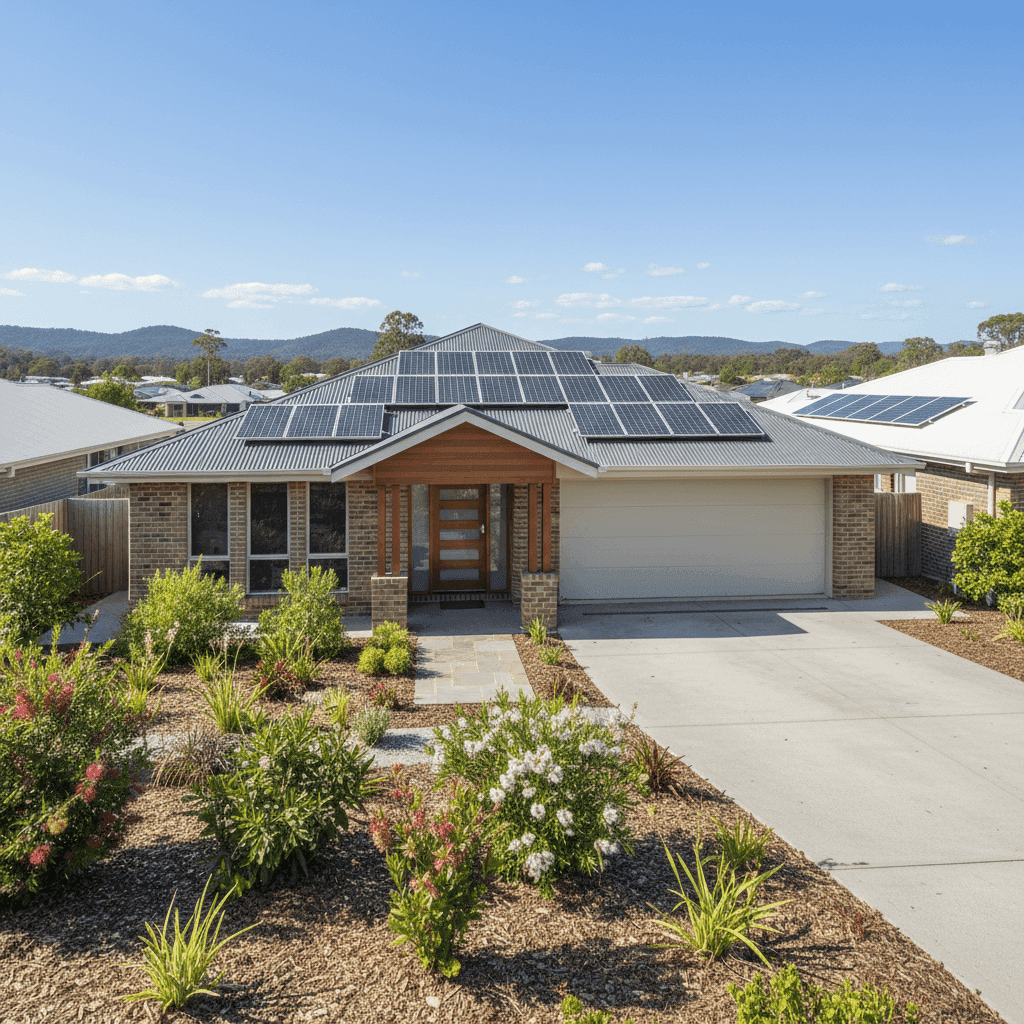
If you own a free standing home in Cooroy, QLD 4563, you're probably wondering whether your home insurance premium is reasonable — or whether you're paying more than you should. This article breaks down a real home and contents insurance quote for a four-bedroom, two-bathroom brick veneer home in Cooroy, comparing it against suburb, state, and national benchmarks to help you make a more informed decision.
---
Is This Quote Fair?
The annual premium for this property came in at $2,543 per year (or $244 per month), covering both building ($598,000 sum insured) and contents ($50,000), each with a $500 excess.
Our pricing engine has rated this quote as FAIR — Around Average, and the data backs that up. Within the Cooroy suburb, the average premium sits at $2,328/yr and the median at $2,652/yr. At $2,543, this quote lands neatly between those two figures — squarely in the middle of what most Cooroy homeowners are paying for comparable cover.
To put it in broader context, the suburb's 25th percentile is $1,509/yr and the 75th percentile is $3,012/yr. That means roughly half of all Cooroy quotes fall between those two numbers, and this one sits comfortably within that band. It's not the cheapest available, but it's far from the most expensive either.
The verdict? This is a reasonable quote — not a bargain, but not a rip-off. There may still be room to shop around, but you're not being significantly overcharged.
---
How Cooroy Compares
One of the most striking things about this quote is just how well Cooroy compares to the rest of Queensland — and Australia more broadly.
| Benchmark | Average Premium |
|---|---|
| Cooroy (suburb average) | $2,328/yr |
| Cooroy (suburb median) | $2,652/yr |
| Gympie LGA average | $5,581/yr |
| QLD state average | $9,129/yr |
| National average | $5,347/yr |
| National median | $2,764/yr |
The numbers tell a clear story. The QLD state average premium of $9,129/yr is dramatically higher than what Cooroy residents typically pay — largely because Queensland's insurance market is heavily influenced by high-risk cyclone and flood zones in the north of the state, which push averages up significantly. Cooroy, situated in the Sunshine Coast hinterland, is not classified as a cyclone risk area, which is a meaningful advantage when it comes to premium pricing.
Even against the national average of $5,347/yr, Cooroy looks very affordable. The suburb median of $2,652/yr is well below the national median of $2,764/yr, suggesting that homeowners in this area generally enjoy competitive insurance pricing relative to the rest of the country.
Interestingly, the Gympie LGA average of $5,581/yr is considerably higher than Cooroy's suburb average, which suggests that other parts of the Gympie local government area carry more risk — whether from flood, bushfire, or other factors — pulling the LGA figure upward. Cooroy appears to be one of the more favourably priced pockets within the region.
You can explore more detailed pricing data for this area on the Cooroy suburb stats page.
> Note: The suburb sample size for Cooroy is 21 quotes, which is a reasonable dataset but still relatively small. Averages may shift as more data comes in.
---
Property Features That Affect Your Premium
Several characteristics of this particular property influence how insurers price the risk — some favourably, others less so.
Brick Veneer Walls & Colorbond Roof Brick veneer construction is generally viewed positively by insurers. It offers solid fire resistance and structural durability compared to lighter cladding materials. Paired with a steel Colorbond roof — a popular and resilient choice in Queensland — this home presents a relatively low-risk construction profile. Colorbond roofing is particularly valued for its resistance to corrosion, heat, and wind.
Slab Foundation A concrete slab foundation is standard for homes built in Queensland's subtropical climate and is generally considered low-risk by insurers. It avoids the moisture and pest vulnerabilities sometimes associated with raised timber floors.
Built in 2010 At around 15 years old, this home is modern enough to meet contemporary building codes but old enough that some components — roofing, plumbing, electrical — may warrant attention over the coming years. Homes built post-2000 generally attract better premiums than older stock.
Solar Panels This property has solar panels installed, which are typically covered under building insurance (as they're considered a fixed fixture). Homeowners should confirm with their insurer that the panels are included in the building sum insured and that their value is adequately reflected in the $598,000 coverage amount.
Ducted Climate Control Ducted air conditioning is a significant fixed asset and should be factored into the building sum insured. It's worth checking whether your policy explicitly covers HVAC systems for mechanical breakdown or accidental damage.
No Pool The absence of a swimming pool removes a common liability risk from the equation — pools can add complexity to contents and liability cover, so this simplifies the policy somewhat.
Tile Flooring Tiled flooring is durable and less susceptible to water damage than carpet or timber, which may marginally reduce the risk profile for contents claims related to water ingress.
---
Tips for Homeowners in Cooroy
1. Review your building sum insured regularly With a 214 sqm home built in 2010 and features like solar panels and ducted air conditioning, it's important to ensure your $598,000 sum insured reflects current rebuild costs — not just the market value of your home. Construction costs in Queensland have risen significantly in recent years, and being underinsured can be costly at claim time.
2. Consider raising your excess to reduce your premium Both the building and contents excess on this policy sit at $500. If you have the financial buffer to absorb a higher out-of-pocket cost in the event of a claim, increasing your excess to $1,000 or more can noticeably reduce your annual premium.
3. Shop around at renewal time Even if your current quote is rated "fair," that doesn't mean it's the best available. Insurers reprice risk differently, and a competing insurer may offer comparable cover for less. Use a comparison tool like CoverClub to benchmark your renewal quote before you commit.
4. Check your contents coverage is sufficient $50,000 in contents cover is on the modest side for a four-bedroom home. Take stock of your furniture, appliances, electronics, and valuables — it's easy to underestimate the replacement cost of everything inside your home. A contents underinsurance shortfall can be just as damaging as a building one.
---
Compare Your Own Quote
Whether you're a first-time buyer or a long-term Cooroy resident reviewing your renewal, it pays to know where your premium sits relative to the market. CoverClub makes it easy to compare home and contents insurance quotes from multiple insurers in one place — so you can see whether you're getting a fair deal or leaving money on the table.