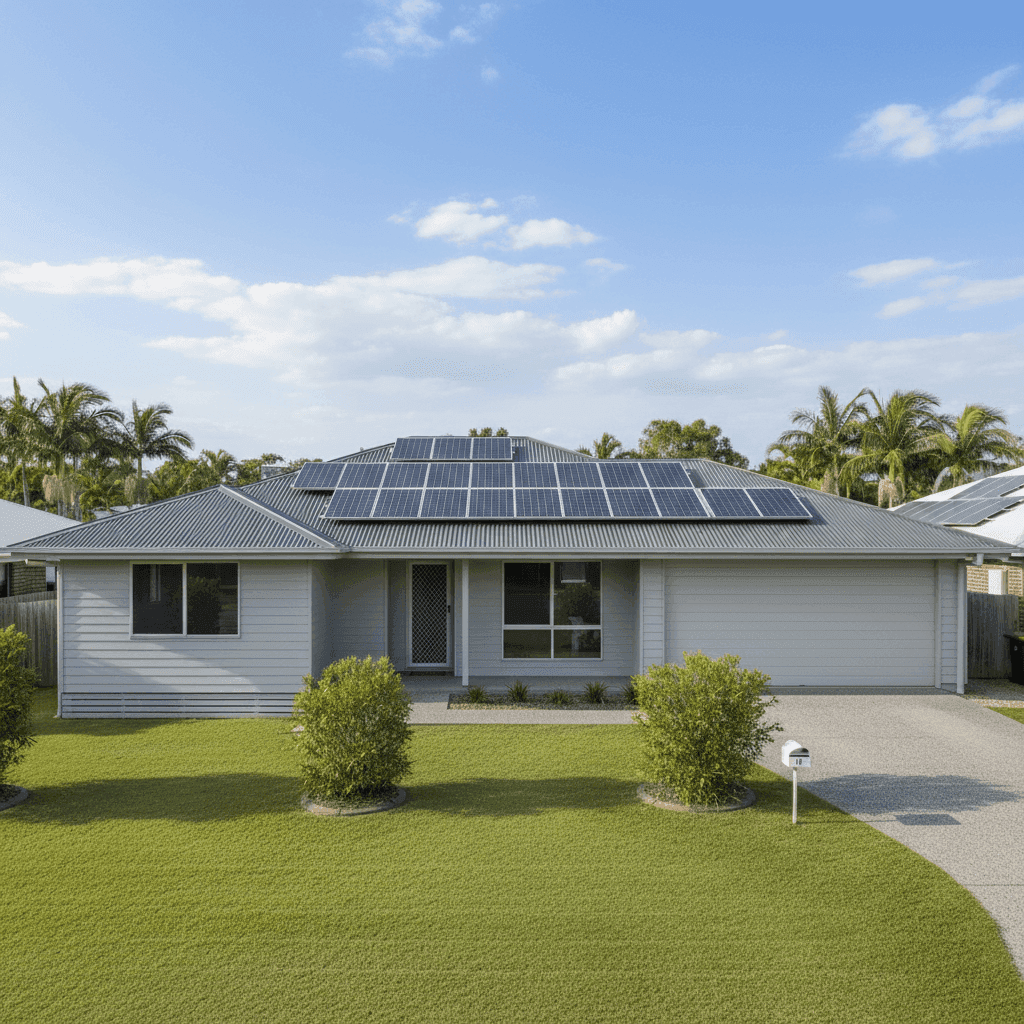
If you own or are considering buying a free standing home in Coral Cove, QLD 4670, understanding what you should expect to pay for home and contents insurance is one of the smartest financial moves you can make. This coastal suburb in the Bundaberg region has its own unique risk profile, and premiums here can vary dramatically depending on the insurer, the property's characteristics, and the level of cover you choose.
In this article, we break down a real home and contents insurance quote for a 3-bedroom, 2-bathroom free standing home in Coral Cove — and put it into context against suburb, state, and national benchmarks.
---
Is This Quote Fair?
The quote in question comes in at $1,676 per year (or roughly $166 per month), covering a building sum insured of $550,000 and contents valued at $50,000. The building excess is set at $3,000 and the contents excess at $1,000.
Our pricing engine rates this quote as CHEAP — below average for the area. That's a meaningful finding. In a suburb where insurance costs can be significant due to Queensland's exposure to weather events, landing a premium well under the local going rate is a genuine win for the homeowner.
To put it plainly: this quote is substantially cheaper than what most Coral Cove residents are paying. Based on a sample of 10 quotes in postcode 4670, the suburb average sits at $4,117 per year and the median at $4,021 per year. Even the 25th percentile — meaning the cheapest quarter of quotes — comes in at $3,749 per year. This quote at $1,676 sits well below that threshold, making it an exceptionally competitive result.
It's worth noting that a higher excess (particularly the $3,000 building excess) does play a role in reducing the annual premium. Homeowners should weigh up whether they're comfortable covering the first $3,000 of any building claim out of pocket in exchange for the lower ongoing cost.
---
How Coral Cove Compares
To fully appreciate how this quote stacks up, it helps to zoom out and look at the broader picture. You can explore the full data on the Coral Cove suburb stats page.
| Benchmark | Premium |
|---|---|
| This Quote | $1,676/yr |
| Coral Cove Suburb Average | $4,117/yr |
| Coral Cove Suburb Median | $4,021/yr |
| Coral Cove 25th Percentile | $3,749/yr |
| QLD State Average | $9,129/yr |
| QLD State Median | $3,903/yr |
| National Average | $5,347/yr |
| National Median | $2,764/yr |
The figures tell a compelling story. Queensland's state average premium of $9,129 per year is one of the highest in the country — a reflection of the state's exposure to cyclones, flooding, and severe storms across many regions. However, the QLD state median of $3,903 paints a more moderate picture, suggesting a smaller number of very high-risk properties are pulling the average upward.
At the national level, the average premium is $5,347 per year, while the median sits at $2,764 — again, with the average skewed by high-risk coastal and flood-prone areas around Australia.
This quote at $1,676 sits below even the national median, which is a strong result for a Queensland coastal property with a $550,000 building sum insured.
---
Property Features That Affect Your Premium
Several characteristics of this particular home work in favour of a lower premium:
Newly Built (2025)
A construction year of 2025 means this is essentially a brand-new home. Insurers typically reward newer builds with lower premiums because modern construction standards reduce the likelihood of structural failure, electrical faults, and water damage. Building codes have also improved significantly in recent decades, meaning new homes are generally better equipped to handle adverse weather.
Hardiplank / Hardiflex External Walls
Fibre cement cladding such as Hardiplank and Hardiflex is well regarded by insurers for its durability and fire resistance. Unlike timber weatherboards, it doesn't rot or warp easily, and it holds up well in humid coastal climates like Coral Cove's.
Steel / Colorbond Roof
Colorbond steel roofing is a popular choice in Queensland for good reason — it's lightweight, durable, and performs well in high winds. Insurers generally view Colorbond roofs favourably compared to older tile roofs, which can crack or lift in storms.
Concrete Slab Foundation
A slab foundation is considered one of the more stable and insurer-friendly options. It reduces the risk of subfloor damage from moisture and pests, and is a common choice for modern Queensland homes.
Solar Panels
This property includes solar panels, which add a modest amount to the replacement cost but are typically covered under a home and contents policy. It's worth confirming with your insurer that solar panels are explicitly included in your building sum insured to avoid any gaps in cover.
No Cyclone Risk Classification
Despite being in coastal Queensland, this property is not classified as being in a cyclone risk area, which has a meaningful impact on premiums. Cyclone-rated areas — particularly in North Queensland — can attract significantly higher premiums due to the increased risk of catastrophic wind damage.
---
Tips for Homeowners in Coral Cove
1. Review Your Sum Insured Annually
With a building sum insured of $550,000, it's important to ensure this figure reflects the current cost to rebuild your home — not its market value. Construction costs have risen sharply in recent years, and being underinsured can leave you significantly out of pocket after a major claim. Use a building cost calculator or speak with a quantity surveyor to validate your figure each year.
2. Understand Your Excess Before You Claim
This policy carries a $3,000 building excess, which is on the higher end. While it contributes to the lower premium, it means smaller claims may not be worth lodging. Factor this into your decision-making and consider whether a lower excess (at a slightly higher premium) might better suit your financial situation.
3. Confirm Solar Panel Coverage
Solar panels are increasingly common on Queensland homes, but not all policies cover them automatically as part of the building. Check your Product Disclosure Statement (PDS) carefully to confirm your panels — and any associated inverter and battery storage — are included in your cover.
4. Compare Quotes at Renewal Time
Even if you're happy with your current insurer, it pays to shop around at renewal. The insurance market is competitive, and as this quote demonstrates, there can be enormous variation in what different insurers will charge for the same property. Loyalty doesn't always pay in insurance.
---
Ready to Compare Home Insurance in Coral Cove?
Whether you're a first-time buyer or a long-term homeowner, comparing home and contents insurance quotes is one of the easiest ways to save money without sacrificing cover. CoverClub makes it simple to see what multiple insurers would charge for your property — in minutes.
Get a home insurance quote for your Coral Cove property today and find out if you're paying more than you need to.