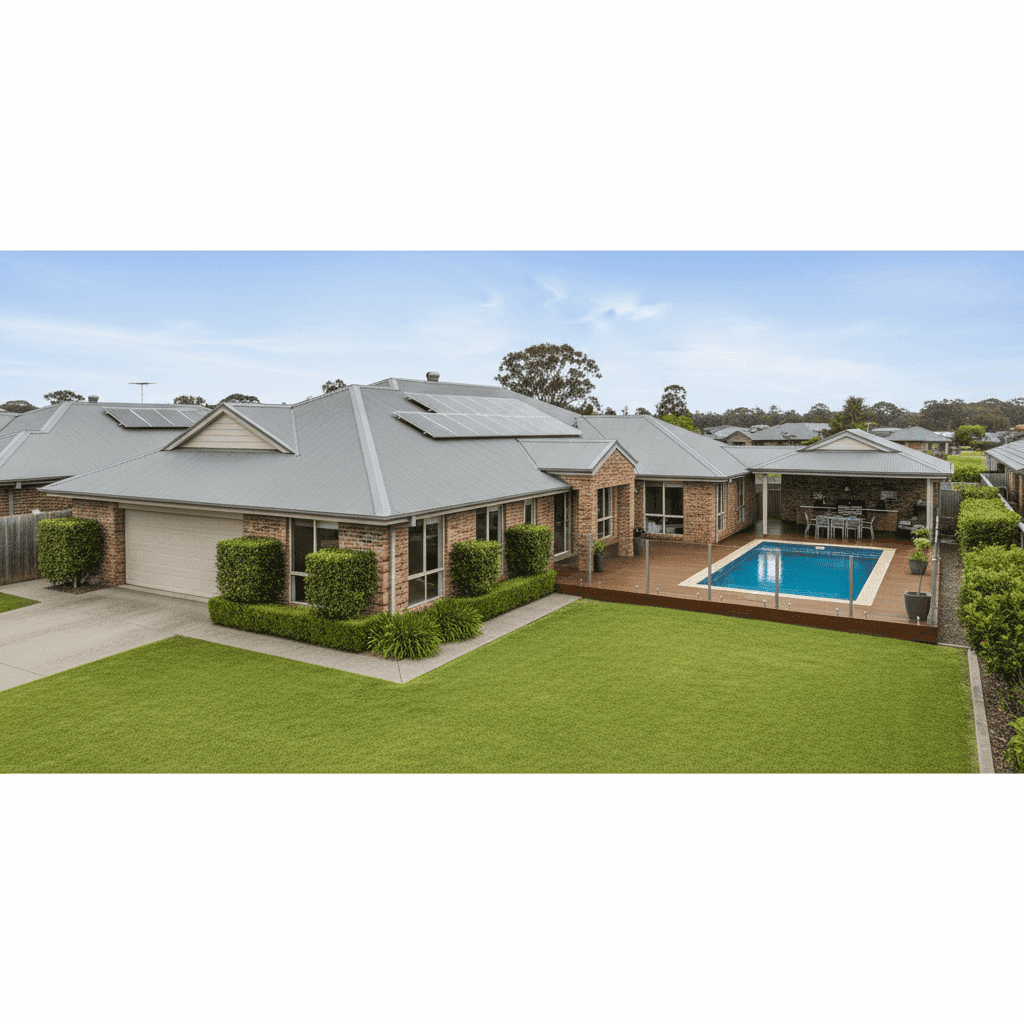
Corangula is a quiet locality in the Port Macquarie-Hastings region of New South Wales, and like much of coastal and semi-rural NSW, home insurance here carries a price tag that can raise eyebrows. This article takes a close look at a real home and contents insurance quote for a five-bedroom, free standing home in Corangula (NSW 2440) — breaking down what's driving the cost, how it stacks up against state and national benchmarks, and what you can do to make sure you're getting value for money.
---
Is This Quote Fair?
The annual premium for this property comes in at $8,707 per year (or $828 per month), covering a building sum insured of $1,199,000 and contents valued at $100,000. Both the building and contents excess are set at $1,000.
Our price rating for this quote is Expensive (Above Average) — and the data backs that up. The NSW state average premium sits at $3,801 per year, with a median of $3,410. Nationally, the average is even lower at $2,965, with a median of $2,716. On the face of it, this quote is more than double the NSW average and nearly three times the national average.
However, context matters enormously here. A few key factors explain why this premium is elevated:
- High building sum insured: At $1,199,000, the rebuild cost estimate is substantial. Larger, higher-quality homes naturally attract higher premiums — and this is one of the single biggest levers in any home insurance calculation.
- Above average fittings quality: Insurers price replacement costs based on the quality of finishes. Above-average fittings mean a more expensive rebuild, which flows directly into the premium.
- Regional risk profile: The Port Macquarie-Hastings LGA has an average premium of $7,001 per year — already well above the state average — reflecting the area's exposure to weather-related risks including storms, flooding, and bushfire.
So while $8,707 is undeniably at the higher end, it's not entirely out of step with what similarly specified homes in this region tend to attract.
---
How Corangula Compares
Putting the numbers side by side tells a clear story:
| Benchmark | Annual Premium |
|---|---|
| This quote | $8,707 |
| LGA average (Port Macquarie-Hastings) | $7,001 |
| NSW average | $3,801 |
| NSW median | $3,410 |
| National average | $2,965 |
| National median | $2,716 |
Note: suburb-level data for Corangula is not currently available due to limited sample size, so the LGA average is the most relevant local comparison. You can explore broader Corangula and NSW 2440 insurance statistics as more data becomes available.
Even against the LGA average of $7,001, this quote sits approximately $1,700 higher — a meaningful gap that warrants shopping around. That said, the LGA average covers a wide range of property types and sizes, many of which are smaller and less valuable than this particular home. When you account for the 286 sqm floor area, five bedrooms, three bathrooms, and premium fittings, the comparison becomes more nuanced.
---
Property Features That Affect Your Premium
Several characteristics of this property have a direct bearing on what insurers charge. Here's how each one plays a role:
Brick veneer construction and Colorbond roof Brick veneer walls are generally viewed favourably by insurers — they're durable, fire-resistant, and relatively straightforward to repair. A steel Colorbond roof is similarly well-regarded for its longevity and resistance to weather damage. Together, these materials typically attract more competitive premiums compared to timber-framed or older construction types.
Stump foundation Homes on stumps can be more vulnerable to movement, particularly in areas with reactive soils or flood risk. Some insurers may apply a loading for this foundation type, though much depends on the specific policy terms.
Timber and laminate flooring Flooring type influences the cost of internal reinstatement. Timber and laminate floors are generally mid-to-upper range in replacement cost, which contributes to the overall contents and building valuation.
Swimming pool A pool adds liability exposure and increases the complexity of a rebuild. Most insurers factor this into the building sum insured and the overall risk assessment.
Solar panels Solar systems are increasingly common, but they add to the replacement cost of a home and can be a point of contention in claims if not properly specified. It's worth confirming with your insurer that your solar panels are explicitly covered under the building policy.
Ducted climate control Ducted air conditioning systems are expensive to replace and are typically included in the building sum insured. Their presence contributes to the higher rebuild estimate for this property.
Construction year: 1995 A home built in 1995 is relatively modern by Australian standards, which is generally positive from an insurer's perspective. It's likely to comply with building codes introduced in the late 1980s and early 1990s, reducing some structural risk concerns.
---
Tips for Homeowners in Corangula
If you're insuring a property in the Port Macquarie-Hastings area, here are four practical steps to help you manage your premium without compromising on cover:
- Review your sum insured carefully — in both directions. Over-insuring is a common and costly mistake. Use a professional building replacement cost calculator or engage a quantity surveyor to confirm your sum insured reflects actual rebuild costs, not market value. Equally, under-insuring can leave you badly exposed at claim time — so accuracy is key.
- Compare multiple insurers. The gap between the most and least expensive quotes for the same property can be substantial. Getting a quote through CoverClub lets you see how different insurers price your specific risk profile side by side.
- Ask about discounts for security and safety features. Insurers often offer reduced premiums for homes with monitored alarm systems, deadbolts, and smoke detectors. If your property has these features, make sure they're declared.
- Consider a higher excess to reduce your premium. If you have the financial buffer to absorb a larger out-of-pocket cost in the event of a claim, opting for a higher excess (say, $2,000 instead of $1,000) can meaningfully reduce your annual premium. Just make sure the saving justifies the increased exposure.
---
Ready to Compare?
Whether you're renewing your existing policy or insuring a new property, it pays to shop around — especially in a higher-risk region like Port Macquarie-Hastings. CoverClub makes it easy to compare home and contents insurance quotes from a range of Australian insurers, all in one place. Get a quote today and find out if you could be paying less for the same level of cover.