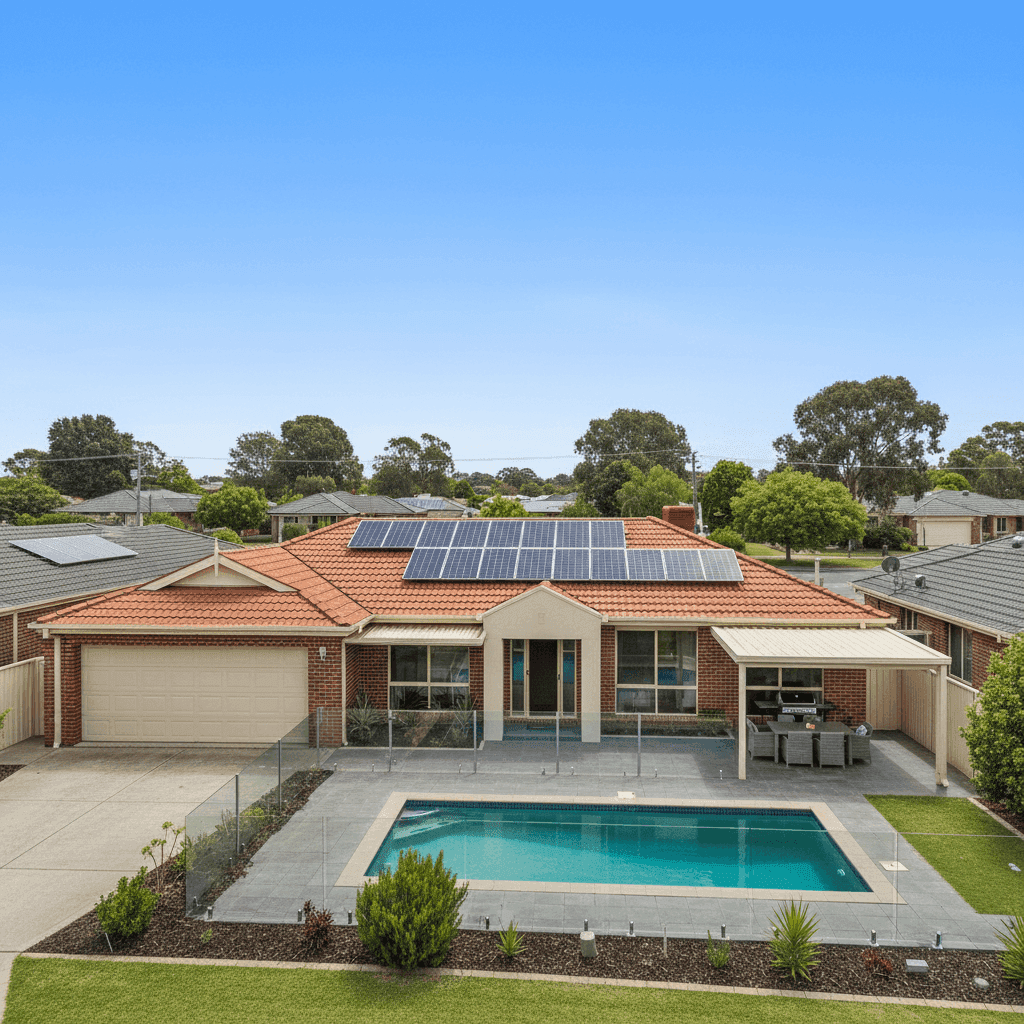
If you own a free standing home in Corio, VIC 3214, you've probably wondered whether you're paying a fair price for home insurance — or quietly overpaying. This article breaks down a real home and contents insurance quote for a three-bedroom brick veneer property in Corio, comparing it against local, state, and national benchmarks to help you make a more informed decision at renewal time.
---
Is This Quote Fair?
The quote in question sits at $1,257 per year (or around $130 per month) for combined home and contents cover, with a building sum insured of $664,000 and contents valued at $172,000. The building excess is $3,000, and the contents excess is $500.
Our price rating for this quote is FAIR — Around Average.
That assessment holds up when you look at the numbers in context. The suburb average for Corio sits at $1,357 per year, meaning this quote comes in roughly $100 below the local average — a modest but meaningful saving. It also sits just below the suburb median of $1,296, placing it in the more competitive half of quotes seen in the area.
In short: this isn't a bargain-basement price, but it's a reasonable result for the cover provided. There's still room to shop around, particularly if you're willing to adjust your excess levels or consolidate policies with a single insurer.
---
How Corio Compares
To understand whether Corio is an expensive or affordable place to insure a home, it helps to zoom out.
| Benchmark | Average Premium |
|---|---|
| Corio (suburb average) | $1,357/yr |
| Greater Geelong (LGA average) | $1,754/yr |
| Victoria (state average) | $3,000/yr |
| Australia (national average) | $5,347/yr |
The contrast is striking. Corio homeowners are paying, on average, less than half the Victorian state average — and roughly a quarter of the national average. That's a significant advantage, and it reflects the relatively lower natural hazard risk profile of this part of Geelong compared to, say, coastal or bushfire-prone regions elsewhere in Australia.
Within the suburb itself, premiums vary considerably. The 25th percentile sits at $1,025/yr, while the 75th percentile reaches $1,674/yr — a spread of nearly $650. This tells us that while many Corio homeowners are getting competitive rates, there's a meaningful chunk paying well above average, likely due to differences in sum insured, cover type, insurer choice, or property-specific risk factors.
You can explore the full breakdown of local pricing data on the Corio suburb stats page, compare it against all of Victoria, or see how it stacks up against national home insurance trends.
---
Property Features That Affect Your Premium
Every home is different, and insurers price risk based on a detailed picture of your property. Here's how the key features of this particular home influence its premium.
Brick Veneer Walls & Tiled Roof
Brick veneer construction is generally well-regarded by insurers. It offers solid fire resistance and structural durability, which tends to translate to lower premiums compared to weatherboard or timber-clad homes. Similarly, a tiled roof is considered a low-risk roofing material — more resilient to ember attack and general weather damage than corrugated iron in some contexts, though tiles can crack under hail impact. Together, these materials position the property favourably from a risk perspective.
Stump Foundation
This home sits on stumps, which is common for properties built in the 1970s across Victoria. Stump foundations can introduce some risk around subsidence and pest damage over time — particularly in areas with reactive soils or termite activity. Insurers may factor this in, especially for older homes where the stumps haven't been recently inspected or replaced.
Construction Era (1976)
Homes built in the mid-1970s are now approaching 50 years old. While many are structurally sound, older homes can carry higher rebuild costs due to the need for upgraded materials and compliance with current building codes. The building sum insured of $664,000 for a 130 sqm home reflects this — it's important to ensure this figure is regularly reviewed so you're neither underinsured nor over-paying for cover you don't need.
Swimming Pool
The presence of a pool adds to the replacement cost of the property and can introduce liability considerations. Most home insurance policies will cover the pool structure under building cover, but it's worth confirming this with your insurer and checking whether pool equipment (pumps, filters, heating) is included.
Solar Panels
Solar panels are now a standard feature on many Australian homes, but they're not always automatically covered — or covered adequately — under a standard home insurance policy. Panels installed on the roof are generally treated as a fixture and covered under building insurance, but damage from electrical faults or storm events can sometimes fall into grey areas. Always confirm your policy's position on solar with your insurer.
Vinyl Flooring & Standard Fittings
Vinyl flooring and standard-grade fittings keep the overall replacement cost of the home's interior more manageable than high-end finishes would. This is reflected in the contents sum insured and helps keep the overall premium competitive.
---
Tips for Homeowners in Corio
Whether you're reviewing an existing policy or shopping around for the first time, here are four practical steps worth taking.
1. Review your building sum insured annually. Construction costs have risen significantly in recent years. A sum insured set two or three years ago may no longer reflect the true cost of rebuilding your home to current standards. Use an independent building cost calculator or speak to a quantity surveyor to validate your figure.
2. Confirm solar panel and pool coverage explicitly. Don't assume these features are covered — ask your insurer directly. Request written confirmation of what's included and what's excluded, particularly around storm damage to panels and pool equipment.
3. Consider your excess strategy. This quote carries a $3,000 building excess. A higher excess generally means a lower premium, but it also means a larger out-of-pocket cost if you need to claim. Think about what you could realistically afford to cover yourself, and adjust accordingly.
4. Compare quotes at renewal — every year. The home insurance market is competitive, and loyalty doesn't always pay. Even if your current insurer has treated you well, it's worth getting at least two or three comparison quotes at renewal. Premiums can shift significantly from year to year, and the savings can be substantial.
---
Compare Your Home Insurance Quote Today
Whether this quote is the right fit for your home depends on your circumstances, risk appetite, and what's important to you in a policy. The best way to know if you're getting a good deal is to compare. At CoverClub, we make it easy to see how your current premium stacks up and explore alternatives — no jargon, no pressure.