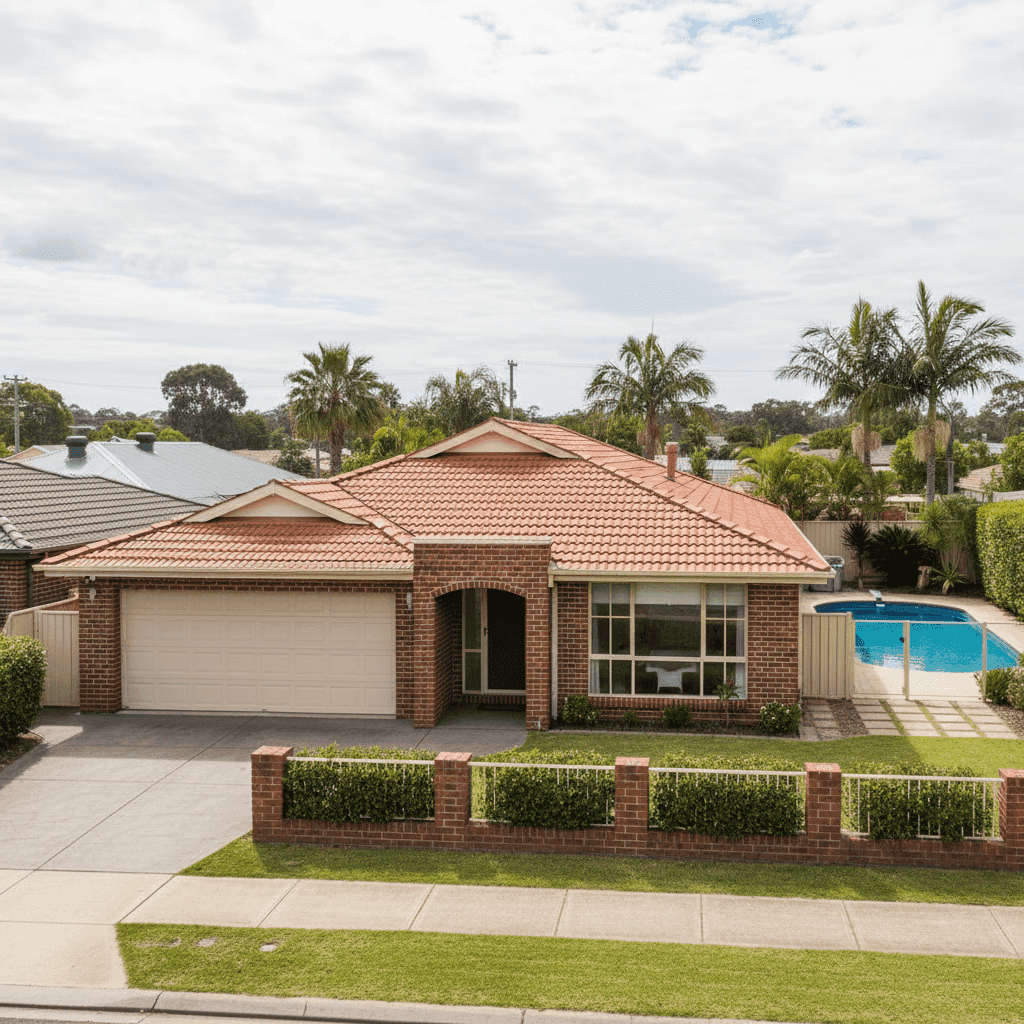
Corio is a well-established suburb in the City of Greater Geelong, sitting roughly 10 kilometres north of the Geelong CBD. Known for its affordable housing stock and family-friendly streets, it attracts a mix of first-home buyers and long-term residents. This article takes a close look at a real building insurance quote for a four-bedroom, two-bathroom free standing home in Corio (postcode 3214) — and unpacks whether the price stacks up against what other homeowners are paying locally, across Victoria, and nationally.
---
Is This Quote Fair?
The quote in question comes in at $1,069 per year (or around $103 per month) for building-only cover on a four-bedroom brick veneer home, with a building sum insured of $688,000 and a standard excess of $2,000.
Our price rating for this quote is FAIR — Around Average, and the data backs that up. Within the Corio suburb, the average annual premium sits at $1,221 and the median at $1,207. At $1,069, this quote lands below both of those figures — placing it comfortably in the lower half of the local market, closer to the 25th percentile of $964 than the 75th percentile of $1,362.
In practical terms, this homeowner is paying less than most of their neighbours for comparable cover. That's a reasonable outcome, though it's always worth checking what's included in the policy — a lower premium doesn't always mean better value if key protections are missing or exclusions are buried in the fine print.
---
How Corio Compares
To put this quote in broader context, it helps to zoom out and look at the Victorian state average and national benchmarks.
| Benchmark | Average Premium | Median Premium |
|---|---|---|
| Corio (3214) | $1,221/yr | $1,207/yr |
| Greater Geelong LGA | $1,769/yr | — |
| Victoria (VIC) | $2,921/yr | $2,694/yr |
| National | $2,965/yr | $2,716/yr |
The contrast is striking. Corio homeowners are paying, on average, less than half what Victorian and national averages suggest. Even compared to the broader Greater Geelong LGA average of $1,769, Corio comes in significantly cheaper.
This isn't necessarily surprising. Corio is an inland suburb with no direct coastal flood exposure, sits outside cyclone-risk zones, and features predominantly brick construction — all factors that insurers tend to view favourably when pricing risk. The suburb's relatively uniform housing stock (many homes built in similar eras with similar materials) also means there's less variability in pricing compared to more diverse postcodes.
You can explore the full breakdown of Corio suburb insurance statistics to see how premiums are distributed across the postcode.
---
Property Features That Affect Your Premium
Several characteristics of this particular property influence how insurers assess and price the risk.
Brick Veneer Walls & Tiled Roof
Brick veneer is one of the most common external wall materials in Australian suburban homes, and insurers generally regard it as a lower-risk construction type compared to weatherboard or lightweight cladding. Similarly, a tiled roof is considered durable and fire-resistant, which can contribute to a more competitive premium. Together, these two features work in the homeowner's favour.
Slab Foundation
A concrete slab foundation is standard for homes built in this era and region. It offers stability and reduces the risk of subfloor damage from moisture or pests — another box ticked from an underwriter's perspective.
Built in 1999
At around 25 years old, this home sits in a comfortable middle ground. It's modern enough to meet building codes that came into effect in the 1990s, but established enough that any construction defects would have surfaced long ago. Insurers don't typically penalise homes of this vintage.
Swimming Pool
The property includes a swimming pool, which is worth noting. Pools can introduce additional liability considerations — particularly in Victoria, where pool safety barrier regulations are strictly enforced. Some policies include public liability cover that extends to pool-related incidents, so it's worth confirming this is included in any policy you hold or are considering.
Building Size: 214 sqm
At 214 square metres, this is a reasonably sized family home. The sum insured of $688,000 reflects the cost to fully rebuild the property, including labour and materials — not its market value. It's important these two figures aren't confused. Underinsurance remains a significant issue across Australia, so ensuring the sum insured is regularly reviewed is critical.
---
Tips for Homeowners in Corio
1. Review Your Sum Insured Annually
Construction costs have risen considerably in recent years. A sum insured set a few years ago may no longer reflect what it would actually cost to rebuild your home today. Use a building cost calculator or speak to a quantity surveyor to make sure you're adequately covered.
2. Check Your Pool Compliance
Victoria has specific requirements around pool and spa safety barriers. Non-compliant barriers can affect your liability position and, in some cases, your insurance coverage. Ensure your pool fencing meets current standards under the Building Regulations 2018.
3. Compare Policies — Not Just Premiums
A lower premium is appealing, but the real value of an insurance policy only becomes clear at claim time. Compare policy documents carefully, paying attention to what's excluded, how claims are settled (replacement vs. indemnity), and whether temporary accommodation is covered during repairs.
4. Consider Bundling Building and Contents Cover
If you also need contents insurance, combining it with your building policy under the same insurer can sometimes attract a discount. It also simplifies the claims process if both your home and belongings are damaged in the same event.
---
Find a Better Deal with CoverClub
Whether you're happy with your current quote or want to see if you can do better, CoverClub makes it easy to compare home insurance options side by side. Our platform analyses real quotes from across Australia so you can make an informed decision — not just go with the first number you see. Get a quote today and find out what Corio homeowners are actually paying for their cover.