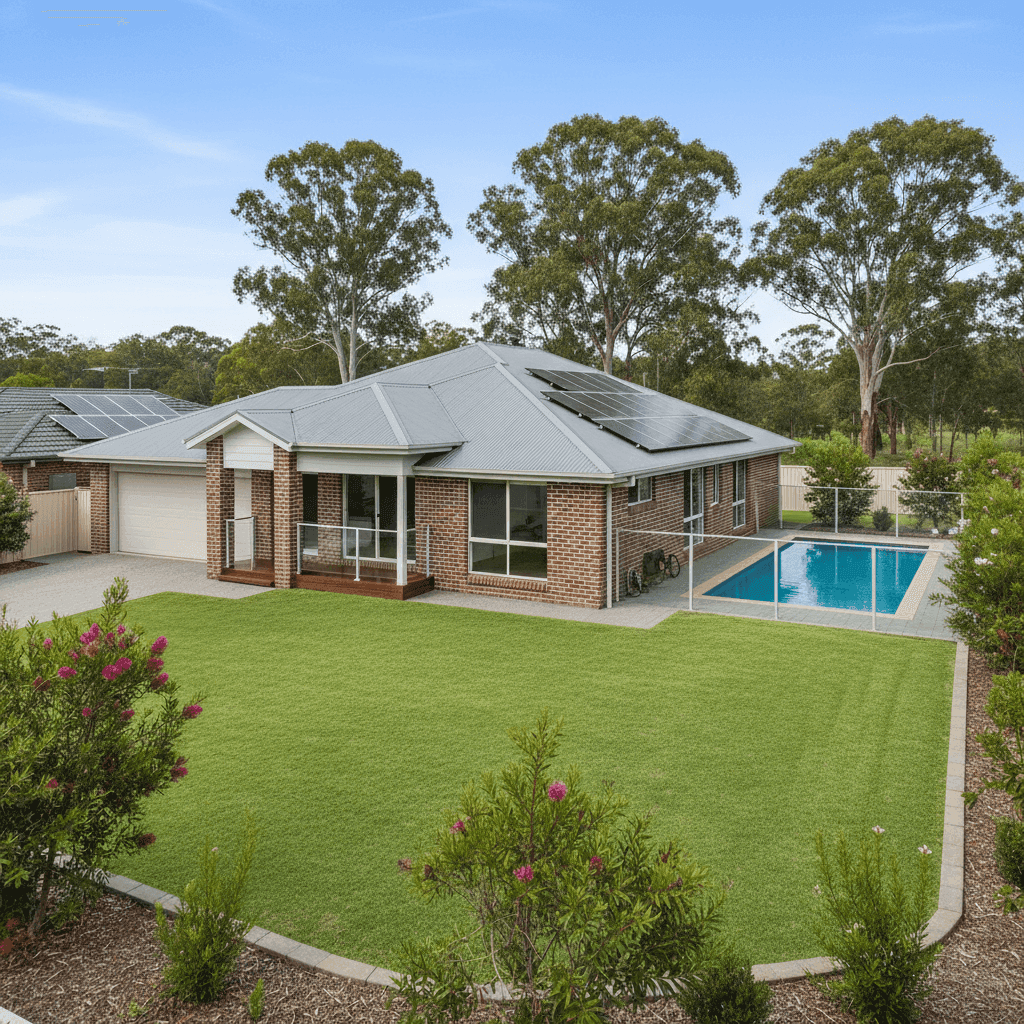
Cornubia is a well-established residential suburb in the Redland City Council area of South East Queensland, sitting roughly 30 kilometres south-east of Brisbane's CBD. Known for its family-friendly streets and leafy blocks, it's the kind of suburb where a large, free-standing brick home with a pool and solar panels is entirely typical. But what does it actually cost to insure one of these properties — and is the quote on the table a fair deal?
This article breaks down a real home and contents insurance quote for a five-bedroom, two-bathroom free-standing home in Cornubia, comparing it against local, state, and national benchmarks to help you make a more informed decision.
---
Is This Quote Fair?
The quote in question comes in at $3,404 per year (or $333 per month) for combined home and contents cover, with a building sum insured of $1,119,000 and contents valued at $50,000. Both the building and contents excess are set at $2,000.
Based on available market data, this premium is rated Expensive — above average for the area. The suburb average for Cornubia sits at $2,050 per year, with a median of $1,769. That puts this quote roughly 66% above the suburb average and nearly double the median — a significant gap that's worth understanding before you sign on the dotted line.
That said, context matters. This is a large home — 277 square metres — with a high building sum insured of over $1.1 million. It also has a pool, solar panels, and ducted climate control, all of which add to the insurer's risk exposure and replacement cost calculations. When you factor in these features, the premium isn't entirely surprising, but it does still sit at the higher end of what comparable properties in the suburb are paying.
---
How Cornubia Compares
To put this quote in perspective, here's how it stacks up across different comparison points:
| Benchmark | Annual Premium |
|---|---|
| This Quote | $3,404 |
| Cornubia Suburb Average | $2,050 |
| Cornubia Suburb Median | $1,769 |
| Cornubia 25th Percentile | $1,268 |
| Cornubia 75th Percentile | $2,324 |
| Redland LGA Average | $3,178 |
| QLD State Average | $9,129 |
| QLD State Median | $3,903 |
| National Average | $5,347 |
| National Median | $2,764 |
A few things stand out here. First, while this quote is above the Cornubia suburb average, it's actually below both the QLD state average and the national average — and it's close to the Queensland median of $3,903. This reflects the reality that Queensland as a whole carries elevated insurance costs due to cyclone, flood, and storm risk across much of the state.
Interestingly, the Redland LGA average of $3,178 is closer to this quote than the suburb-level figures, suggesting that properties with higher rebuild values and additional features in this council area do attract premiums in this range. Compared to the national median of $2,764, this quote is about 23% higher — but again, the property size and features go a long way toward explaining the difference.
The suburb sample size of 15 quotes is relatively small, so the local averages should be treated as a guide rather than a definitive benchmark.
---
Property Features That Affect Your Premium
Several characteristics of this property are likely pushing the premium upward. Understanding them can help you have a more productive conversation with your insurer — or identify areas where adjustments might be possible.
Building size and sum insured: At 277 sqm with a building sum insured of $1,119,000, this is a substantial home. Rebuild costs in South East Queensland have risen sharply in recent years due to labour shortages and material price increases, so a high sum insured is appropriate — but it does directly increase your premium.
Swimming pool: Pools add to the insurable value of the property and also introduce liability considerations. Most insurers factor this into their pricing, particularly for homes where the pool is a permanent, in-ground fixture.
Solar panels: Rooftop solar systems are increasingly common in Queensland, but they're not always automatically covered under standard home insurance policies. When they are included, they add to the replacement cost calculation, which flows through to the premium.
Ducted climate control: A full ducted system is a high-value fixed asset. If it needs to be replaced following a covered event, the cost can run into tens of thousands of dollars — something insurers price into the policy.
Brick veneer walls and Colorbond roof: These are generally considered durable, low-maintenance construction types that insurers view favourably. A brick veneer home on a concrete slab is typically more resilient to fire and certain weather events than timber-framed alternatives, which can work in your favour when it comes to pricing.
Construction year (1992): A home built in 1992 is over 30 years old. While it's not considered heritage or high-risk, older homes can have ageing plumbing, electrical systems, and roofing that may attract slightly higher premiums compared to newer builds.
No cyclone risk: Cornubia sits outside designated cyclone risk zones, which is a meaningful factor in Queensland. Homes in cyclone-affected areas can pay dramatically more, so this is a genuine saving compared to properties further north.
---
Tips for Homeowners in Cornubia
If you're looking to get better value on your home and contents insurance, here are four practical steps worth considering:
- Review your sum insured regularly. Building costs fluctuate, and being underinsured can be just as costly as overpaying. Use a reputable building cost calculator to check whether your current sum insured reflects today's rebuild costs — not what you paid for the home.
- Check what's actually covered for your solar panels and pool. Not all policies treat these the same way. Ask your insurer specifically whether solar panels are covered for accidental damage, storm damage, and electrical breakdown — and whether your pool equipment (pumps, filters, heating) is included.
- Compare quotes before renewal. Loyalty doesn't always pay in insurance. Insurers regularly offer better rates to new customers, and the market can shift significantly from year to year. Get a fresh quote at CoverClub to see what other providers are offering for your specific property.
- Consider your excess settings. This quote carries a $2,000 excess on both building and contents. Opting for a higher excess can reduce your annual premium, but make sure you're comfortable covering that amount out of pocket in the event of a claim. A lower excess may be worth the extra cost if cash flow is a concern.
---
Ready to Compare?
Whether this quote feels right or you suspect there's a better deal out there, the smartest move is to compare. CoverClub makes it easy to see how different insurers price your specific property — so you're not just guessing. Start comparing home insurance quotes at CoverClub and find out what you should actually be paying for your Cornubia home.