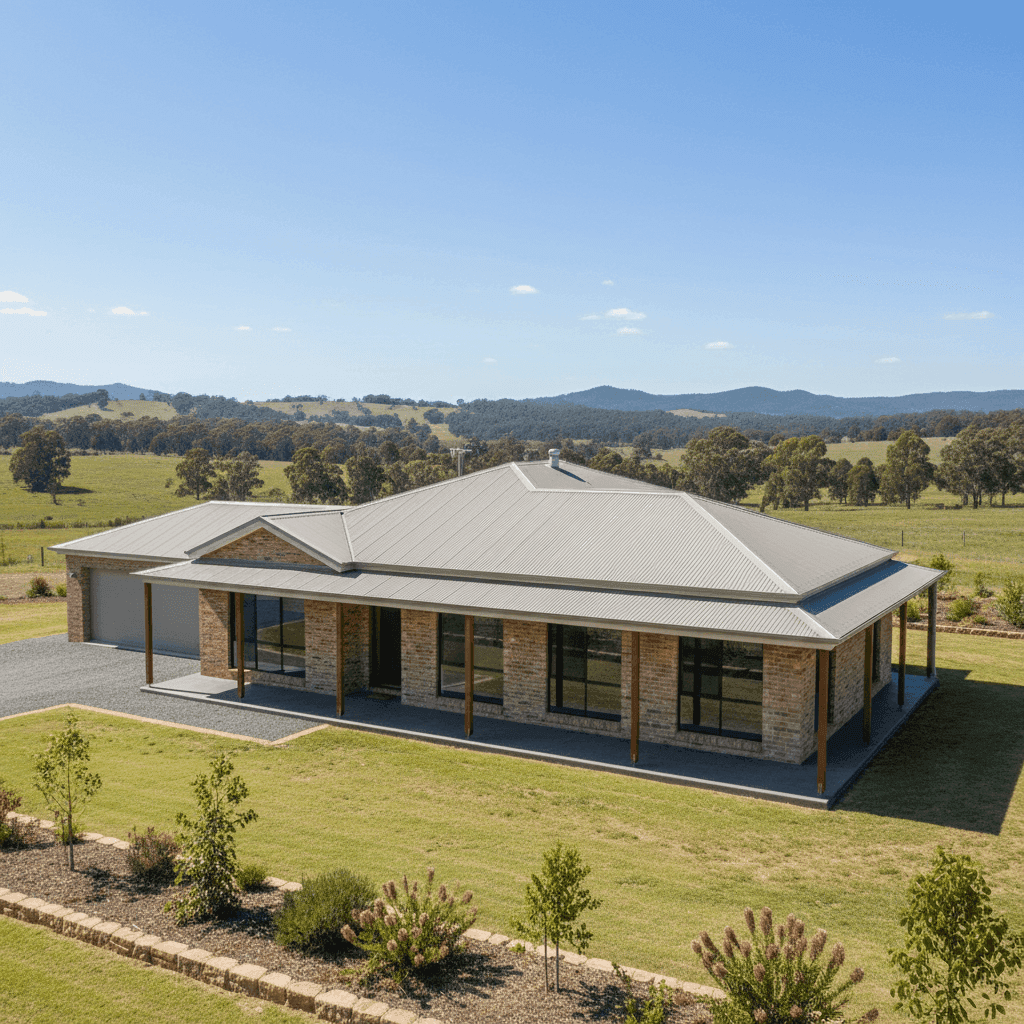
If you own a free standing home in Cottonvale, QLD 4375, you're likely curious about whether what you're paying for building insurance is reasonable — or whether there's room to do better. Cottonvale is a quiet rural locality on the Southern Downs, sitting at elevation in the Granite Belt region near Stanthorpe. It's a beautiful part of Queensland, but like anywhere, the cost of protecting your home can vary significantly depending on a range of factors. This article breaks down a real building-only insurance quote for a four-bedroom, two-bathroom brick veneer home in Cottonvale, and puts it in context against local, state, and national benchmarks.
---
Is This Quote Fair?
The annual premium for this quote comes in at $2,589 per year (or $241/month), covering building only with a sum insured of $598,000 and a building excess of $5,000. Our pricing analysis rates this as CHEAP — below average — which is genuinely good news for the homeowner.
To put that in perspective: the Queensland state average premium sits at a substantial $9,129 per year, and even the state median — a more representative figure that strips out extreme outliers — is $3,903 per year. This quote comes in well below both measures, suggesting the homeowner is getting a competitive deal relative to most Queenslanders.
Nationally, the picture is similar. According to CoverClub's national insurance data, the average Australian home insurance premium is $5,347/year, with a national median of $2,764/year. At $2,589, this quote sits just below the national median — a solid result.
The higher excess of $5,000 on the building component is worth noting. Opting for a higher excess is a common way to reduce your annual premium, and it appears to be playing a role in keeping this quote competitive. It's a worthwhile trade-off for many homeowners, particularly those with a solid financial buffer who are primarily seeking protection against major loss events rather than minor claims.
---
How Cottonvale Compares
While suburb-level data for Cottonvale isn't available in sufficient volume to produce a reliable local average, we can look at the broader Tenterfield LGA average of $4,013/year as a useful regional reference point. This quote at $2,589 comes in roughly 35% below the LGA average, reinforcing the "cheap" rating.
Here's a quick summary of how this quote stacks up:
| Benchmark | Annual Premium |
|---|---|
| This Quote | $2,589 |
| Tenterfield LGA Average | $4,013 |
| QLD State Median | $3,903 |
| National Median | $2,764 |
| QLD State Average | $9,129 |
| National Average | $5,347 |
You can explore more localised pricing data on the Cottonvale suburb stats page as more data becomes available for the area.
One important caveat: Queensland averages are heavily skewed upward by high-risk coastal and cyclone-prone areas, which is why the state average of $9,129 looks so much higher than the median. Cottonvale, being an inland Southern Downs locality with no cyclone risk, benefits from a more favourable risk profile compared to coastal Queensland properties.
---
Property Features That Affect Your Premium
Several characteristics of this particular home are likely contributing to its competitive premium. Understanding these factors can help you make informed decisions when reviewing or renewing your own cover.
Brick Veneer Walls Brick veneer construction is generally viewed favourably by insurers. It offers solid fire resistance and structural durability compared to timber-framed or clad exteriors, which can translate to lower premiums. It's one of the more common wall types in regional Queensland and tends to be priced competitively.
Steel/Colorbond Roof A Colorbond steel roof is another tick in the right column. It's highly durable, resistant to fire and pests, and performs well in harsh Australian weather conditions. Insurers typically price these roofs more favourably than older tile or fibrous cement alternatives, particularly in areas prone to hail or high winds.
Slab Foundation A concrete slab foundation is considered low-risk by most insurers. It's structurally stable, not susceptible to subfloor moisture or termite ingress in the way that elevated timber stumps can be, and generally requires less maintenance over time.
Timber/Laminate Flooring Flooring type can influence contents-related claims, but for building-only cover, it's a relatively minor factor. Timber and laminate floors are standard in homes of this era and don't significantly elevate risk.
Construction Year: 1975 At approximately 50 years old, this home is older than average. Older homes can attract higher premiums due to the cost of replacing period-appropriate materials and the potential for ageing systems (plumbing, wiring, roofing). However, the combination of durable materials — brick veneer walls and a Colorbond roof — suggests the property has likely been well-maintained or updated over the decades, which may be helping to keep the premium down.
No Pool, Solar Panels, or Ducted Climate Control The absence of these features simplifies the risk profile. Pools, solar installations, and ducted systems all add to the replacement cost and potential liability exposure of a property. Without them, the sum insured and risk complexity remain more straightforward.
---
Tips for Homeowners in Cottonvale
Whether you're reviewing an existing policy or shopping for new cover, here are a few practical steps worth considering.
1. Review Your Sum Insured Regularly At $598,000, the building sum insured needs to reflect the true cost of rebuilding your home from the ground up — not its market value. Construction costs have risen significantly in regional Queensland over recent years, so it's worth reassessing this figure annually, ideally using an independent building cost calculator or speaking with a local builder.
2. Consider Whether Building-Only Cover Is Enough This quote covers the building structure only. If you have valuable contents — furniture, appliances, electronics, clothing — a separate contents policy or combined building and contents cover may be worth exploring. Contents excess on this policy is listed at $1,000, which is standard.
3. Understand Your Excess Before You Claim The $5,000 building excess on this policy is on the higher end. Make sure you're comfortable with that out-of-pocket cost in the event of a claim. If you'd prefer a lower excess, request alternative quotes — you may find the premium difference is modest.
4. Don't Auto-Renew Without Comparing Even a competitively priced policy can be beaten. Insurance markets shift year to year, and loyalty doesn't always pay. Set a reminder to compare your renewal quote against the market each year, particularly as your property ages or your circumstances change.
---
Ready to Compare?
Whether this quote is your own or you're simply benchmarking what home insurance should cost in Cottonvale, knowledge is your best tool. CoverClub makes it easy to compare building and contents insurance quotes from a range of Australian insurers in one place. Get a quote today at CoverClub and see how much you could save on protecting your home.