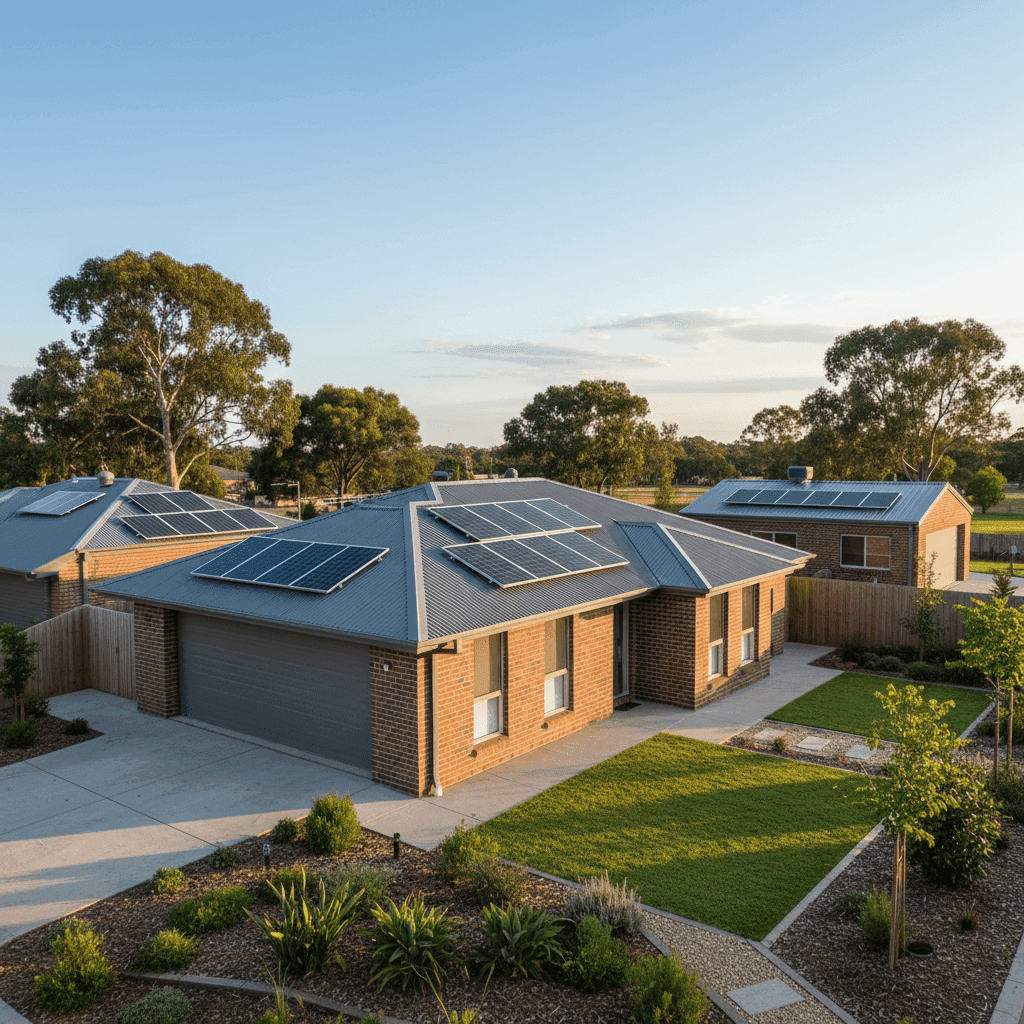
If you own a free standing home in Coutts Crossing, NSW 2460, you're probably aware that home insurance premiums in regional New South Wales can vary enormously. This article breaks down a real home and contents insurance quote for a 3-bedroom, 1-bathroom brick veneer home in Coutts Crossing — and puts it in context against suburb, state, and national benchmarks so you can judge whether you're getting a fair deal.
---
Is This Quote Fair?
The quote in question sits at $2,726 per year (or $274 per month) for combined home and contents cover, with a building sum insured of $900,000 and contents valued at $80,000. The building excess is $4,000 and the contents excess is $1,000.
Our price rating for this quote is FAIR — Around Average.
That rating reflects where this premium lands relative to what other homeowners in the area are paying. It's not the cheapest quote you could find in this postcode, but it's comfortably below the suburb average and median, which puts it in reasonable territory. Whether it's the right price for your specific circumstances depends on a few more factors — but on the surface, this is a competitive result worth considering.
---
How Coutts Crossing Compares
To understand what "fair" actually means here, it helps to look at the numbers side by side. Based on quotes collected for Coutts Crossing (NSW 2460) across a sample of 39 policies:
| Benchmark | Annual Premium |
|---|---|
| This quote | $2,726 |
| Suburb 25th percentile | $2,049 |
| Suburb median | $3,234 |
| Suburb average | $3,986 |
| Suburb 75th percentile | $5,436 |
| NSW average | $3,801 |
| NSW median | $3,410 |
| National average | $2,965 |
| National median | $2,716 |
| Richmond Valley LGA average | $7,188 |
A few things stand out immediately. First, the Richmond Valley LGA average of $7,188 is extraordinarily high — more than 2.6 times this quote. That figure is heavily influenced by flood and weather risk in the broader LGA, which includes areas far more exposed than Coutts Crossing itself. It's a reminder that LGA-level data can mask significant variation at the suburb level.
Second, this quote of $2,726 sits below both the NSW average ($3,801) and the NSW median ($3,410), and is almost exactly in line with the national median of $2,716. Compared to the broader NSW market, this is a solid result. Relative to national benchmarks, it's right on the money — literally.
The suburb median of $3,234 means roughly half of Coutts Crossing homeowners are paying more than this quote. That's a meaningful saving over time, particularly given the high upper end of the market in this area.
---
Property Features That Affect Your Premium
Every insurer prices risk differently, but certain property characteristics consistently influence what you'll pay. Here's how the features of this particular home come into play:
Brick veneer construction is generally viewed favourably by insurers. It offers solid fire resistance and structural durability compared to timber-framed or weatherboard homes, which can translate to lower premiums.
Steel/Colorbond roofing is another positive signal. Colorbond is lightweight, resistant to corrosion, and performs well in high-wind events. Insurers tend to price it more favourably than older terracotta or asbestos roofing.
Slab foundation is the standard in modern Australian construction and carries minimal additional risk in most contexts. Combined with a 2003 build year, this home sits in a relatively modern bracket — post-2000 homes often benefit from updated building codes around cyclone strapping, fire ratings, and structural integrity.
Solar panels are worth noting. While they don't typically push premiums up dramatically, some insurers treat them as an additional asset requiring coverage. It's worth confirming your policy explicitly covers solar panels under the building sum insured, particularly for damage from storms or hail.
The granny flat is a significant factor. Additional dwellings on the same property increase the insurable value and the potential for claims. Insurers may treat a granny flat as part of the main building structure or as a separate item — always clarify this with your insurer to avoid being underinsured.
Tile flooring and standard fittings keep the replacement cost estimate grounded. High-end finishes and bespoke fittings can push rebuild costs — and therefore premiums — considerably higher.
No pool and no ducted climate control mean fewer liability and mechanical breakdown exposures, which helps keep the premium in check.
---
Tips for Homeowners in Coutts Crossing
1. Review your building sum insured carefully. At $900,000, the building sum insured here is substantial for a 160 sqm home. Make sure this figure reflects the actual cost to rebuild — not the market value of the property. Overcovering can inflate your premium unnecessarily, while undercovering leaves you exposed. Use a building cost calculator or speak to a quantity surveyor to get an accurate estimate.
2. Clarify granny flat coverage. If you have a granny flat on your property, ask your insurer explicitly whether it's covered under your main building policy, and to what limit. Some policies include ancillary structures automatically; others require a separate endorsement. Getting this wrong could leave a significant gap in your cover.
3. Confirm solar panel protection. Solar panels are a meaningful investment. Check that your policy covers them for storm, hail, and accidental damage — and that the sum insured accounts for their replacement cost, including installation.
4. Shop around at renewal time. The wide spread of premiums in Coutts Crossing — from $2,049 at the 25th percentile to $5,436 at the 75th — shows just how much prices can vary for similar homes. Loyalty doesn't always pay with insurance. Comparing quotes annually is one of the simplest ways to avoid overpaying.
---
Compare Your Own Quote
Curious how your current premium stacks up? CoverClub makes it easy to benchmark your home insurance against real quotes from across Australia. Whether you're in Coutts Crossing or anywhere else in the country, get a quote today at CoverClub and see exactly where you stand — no obligation, no pressure.