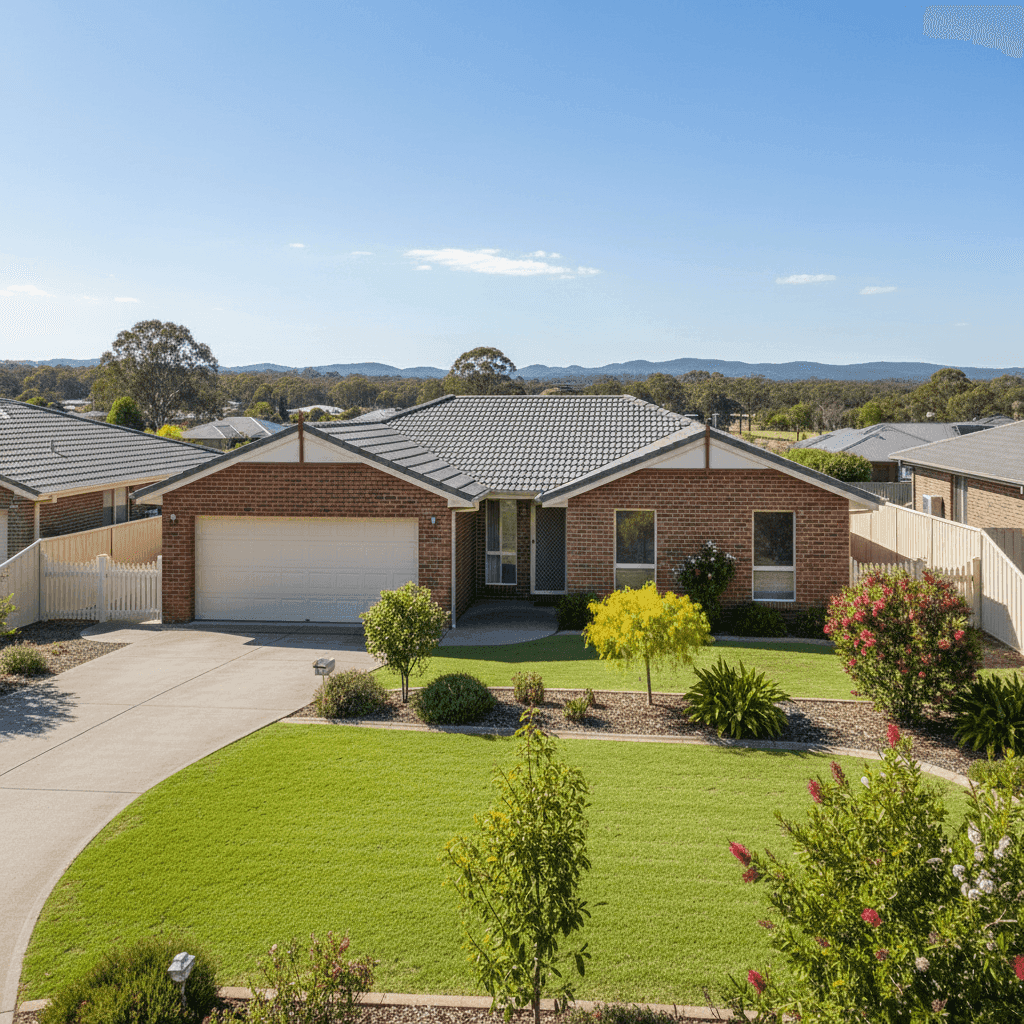
If you own a free standing home in Coutts Crossing, NSW 2460, you might be wondering whether you're paying a fair price for your home and contents insurance. This article breaks down a real insurance quote for a four-bedroom, three-bathroom brick veneer home in the area, and puts the numbers in context using suburb, state, and national benchmarks. Whether you're renewing your policy or shopping around for the first time, understanding what drives your premium can save you hundreds of dollars a year.
---
Is This Quote Fair?
The quote in question comes in at $3,265 per year (or around $313 per month), covering both building and contents for a home insured at $736,000 with $20,000 in contents cover. Both the building and contents excess are set at $1,000.
Our price rating for this quote is CHEAP — below average for the area. That's genuinely good news for the homeowner. Based on 37 quotes collected for the Coutts Crossing suburb, the local average premium sits at $4,294 per year, with a median of $4,573. This quote falls well below both figures, and even comfortably under the suburb's 25th percentile of $3,592 — meaning it's cheaper than at least 75% of quotes we've seen in the area.
In plain terms: if you're paying around $3,265 for this level of cover in Coutts Crossing, you're doing better than most of your neighbours.
---
How Coutts Crossing Compares
To understand just how competitive this quote is, it helps to zoom out and look at the broader picture.
| Benchmark | Premium |
|---|---|
| This Quote | $3,265/yr |
| Coutts Crossing Suburb Average | $4,294/yr |
| Coutts Crossing Suburb Median | $4,573/yr |
| Coutts Crossing 25th Percentile | $3,592/yr |
| NSW State Average | $9,528/yr |
| NSW State Median | $3,770/yr |
| National Average | $5,347/yr |
| National Median | $2,764/yr |
| Richmond Valley LGA Average | $41,437/yr |
A few things stand out here. First, the NSW state average of $9,528 is dramatically higher than what's seen in Coutts Crossing — though this is largely driven by high-value properties and elevated-risk areas across the state skewing the mean upward. The state median of $3,770 is a more reliable comparison point, and this quote still comes in below it.
At the national level, the average premium of $5,347 is also well above this quote, while the national median of $2,764 is lower — reflecting the wide variation in premiums across very different property types and risk profiles around the country.
Perhaps the most striking figure is the Richmond Valley LGA average of $41,437 per year. This extraordinarily high number is almost certainly influenced by a small number of very high-risk or high-value properties in the LGA — potentially including flood-prone or cyclone-affected areas — and shouldn't be taken as representative of what most homeowners in Coutts Crossing pay. It does, however, serve as a reminder of how dramatically risk can vary within a single local government area.
---
Property Features That Affect Your Premium
Several characteristics of this particular property influence how insurers assess and price the risk.
Construction era (1978): Homes built in the late 1970s are generally considered moderate risk by insurers. They predate many modern building codes but are typically well-established structures. Wiring, plumbing, and roofing may be aging, which can nudge premiums upward unless recent upgrades have been made.
Brick veneer walls: Brick veneer construction is viewed favourably by most insurers. It offers solid fire resistance and structural durability compared to weatherboard or fibrous cement, which can contribute to a more competitive premium.
Tiled roof: Terracotta or concrete tiles are a common and generally well-regarded roofing material in NSW. They perform well in moderate weather conditions, though they can be more expensive to repair or replace than Colorbond metal roofing if damaged.
Slab foundation: A concrete slab is a stable and low-maintenance foundation type. It's generally not associated with the subsidence or moisture risks that can affect homes on stumps or piers, which insurers tend to view positively.
Ducted climate control: The presence of ducted air conditioning adds to the overall replacement value of the home. Insurers factor in the cost to replace built-in systems when calculating building sum insured, so it's important this is reflected accurately in your coverage.
No pool, no solar panels: The absence of a swimming pool removes a liability risk that can increase premiums. Solar panels, while generally beneficial, can add complexity to roof claims — so their absence slightly simplifies the risk profile here.
Building size (214 sqm): At 214 square metres, this is a reasonably sized family home. The sum insured of $736,000 works out to roughly $3,440 per square metre, which is broadly in line with current construction cost estimates for NSW, though homeowners should periodically review this figure to ensure it keeps pace with rising building costs.
---
Tips for Homeowners in Coutts Crossing
1. Review your sum insured annually. Building costs in NSW have risen significantly in recent years. A sum insured set even two or three years ago may no longer be sufficient to fully rebuild your home. Use a building cost calculator or speak with a quantity surveyor to make sure you're not underinsured.
2. Don't overlook your contents coverage. A contents value of $20,000 is on the lower end for a four-bedroom, three-bathroom home. Take stock of your furniture, appliances, clothing, and personal items — many homeowners are surprised to find their contents are worth significantly more than they initially estimated.
3. Ask about flood cover. Parts of the Clarence Valley region, which encompasses Coutts Crossing, have experienced flooding in the past. Check whether your policy includes flood cover as standard or as an optional add-on, and make sure you understand the definition your insurer uses — some policies distinguish between riverine flooding and storm surge.
4. Compare at renewal time. Even if you're happy with your current premium, it's worth getting comparison quotes each year. Insurers regularly adjust their pricing models, and loyalty doesn't always translate to the best deal. A quick comparison could reveal significant savings without sacrificing cover quality.
---
Ready to Compare Home Insurance Quotes?
Whether you're looking to benchmark your existing policy or find a better deal, CoverClub makes it easy to compare home and contents insurance quotes tailored to your property. Get a quote today and see how much you could save — it only takes a few minutes, and you might be surprised by the difference.