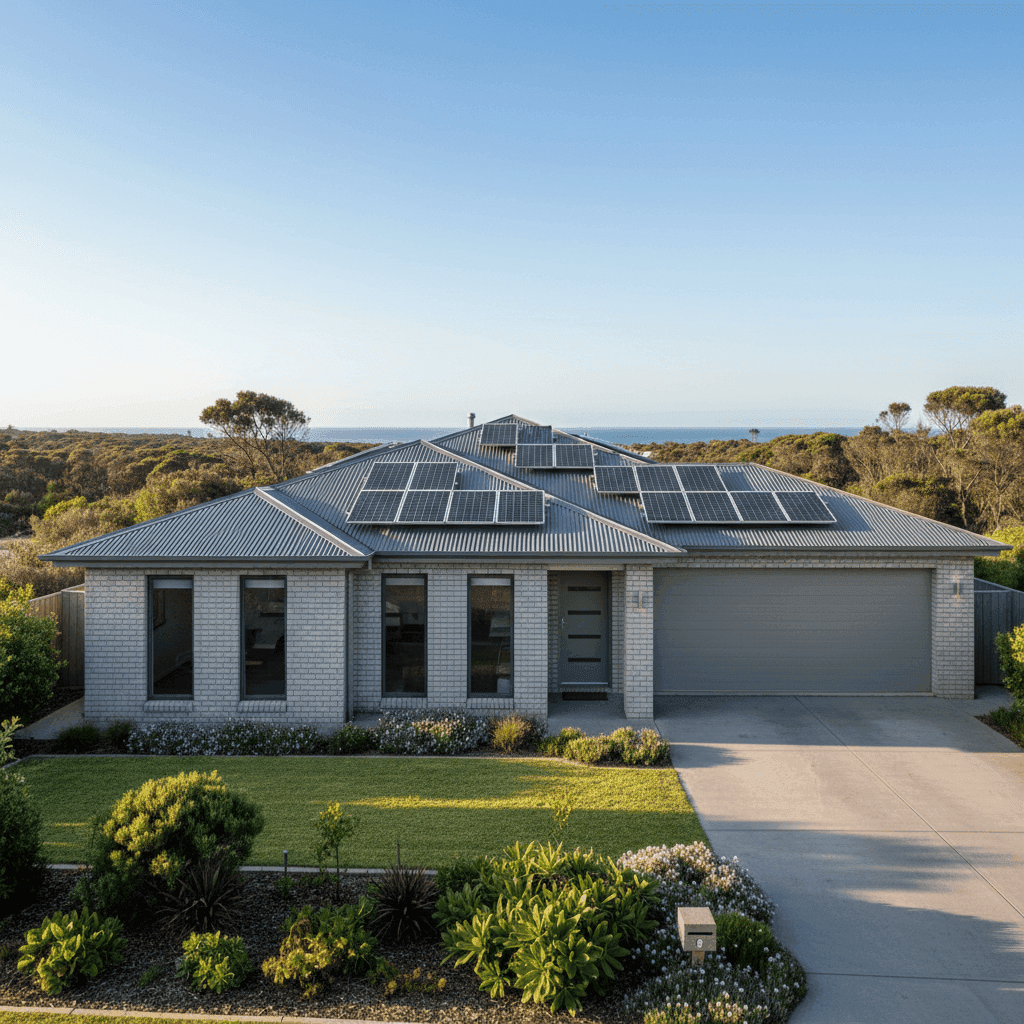
Cowes, nestled on the northern tip of Phillip Island in Victoria's Bass Coast region, is one of the state's most popular coastal destinations — and an increasingly sought-after place to call home. Whether you're a permanent resident or using your property as a holiday retreat, protecting a four-bedroom free standing home here with the right insurance cover is essential. This article breaks down a real home and contents insurance quote for a property in Cowes (VIC 3922) and puts it in context with local, state, and national data to help you understand what you're paying — and whether there's room to do better.
---
Is This Quote Fair?
The quote in question comes in at $1,524 per year (or about $167 per month) for combined home and contents cover, with a building sum insured of $817,000 and contents valued at $104,000. The building excess sits at $4,000, while the contents excess is $2,000.
Our independent price rating for this quote is Fair — Around Average. That's a reasonable result, and here's why.
When we look at the suburb-level data for Cowes (3922), the average premium across comparable quotes is $1,528 per year, and the median sits slightly higher at $1,591. This quote lands just $4 below the suburb average — essentially right in the middle of the pack. It's not the cheapest option available in the area (the 25th percentile sits at $1,056/yr), but it's also well below the upper range, with the 75th percentile reaching $1,965/yr.
In short: this isn't a bargain, but it's a solid, competitive price for the level of cover provided.
---
How Cowes Compares
One of the most telling aspects of this quote is how favourably Cowes stacks up against broader benchmarks.
| Benchmark | Average Premium |
|---|---|
| Cowes (3922) suburb average | $1,528/yr |
| Bass Coast LGA average | $2,160/yr |
| Victoria state average | $3,000/yr |
| National average | $5,347/yr |
The Victorian state average of $3,000/yr is nearly double what this homeowner is paying. And compared to the national average of $5,347/yr — which is heavily influenced by high-risk regions in Queensland and Western Australia — this Cowes quote looks exceptionally competitive.
Even within the Bass Coast LGA, where the average premium is $2,160/yr, this quote comes in $636 cheaper annually. That's a meaningful saving, particularly for a property of this size and value.
It's worth noting that the suburb sample size for Cowes is 15 quotes, which is a reasonable dataset for a regional coastal town. As more data comes in over time, these averages will become even more refined — but the current picture suggests Cowes is a relatively affordable area to insure compared to much of Victoria and the country.
---
Property Features That Affect Your Premium
Insurance underwriters assess risk based on a wide range of property characteristics. Here's how the specific features of this home likely influence the premium:
Brick Veneer Walls Brick veneer is one of the more favourable wall construction types in the eyes of insurers. It offers solid fire resistance and structural durability, which typically translates to lower rebuild risk and, consequently, a more competitive premium.
Steel / Colorbond Roof Colorbond steel roofing is highly regarded for its resilience against harsh Australian weather conditions. It's resistant to corrosion, performs well in high winds, and requires minimal maintenance — all factors that reduce insurer risk.
Concrete Slab Foundation A slab foundation is considered stable and low-risk, particularly in coastal areas where soil movement and moisture can be concerns. It's a positive factor for insurers assessing structural integrity.
Solar Panels This property has solar panels installed, which can add a modest amount to the sum insured given the replacement cost of the system. However, most modern home insurance policies cover rooftop solar panels as part of the building, so it's important to confirm this is included — and that the building sum insured accounts for their replacement value.
Ducted Climate Control Ducted air conditioning systems are a significant fixed asset and are typically covered under building insurance. Their presence may slightly increase the sum insured required but is generally not a major premium driver on its own.
Built in 2015 A home constructed in 2015 is relatively modern, built to contemporary Australian Standards. Newer builds often benefit from improved construction quality, better fire safety features, and compliance with updated building codes — all of which can positively influence your premium.
No Pool, No Cyclone Risk Zone The absence of a swimming pool removes a common liability consideration. And while Cowes is a coastal town, it falls outside designated cyclone risk zones, which keeps premiums considerably lower than comparable properties in northern Australia.
268 sqm Building Size At 268 square metres, this is a generously sized home. Larger floor areas generally mean higher rebuild costs, which is reflected in the $817,000 building sum insured. Ensuring this figure accurately reflects current construction costs in the region is crucial.
---
Tips for Homeowners in Cowes
1. Review your building sum insured annually Construction costs in regional Victoria have risen significantly in recent years. The $817,000 sum insured on this property should be reviewed each year to ensure it reflects current rebuild costs — not just the market value of the land and home. Underinsurance is one of the most common and costly mistakes homeowners make.
2. Check that your solar panels are covered If you have rooftop solar, confirm with your insurer that the panels and inverter are explicitly covered under your building policy, and that their replacement cost is factored into your sum insured. This is a detail that's easy to overlook at renewal time.
3. Compare quotes before renewing With the 25th percentile for Cowes sitting at $1,056/yr, there's clearly a range of pricing in the market. Even if your current quote is fair, it pays to shop around at renewal. Get a fresh quote at CoverClub to see whether you could be paying less for the same or better cover.
4. Consider your excess settings carefully This policy carries a $4,000 building excess and a $2,000 contents excess. Higher excesses generally reduce your annual premium, but it's worth making sure you're comfortable covering that amount out of pocket in the event of a claim. If cash flow is a concern, a lower excess — even at a slightly higher premium — might be the smarter choice.
---
Ready to Compare?
Whether you're a long-time Cowes local or a recent arrival to Phillip Island, making sure you have the right home insurance at the right price matters. CoverClub makes it easy to compare quotes from multiple insurers in one place, tailored to your property's specific features and location.
Start comparing home insurance quotes for your Cowes property today — it only takes a few minutes, and you might be surprised by what you find.
For more suburb-specific data, visit our Cowes insurance statistics page or explore Victoria-wide home insurance trends.