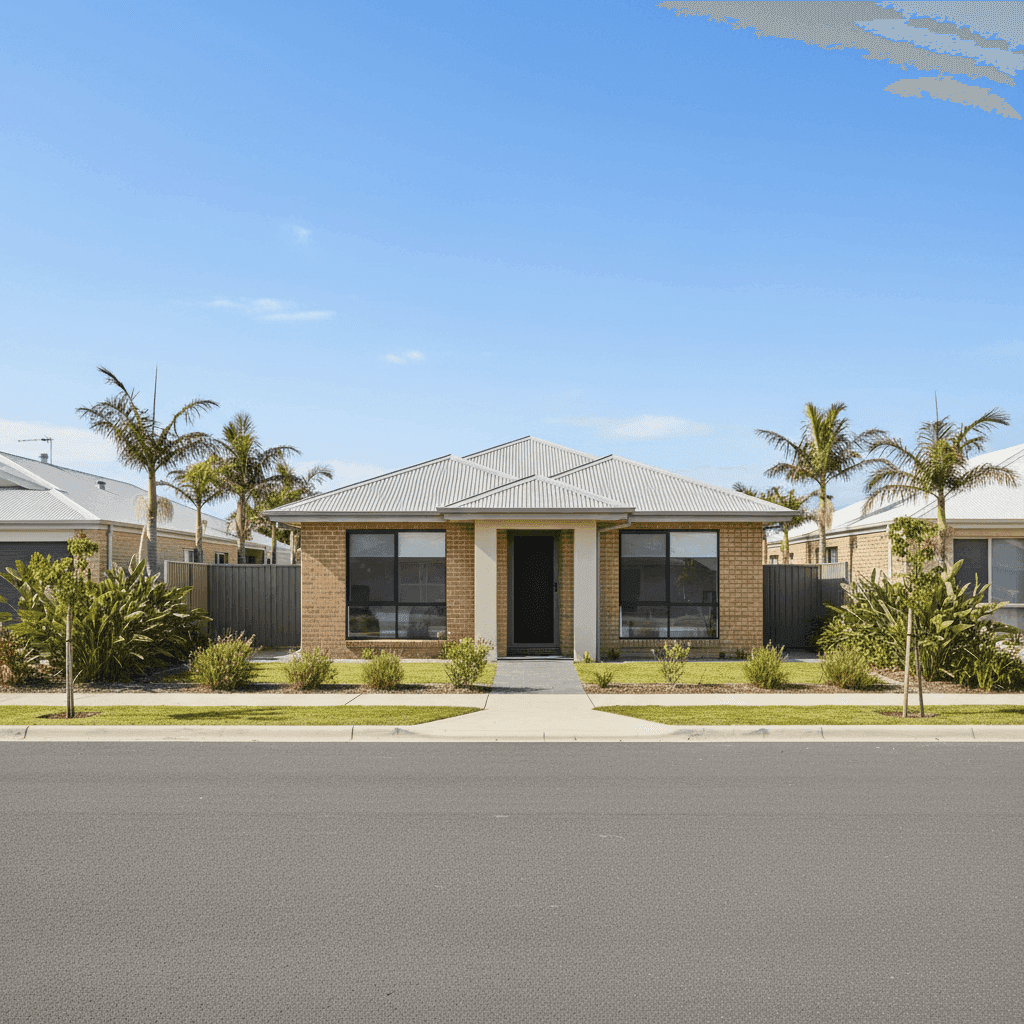
If you own a free standing home in Cowes, VIC 3922, you're likely already aware that insurance costs on Phillip Island can vary considerably. Cowes is the island's main township — a popular coastal destination that attracts both permanent residents and holiday home owners. That mix of lifestyle appeal and coastal exposure means insurers price risk here carefully. This article breaks down a real home and contents insurance quote for a three-bedroom, two-bathroom brick veneer home in Cowes, comparing it against local, state and national benchmarks to help you understand what fair value looks like.
---
Is This Quote Fair?
The quote in question comes in at $1,274 per year (or roughly $124 per month) for combined home and contents cover — with a building sum insured of $650,000 and contents valued at $36,000. The building excess sits at $2,000 and the contents excess at $1,000.
Our price rating for this quote? Cheap — well below average.
To put that in perspective: the average home and contents premium across Cowes currently sits at $2,134 per year, with a median of $2,078. This quote comes in at roughly 40% below the suburb average — a meaningful saving that's hard to ignore. Even compared to the cheapest quarter of quotes in the area (the 25th percentile sits at $1,868), this premium is still noticeably lower.
For a property built in 2013 with above-average fittings, that's an impressive result. Newer builds tend to attract more competitive premiums because they're constructed to modern building codes, which generally means better structural resilience and lower claims risk. The combination of a relatively recent construction year and solid building materials has clearly worked in the homeowner's favour here.
---
How Cowes Compares
Zooming out to a broader view, the savings become even more striking. Here's how this quote stacks up across different comparison points:
| Benchmark | Annual Premium |
|---|---|
| This Quote | $1,274 |
| Cowes Suburb Average | $2,134 |
| Cowes Suburb Median | $2,078 |
| Bass Coast LGA Average | $2,307 |
| Victoria State Average | $2,921 |
| Victoria State Median | $2,694 |
| National Average | $2,965 |
| National Median | $2,716 |
This quote is 56% below the Victorian state average and 57% below the national average — a remarkable gap. Of course, individual premiums depend heavily on the specific property, the insurer, the level of cover, and the excess chosen. A higher building excess of $2,000 (compared to some policies that default to $500–$1,000) will reduce the annual premium, so that's worth factoring in when comparing apples with apples.
That said, even accounting for the higher excess, this quote represents genuinely competitive pricing for a well-built coastal property.
You can explore more local data on the Cowes insurance stats page, or compare how Cowes sits within Victoria's broader insurance landscape. For a national perspective, the CoverClub national stats page gives a useful overview of how premiums vary across Australia.
---
Property Features That Affect Your Premium
Several characteristics of this particular property work in its favour from an underwriting perspective:
Brick Veneer Walls Brick veneer is one of the most common external wall types in Australian residential construction, and insurers generally view it favourably. It offers solid fire resistance and durability, which can translate to lower premiums compared to timber-framed or clad exteriors.
Steel / Colorbond Roof A Colorbond steel roof is another tick in the right column. It's lightweight, low-maintenance, resistant to ember attack, and performs well in high-wind conditions. For a coastal property like this one in Cowes, wind resilience is particularly relevant.
Concrete Slab Foundation Slab-on-ground construction is generally considered stable and low-risk by insurers. It eliminates the underfloor space that can be vulnerable to flooding, pest damage or moisture — all of which can drive up premiums.
Built in 2013 A construction year of 2013 means this home was built under relatively modern Australian building standards (NCC/BCA). Newer homes typically have better insulation, updated electrical systems, and more resilient structural designs — all factors that reduce the likelihood of a major claim.
Above-Average Fittings Above-average fittings — think stone benchtops, quality appliances, and premium fixtures — do increase the cost to rebuild or repair, which is reflected in the $650,000 sum insured. However, they don't necessarily push premiums up dramatically if the building is otherwise low-risk.
No Pool, No Solar Panels The absence of a pool removes a common liability risk factor. While solar panels are generally insurable, their absence simplifies the risk profile slightly.
Tiles Flooring Tiled flooring throughout is durable and straightforward to replace, reducing the potential cost of water damage claims compared to hardwood or engineered timber floors.
Taken together, this is a property profile that presents well to insurers — modern, well-constructed, and made from materials that age reliably.
---
Tips for Homeowners in Cowes
Whether you're a permanent resident or managing a holiday property on Phillip Island, here are a few practical ways to keep your home insurance working for you:
1. Review your sum insured regularly Construction costs have risen significantly in recent years. If your home was last valued a few years ago, the cost to rebuild it today may be higher than your current sum insured. Underinsurance is one of the most common — and costly — mistakes homeowners make. Use a building cost calculator or speak with a quantity surveyor to get an accurate figure.
2. Consider your excess carefully A higher excess (like the $2,000 building excess in this quote) can meaningfully reduce your annual premium. If you have the financial buffer to cover a larger out-of-pocket expense in the event of a claim, opting for a higher excess is often a smart way to lower ongoing costs.
3. Don't set-and-forget your policy Insurance markets shift, and the best deal one year may not be the best deal the next. Make a habit of comparing quotes at renewal time — even if you're happy with your current insurer. CoverClub makes it easy to see how your premium stacks up against others in your area.
4. Check your contents sum insured $36,000 in contents cover is on the modest side for a three-bedroom home with above-average fittings. Take stock of your furniture, electronics, clothing, and appliances — it adds up quickly. Being underinsured on contents can leave you significantly out of pocket after a burglary or fire.
---
Ready to Compare?
Whether you're looking for your first quote or due for a renewal check, it pays to shop around. Get a home insurance quote through CoverClub and see how your premium compares to others in Cowes and across Victoria. With transparent pricing data and access to multiple insurers, CoverClub takes the guesswork out of finding competitive cover for your home.