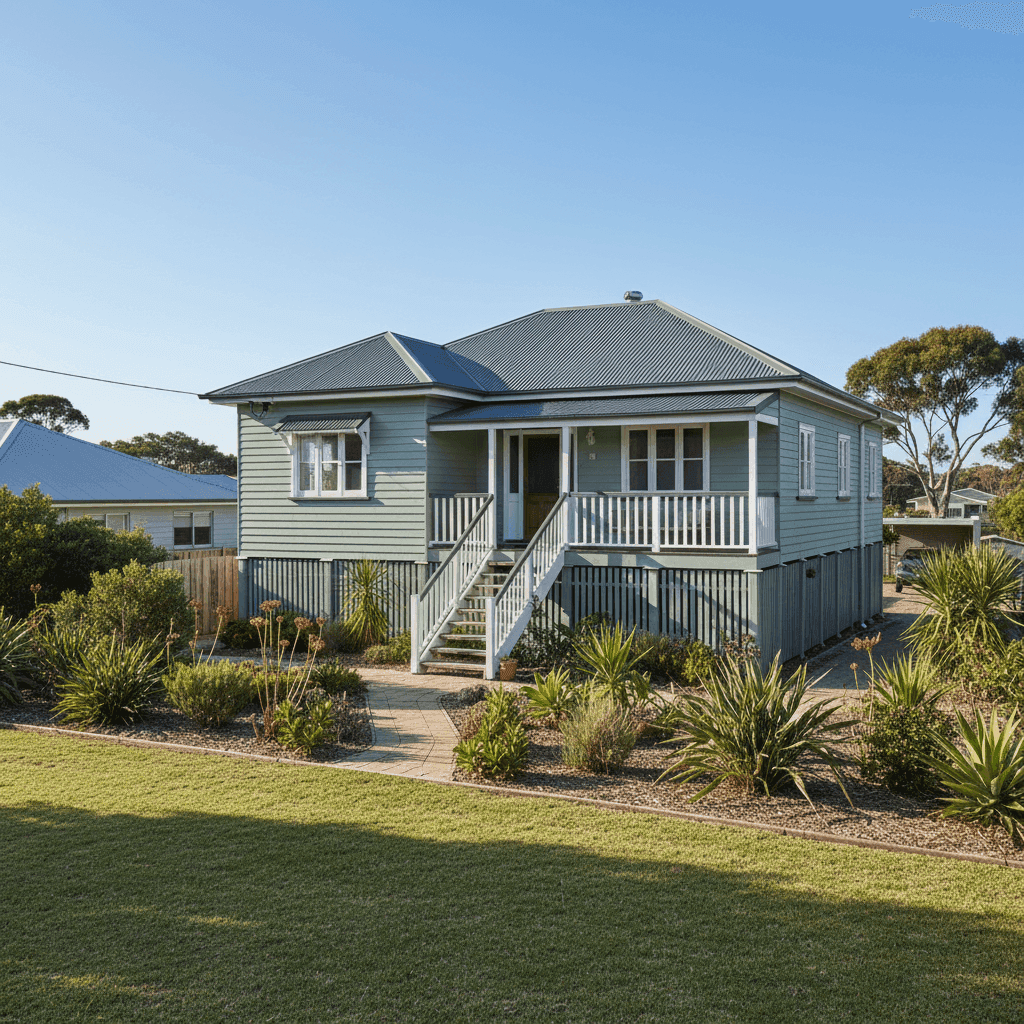
Cowes is the beating heart of Phillip Island — a coastal township that draws holiday-makers, sea-changers, and long-term locals alike. For homeowners in this pocket of Victoria's Bass Coast, protecting a property comes with its own set of considerations: coastal proximity, older housing stock, and a mix of permanent and holiday residences all play into the insurance equation. This article breaks down what a $1,480 per year home and contents quote looks like for a three-bedroom, weatherboard free-standing home in Cowes, how it compares to the broader market, and what you can do to make sure you're getting genuine value.
---
Is This Quote Fair?
The short answer: yes, broadly speaking. CoverClub's price rating for this quote comes in as Fair (Around Average), and the numbers back that up.
At $1,480 per year (or roughly $142 per month), this quote sits below both the suburb average of $1,528 and the suburb median of $1,591 for Cowes. That means this homeowner is paying less than the typical policy in their own postcode — a modest but meaningful saving. The quote also falls comfortably within the middle of the local market range, which runs from around $1,056 at the 25th percentile up to $1,965 at the 75th percentile.
In other words, there's nothing alarming here. The premium isn't suspiciously cheap (which can sometimes signal inadequate cover), nor is it inflated. For a 1960s weatherboard home on stumps with a $400,000 building sum insured and $50,000 in contents cover, this sits in reasonable territory.
It's worth noting that both the building excess and contents excess are set at $5,000 — higher than the standard $500–$1,000 excess many policies default to. This will have helped bring the annual premium down. Before locking in, homeowners should consider whether they're comfortable covering the first $5,000 of any claim out of pocket.
---
How Cowes Compares
One of the more striking takeaways from this data is just how affordable Cowes looks relative to the rest of the country.
| Benchmark | Annual Premium |
|---|---|
| This Quote | $1,480 |
| Cowes (3922) Average | $1,528 |
| Cowes (3922) Median | $1,591 |
| Bass Coast LGA Average | $2,160 |
| VIC State Average | $3,000 |
| VIC State Median | $2,718 |
| National Average | $5,347 |
| National Median | $2,764 |
Cowes sits well below the Victorian state average of $3,000 per year and even further below the national average of $5,347 — a figure heavily influenced by high-risk regions in Queensland and Western Australia where cyclone and flood exposure drives premiums sky-high.
Even against the Bass Coast LGA average of $2,160, Cowes postcode premiums look relatively contained. This suggests that insurers are pricing Cowes as a moderate-risk coastal area rather than a high-risk one — likely reflecting the absence of cyclone zoning and the relatively manageable flood and bushfire risk profiles compared to other parts of the country.
You can explore the full breakdown of local insurance data on the Cowes suburb stats page.
> Note: The suburb sample size for Cowes is 15 quotes, which is a reasonable starting point but not a large dataset. Treat averages as a guide rather than a definitive benchmark.
---
Property Features That Affect Your Premium
Every home tells a story to an insurer, and this one has several features worth understanding.
Weatherboard timber walls are among the most common wall types in older Victorian homes, but they come with a higher fire risk rating than brick or rendered construction. Timber is combustible, can deteriorate with age, and is more susceptible to moisture damage — all factors that can push premiums up relative to brick veneer properties.
The 1960 construction year is significant. Homes built in this era predate modern building codes around fire resistance, earthquake bracing, and energy efficiency. Older homes can also have ageing electrical wiring, plumbing, and structural elements that increase the likelihood of an insurable event. Some insurers scrutinise homes of this vintage more closely during the underwriting process.
Stumped foundations (timber or concrete stumps) are a hallmark of older Victorian and Queenslander-style homes and are extremely common in coastal towns like Cowes. While they provide excellent ventilation and can offer some flood resilience, stumps do require periodic inspection and maintenance. Subsidence or stump rot can be costly and may not be covered under a standard policy — worth checking the product disclosure statement carefully.
The Colorbond steel roof is a genuine positive. Modern steel roofing is durable, low-maintenance, and performs well in coastal environments where salt air can corrode lesser materials. Insurers generally view Colorbond favourably compared to older tile or fibro roofing.
Ducted climate control adds to the contents and fixtures value of the home, and it's good to see this reflected in the overall sum insured. Air conditioning systems can be expensive to repair or replace, so ensuring your policy covers building-integrated systems is important.
The property is not in a cyclone risk area and has no pool or solar panels — both of which simplify the risk profile and avoid the additional premium loadings those features can attract.
---
Tips for Homeowners in Cowes
1. Review your sum insured regularly Building costs have risen sharply in recent years. A $400,000 building sum insured may have been accurate when the policy was first taken out, but construction inflation means rebuild costs can change significantly year on year. Use an independent building cost calculator or speak with a local builder to sense-check your coverage amount annually.
2. Get your stumps inspected If you haven't had a licensed building inspector assess the condition of your stumps recently, it's worth doing. Stump failure is a known issue in older Victorian homes, and some insurers may exclude or limit cover for gradual deterioration. Catching problems early can also prevent far more costly structural damage down the track.
3. Consider your excess carefully A $5,000 excess is high by most standards. While it reduces your premium, it also means minor-to-moderate claims may not be worth lodging — or could leave you significantly out of pocket. If your financial situation has changed or you'd prefer more accessible cover, ask your insurer about the premium impact of lowering your excess to $1,000 or $2,500.
4. Compare at renewal time The home insurance market is competitive, and loyalty doesn't always pay. Insurers often offer better rates to new customers than to those who simply roll over an existing policy. Set a reminder to compare quotes at least 30 days before your renewal date so you have time to switch if a better deal is available.
---
Ready to Compare?
Whether you're reviewing an existing policy or shopping for cover on a new purchase, comparing quotes is the single most effective way to ensure you're not overpaying. Get a home insurance quote through CoverClub and see how your options stack up — it only takes a few minutes and could save you hundreds of dollars a year.