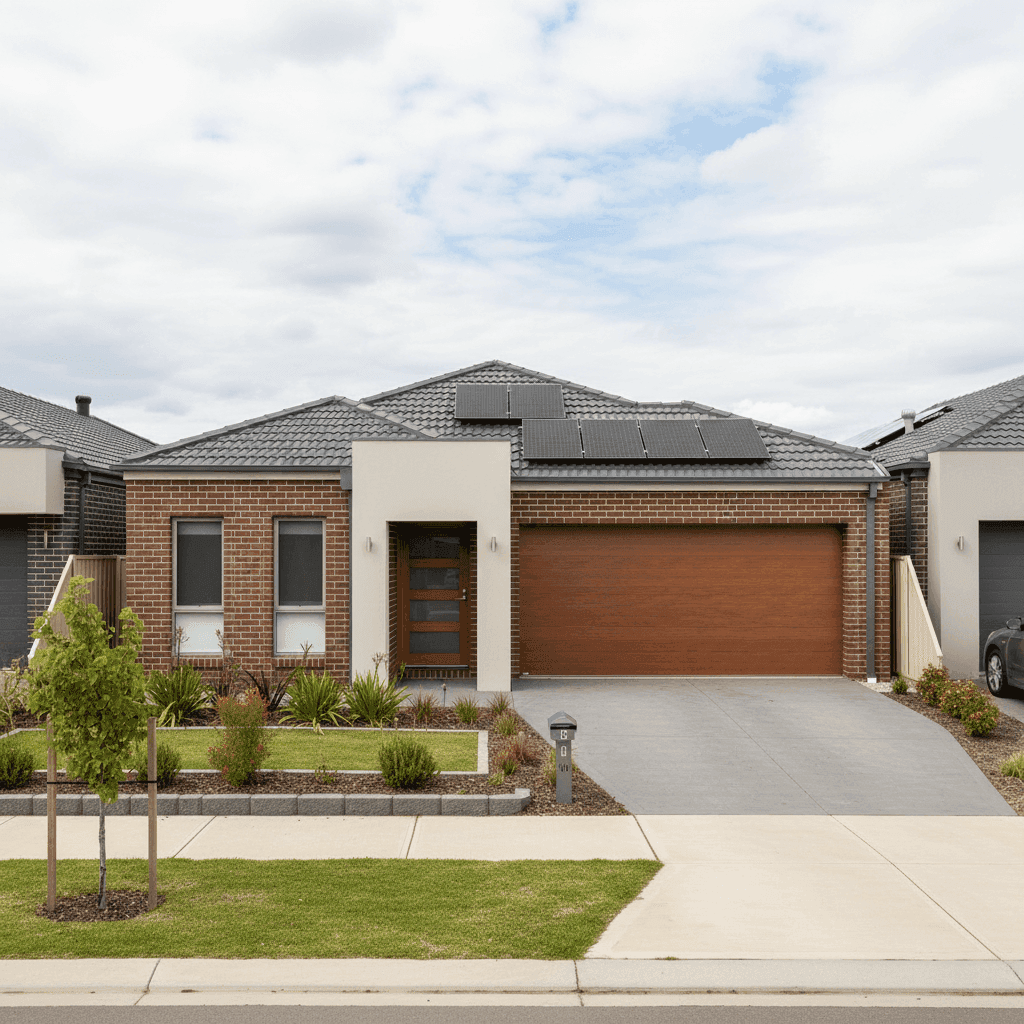
If you own a free standing home in Craigieburn, VIC 3064, you're probably wondering whether you're paying a fair price for your home and contents insurance — or whether there's a better deal out there. This article breaks down a real insurance quote for a three-bedroom, two-bathroom brick veneer home in Craigieburn, compares it against local, state and national benchmarks, and offers practical tips to help you make the most of your cover.
---
Is This Quote Fair?
The quote in question comes in at $1,203 per year (or roughly $115 per month) for combined home and contents insurance, covering a building sum insured of $354,000 and contents valued at $50,000, each with a $1,000 excess.
Based on data from 190 quotes collected for the Craigieburn area, this premium is rated CHEAP — below average for the suburb. The suburb average sits at $1,721 per year, meaning this quote is approximately $518 less than what most Craigieburn homeowners are paying annually. Even compared to the 25th percentile of $1,412 per year, this quote still undercuts the lower end of the local market by more than $200.
In short: yes, this is a genuinely competitive quote. Homeowners who locked in a price like this are well-positioned compared to their neighbours.
---
How Craigieburn Compares
To put this quote in broader context, it helps to look at how Craigieburn stacks up against Victorian and national insurance costs.
| Benchmark | Average Premium | Median Premium |
|---|---|---|
| This Quote | $1,203/yr | — |
| Craigieburn (3064) | $1,721/yr | $1,648/yr |
| LGA: Whittlesea | $1,774/yr | — |
| Victoria (VIC) | $3,000/yr | $2,718/yr |
| National | $5,347/yr | $2,764/yr |
A few things stand out here. First, Craigieburn is a relatively affordable suburb to insure compared to the Victorian state average — local premiums run at roughly half the state average. This reflects the area's low natural hazard risk profile; Craigieburn is not in a cyclone-prone zone, is not subject to significant flood exposure in most pockets, and sits in a part of metropolitan Melbourne that insurers generally view as lower risk.
Second, the national average of $5,347 per year is heavily skewed by high-risk regions — particularly in Queensland and Western Australia, where cyclone, storm surge and flooding risks push premiums significantly higher. The national median of $2,764 is a more representative figure for typical Australian homeowners, and even that is more than double what this Craigieburn quote is offering.
For homeowners in the City of Whittlesea, the local government area (LGA) average of $1,774 per year confirms that Craigieburn is broadly in line with surrounding suburbs, though this particular quote remains well below even that benchmark.
---
Property Features That Affect Your Premium
Several characteristics of this property work in the homeowner's favour when it comes to insurance pricing.
Brick veneer construction is generally well-regarded by insurers. It offers solid fire resistance and structural durability, which reduces the likelihood of a total loss claim. Compared to weatherboard or timber-clad homes, brick veneer typically attracts lower premiums.
Tiled roof is another positive. Concrete or terracotta tiles are considered more resilient than Colorbond or corrugated iron in many underwriting models, particularly for hail and storm events — though tiles can be more susceptible to cracking under extreme hail, so it's worth checking your policy's storm cover carefully.
Slab foundation is standard for homes built in Melbourne's growth corridors and is generally treated as a neutral or positive factor by insurers. It's worth noting that slab homes can be more expensive to repair if subsidence occurs, but this risk is relatively low in Craigieburn's soil conditions.
Built in 2015, this is a relatively modern home. Newer builds benefit from compliance with updated building codes, which typically means better structural integrity, improved fire safety features, and more energy-efficient construction — all of which can contribute to lower risk in an insurer's eyes.
Solar panels are present on this property. While solar adds value to the home, it's important to confirm with your insurer that the panels are explicitly covered under your building sum insured. Some policies include them automatically; others require a separate endorsement. At $354,000 building sum insured, homeowners should verify that this figure accounts for the replacement cost of the solar system.
Ducted climate control is another feature worth noting. These systems can be costly to repair or replace, and homeowners should ensure their contents or building sum insured adequately reflects this. Ducted systems attached to the building structure are typically covered under building insurance, while portable units fall under contents.
The absence of a pool simplifies things — pools add liability exposure and can increase premiums modestly, so not having one is a minor premium-saving factor.
---
Tips for Homeowners in Craigieburn
1. Review your building sum insured regularly. Construction costs have risen significantly in recent years. A sum insured of $354,000 for a 153 sqm home built in 2015 may be appropriate today, but it's worth recalculating your rebuild cost annually — especially given ongoing inflation in the building trades. Underinsurance is one of the most common problems Australian homeowners face at claim time.
2. Confirm solar panel coverage explicitly. As noted above, solar panels are a meaningful asset. Contact your insurer directly to confirm whether your panels are included in the building sum insured and whether there are any exclusions around storm damage, inverter failure, or accidental breakage.
3. Don't auto-renew without comparing. Even if your current premium is below the suburb average, that doesn't mean it will stay that way. Insurers regularly adjust pricing at renewal. Use a comparison platform like CoverClub to benchmark your renewal quote each year and ensure you're still getting a competitive rate.
4. Consider your excess strategically. Both the building and contents excess on this policy sit at $1,000. A higher excess generally means a lower premium — if you have sufficient savings to cover a larger out-of-pocket cost in the event of a claim, increasing your excess to $2,000 or more could reduce your annual premium meaningfully. Conversely, if cash flow is tight, the current $1,000 excess strikes a reasonable balance.
---
Compare Your Own Quote
Whether you're a new homeowner in Craigieburn or coming up for renewal, it pays to shop around. CoverClub makes it easy to compare home and contents insurance quotes from multiple insurers in minutes. Get a quote today and see how your premium stacks up against the suburb average — you might be surprised at what you could save.