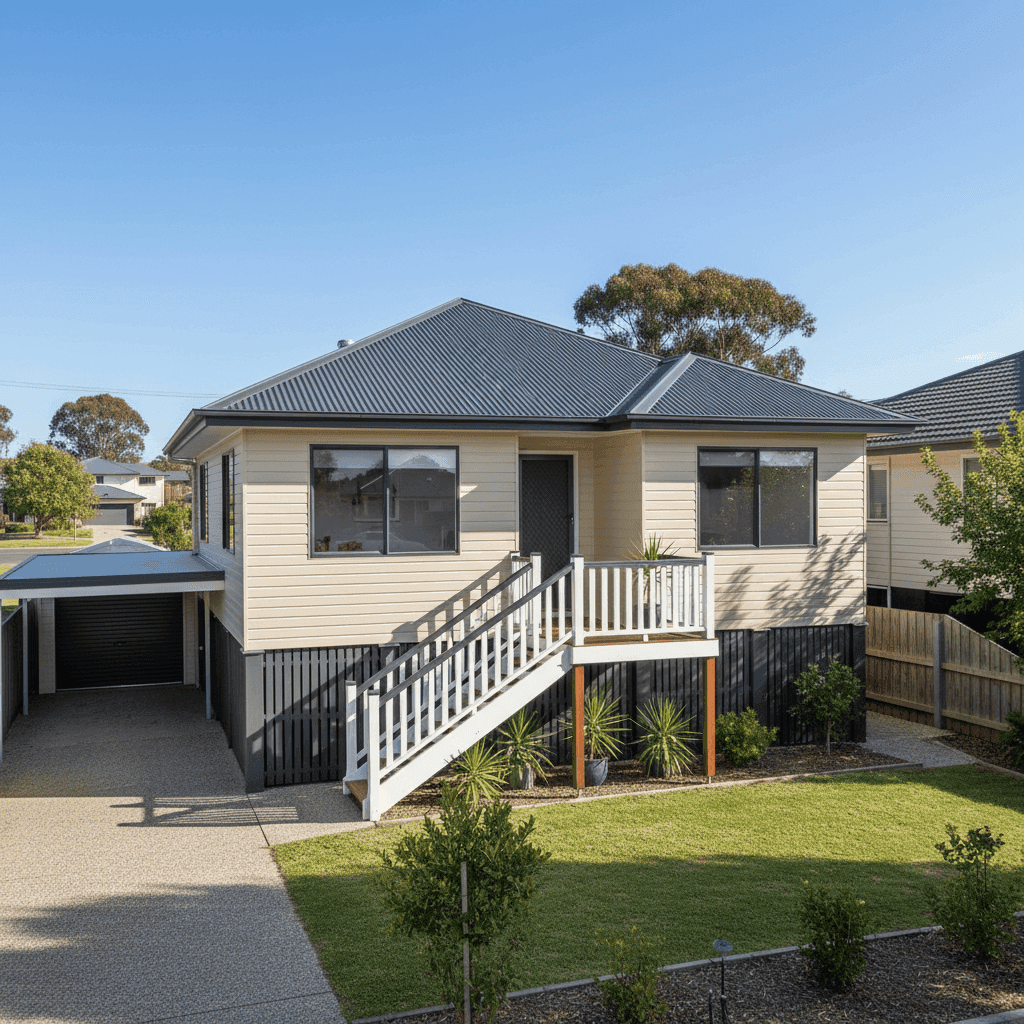
If you own a free standing home in Cranbourne East, VIC 3977, you're probably wondering whether you're paying a fair price for your building insurance — or leaving money on the table. This article breaks down a recent building-only quote of $968 per year for a 1-bedroom, 1-bathroom home in the suburb, benchmarking it against local, state, and national data to give you a clear picture of where it sits in the market.
---
Is This Quote Fair?
The short answer: yes — and then some. This quote has been rated CHEAP (Below Average), meaning it sits well under what most homeowners in the area are paying.
At $968 per year (or roughly $93 per month), this premium comes in significantly below the suburb average of $1,540/yr and even below the 25th percentile of $1,093/yr across 61 quotes collected in Cranbourne East. That means this policy is priced more affordably than at least 75% of comparable quotes in the same postcode — a genuinely strong result.
The building excess is set at $1,000, which is a standard figure for Australian home insurance policies. A higher excess typically reduces your premium, so it's worth noting that this competitive price isn't being artificially inflated by an unusually low excess.
For homeowners on a budget or those looking to keep ongoing costs manageable, this quote represents solid value — provided the level of cover meets your needs.
---
How Cranbourne East Compares
To put this quote in proper context, it helps to zoom out and look at the broader pricing landscape. You can explore the full data on the Cranbourne East insurance stats page.
| Benchmark | Premium |
|---|---|
| This quote | $968/yr |
| Suburb 25th percentile | $1,093/yr |
| Suburb median | $1,421/yr |
| Suburb average | $1,540/yr |
| Suburb 75th percentile | $1,821/yr |
| LGA (Frankston) average | $3,283/yr |
| VIC state average | $3,000/yr |
| National average | $5,347/yr |
The gap between this quote and the broader benchmarks is striking. Compared to the Victorian state average of $3,000/yr, this homeowner is paying less than a third of what the typical Victorian pays for home insurance. Even against the national average of $5,347/yr — heavily influenced by high-risk regions like Far North Queensland and flood-prone areas — this quote is a fraction of the cost.
It's also worth noting that the LGA average for Frankston ($3,283/yr) is more than triple this quote, suggesting that even within the broader local government area, Cranbourne East homeowners may be finding more competitive pricing than their neighbours in other parts of the Frankston LGA.
---
Property Features That Affect Your Premium
Several characteristics of this particular property work in its favour when it comes to insurance pricing.
Hardiplank / Hardiflex external walls are a fibre cement cladding product well regarded by insurers for its durability and fire resistance. Unlike timber weatherboards, Hardiflex doesn't combust easily, which can reduce the risk profile of the dwelling. This is a meaningful factor in Victoria, where bushfire and ember attack remain genuine concerns in outer suburban and semi-rural areas.
Steel / Colorbond roofing is similarly favoured by underwriters. It's non-combustible, resistant to high winds, and less prone to the kind of storm damage that can drive up claims costs. Compared to terracotta or concrete tiles — which can crack, leak, or become dislodged — Colorbond tends to perform well in adverse weather.
Stump foundations (i.e., the home is elevated by at least 1 metre) can be a double-edged sword. On one hand, elevation reduces flood and water ingress risk, which is a positive for insurers. On the other, elevated homes can be more exposed to wind uplift. In this case, the combination of a solid Colorbond roof and fibre cement walls likely offsets any wind-related concerns.
Timber and laminate flooring is worth keeping in mind from a claims perspective. While it looks great and adds value, it can be more susceptible to water damage than tiles. Ensuring your policy covers internal water damage (e.g., from burst pipes or storm ingress) is important for homes with this type of flooring.
Above-average fittings quality means the cost to rebuild or repair this home may be higher than a standard-spec property of the same size. The $200,000 sum insured should be reviewed periodically to ensure it reflects current construction costs — particularly given the significant rise in building material and labour costs across Australia in recent years.
The property also benefits from ducted climate control, which adds to the replacement value of the home. Ducted systems can cost $10,000–$20,000 or more to replace, so confirming this is captured within your building sum insured is a smart move.
---
Tips for Homeowners in Cranbourne East
1. Review your sum insured regularly With construction costs rising sharply across Victoria, a sum insured set a few years ago may no longer be sufficient to fully rebuild your home. Use a building cost calculator or speak with a builder to get a realistic estimate, and update your policy accordingly. Underinsurance is one of the most common — and costly — mistakes Australian homeowners make.
2. Check what's included in "building" cover Building-only policies cover the structure itself, but definitions vary between insurers. Make sure your policy explicitly covers fixed appliances (like your ducted climate control system), fencing, and any outbuildings. If you later add a shed or pergola, notify your insurer to keep your cover current.
3. Understand your excess before you claim A $1,000 building excess is standard, but it's worth knowing this upfront. For minor damage — say, a broken window or small section of damaged cladding — the repair cost may not justify lodging a claim once the excess is factored in. Keeping a small emergency fund for minor repairs can help you avoid unnecessary claims that might affect future premiums.
4. Compare quotes at renewal time Even if you're happy with your current insurer, the home insurance market is competitive and premiums can shift year to year. Running a comparison before your policy renews takes only a few minutes and could reveal savings — especially given how far below average this quote already is.
---
Ready to Compare Home Insurance in Cranbourne East?
Whether you're a first-time homeowner or simply due for a policy review, comparing quotes is the fastest way to make sure you're getting fair value. At CoverClub, we make it easy to see how your premium stacks up against real data from your suburb and beyond.
Get a home insurance quote today and find out if you could be paying less — or whether your current cover is already working hard for you.