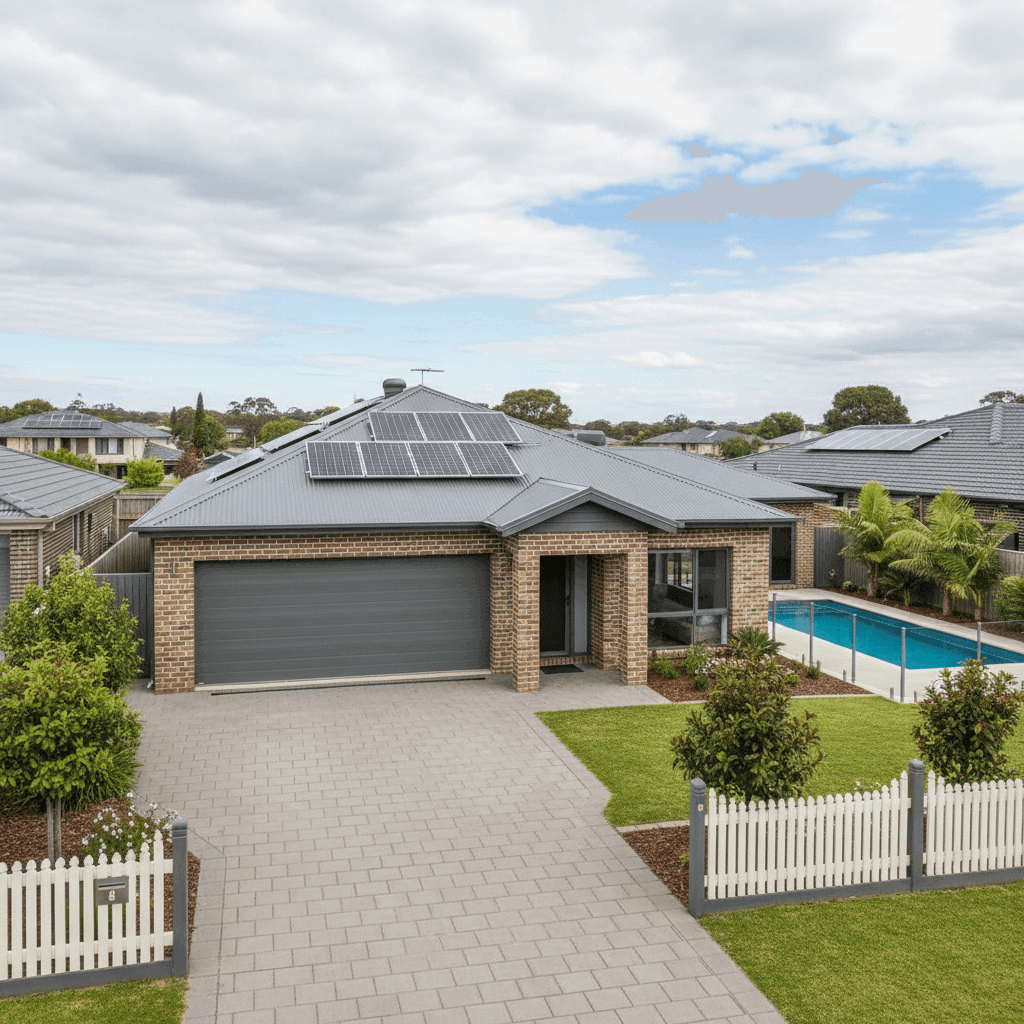
If you own a four-bedroom free standing home in Cranbourne, VIC 3977, you're probably wondering whether your home insurance premium is reasonable — or whether you're paying more than you should. This article breaks down a real home and contents insurance quote for a property in this south-eastern Melbourne suburb, comparing it against local, state, and national benchmarks so you can make a more informed decision.
---
Is This Quote Fair?
The quote in question comes in at $2,237 per year (or $219/month) for combined home and contents cover, with a building sum insured of $762,000 and contents valued at $248,000. Both the building and contents excess are set at $1,000.
Our price rating for this quote is EXPENSIVE — above average for the Cranbourne area.
To put that in perspective: the suburb average premium sits at just $1,347/year, and the median is $1,352/year. That means this quote is running approximately 66% higher than what most Cranbourne homeowners are paying. Even at the 75th percentile — meaning 75% of quotes in the area are cheaper — the figure is only $1,508/year, still well below this premium.
That said, it's important not to compare apples with oranges. This property has a relatively high building sum insured ($762,000) and a substantial contents value ($248,000), which will naturally push the premium upward compared to properties with lower cover levels. The presence of a swimming pool, solar panels, and ducted climate control also adds to the insurer's risk and replacement cost calculations.
---
How Cranbourne Compares
Understanding where Cranbourne sits in the broader insurance landscape is useful context for any homeowner reviewing their policy.
| Benchmark | Average Premium |
|---|---|
| Cranbourne (3977) | $1,347/yr |
| Victoria (VIC) | $3,000/yr |
| National | $5,347/yr |
| LGA (Frankston) | $3,283/yr |
Cranbourne is actually a relatively affordable suburb to insure compared to the Victorian state average of $3,000/year and the national average of $5,347/year — which is heavily influenced by high-risk areas such as cyclone-prone regions of Queensland and flood-affected parts of New South Wales. The LGA average for Frankston sits at $3,283/year, further reinforcing that Cranbourne sits on the more affordable end of the local government area.
This means that while the specific quote analysed here is above the local average, Cranbourne as a suburb generally enjoys lower insurance costs than much of regional and coastal Australia. Homeowners here benefit from the area's relatively low exposure to extreme weather events — there's no cyclone risk, and the region doesn't face the same flood or bushfire frequency as some other parts of Victoria.
For a full breakdown of insurance trends in the postcode, visit the Cranbourne suburb stats page.
---
Property Features That Affect Your Premium
Several characteristics of this property directly influence what insurers charge. Here's how each one plays a role:
Brick Veneer Walls & Colorbond Roof Brick veneer is one of the most common construction types in suburban Melbourne and is generally viewed favourably by insurers — it's durable, fire-resistant, and relatively straightforward to repair. A steel Colorbond roof is similarly well-regarded: it's lightweight, long-lasting, and performs well in high-wind conditions. Together, these materials can help keep premiums more competitive than, say, weatherboard or fibre cement construction.
Slab Foundation A concrete slab foundation is standard for homes built around 2000 and is considered low-risk by most insurers. There's no subfloor cavity to worry about, which reduces the likelihood of certain types of damage.
Timber & Laminate Flooring While attractive and popular, timber and laminate flooring can be more expensive to replace than tiles or carpet, which may nudge the contents or building sum insured slightly higher.
Swimming Pool A pool adds both value and liability to a property. Insurers factor in the cost of pool fencing, equipment (pumps, filters, heating), and the potential for accidental damage or injury. It's a meaningful contributor to a higher premium.
Solar Panels Solar panel systems are now a standard feature on many Australian homes, but they represent a significant replacement cost — often $8,000–$20,000 or more depending on system size. Insurers include this in the building sum insured, which can push the overall premium up.
Ducted Climate Control A ducted heating and cooling system is another high-value fixed asset. Like solar panels, it forms part of the building replacement cost and contributes to a higher sum insured.
Building Size: 214 sqm At 214 square metres, this is a comfortably sized family home. Larger floor areas mean higher rebuild costs, which is directly reflected in the $762,000 building sum insured — a figure that accounts for full demolition and reconstruction at current labour and materials rates.
---
Tips for Homeowners in Cranbourne
If you're looking to get better value on your home and contents insurance, here are four practical steps worth considering:
- Review your sum insured regularly. Building costs have risen sharply in recent years. Make sure your sum insured reflects the true cost to rebuild — not the market value of your home. Underinsurance is one of the most common and costly mistakes Australian homeowners make. Use an independent building cost calculator to cross-check your figure.
- Compare quotes before renewing. Loyalty doesn't always pay in insurance. Many insurers offer better pricing to new customers, so it's worth shopping around each year rather than simply accepting your renewal notice. You can get a new quote at CoverClub in minutes.
- Consider a higher excess to reduce your premium. If you're in a financial position to absorb a larger out-of-pocket cost in the event of a claim, increasing your excess from $1,000 to $2,000 or more can meaningfully reduce your annual premium. Just make sure the saving justifies the additional risk you're taking on.
- Check what's included in your contents cover. With $248,000 in contents, it's worth doing a room-by-room audit to ensure your policy accurately reflects what you own. Over-insuring contents is just as costly as under-insuring — and many homeowners haven't updated their contents value since they first took out the policy.
---
Find a Better Deal with CoverClub
Whether your current premium feels too high or you simply want peace of mind that you're getting fair value, CoverClub makes it easy to compare home and contents insurance options across Australia. Our suburb-level data gives you real benchmarks — not just marketing claims — so you can see exactly how your quote stacks up.
Get a home insurance quote today and find out if you could be paying less for the same level of cover.