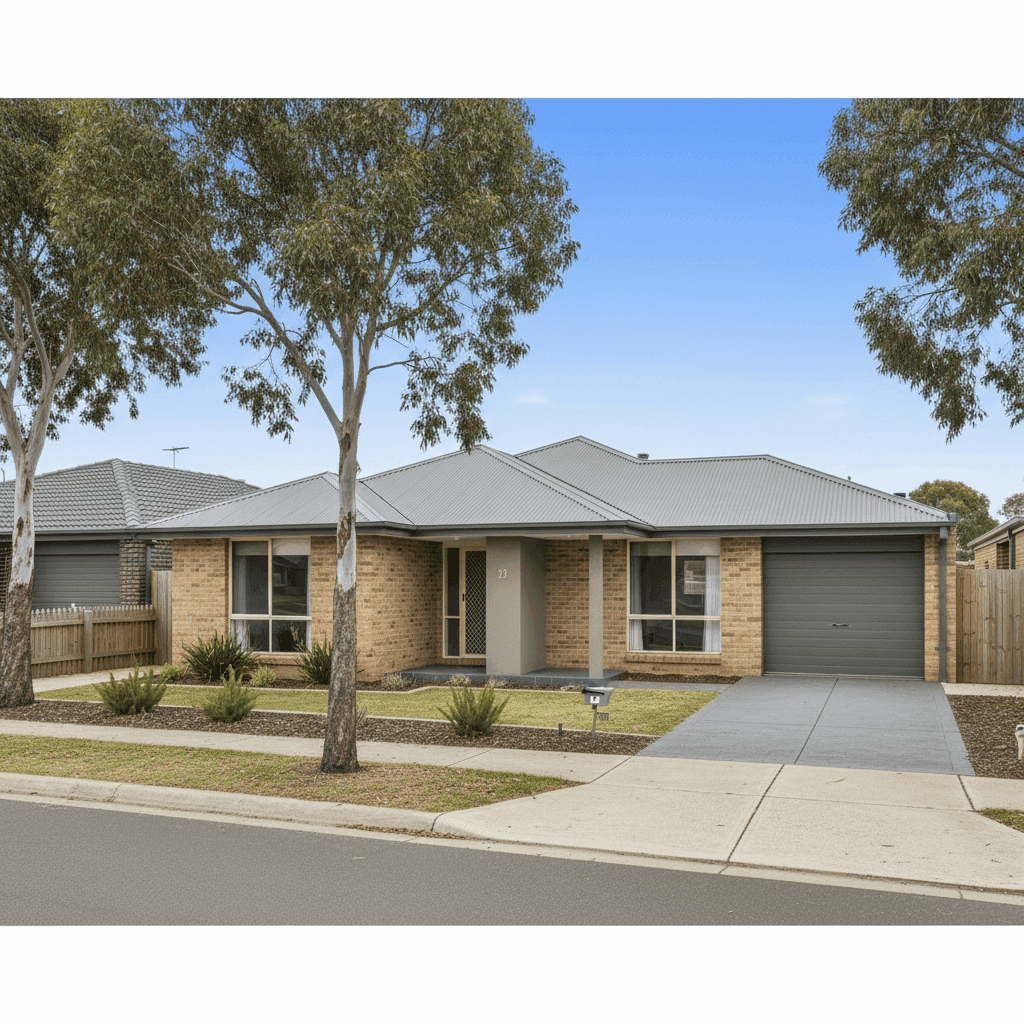
If you own a four-bedroom free standing home in Cranbourne, VIC 3977, you're probably curious whether your home insurance premium is competitive — or whether you're quietly overpaying year after year. We've analysed a recent home and contents insurance quote for a property in this suburb and broken it down against local, state, and national benchmarks so you can see exactly where it sits.
---
Is This Quote Fair?
The quote in question comes in at $1,648 per year (or $158 per month) for combined home and contents cover, with a building sum insured of $600,000 and contents valued at $155,000. Both the building and contents excess are set at $2,000.
Our pricing analysis rates this quote as Expensive — above average for the Cranbourne area.
To put that in context: the suburb average premium sits at $1,347/yr and the median at $1,352/yr. This quote is roughly $300 above the local average, placing it well above the 75th percentile for the suburb (which is $1,508/yr). In other words, around three-quarters of comparable quotes in Cranbourne come in cheaper than this one.
That said, "expensive" is relative. The building sum insured of $600,000 is on the higher end, and the contents value of $155,000 is substantial. Both of these factors push premiums upward, and it's worth remembering that underinsuring your home to chase a lower premium can be a costly mistake if you ever need to make a claim.
---
How Cranbourne Compares
Understanding your premium means looking beyond just your street. Here's how Cranbourne stacks up at different levels:
| Benchmark | Average Premium |
|---|---|
| Cranbourne (suburb) | $1,347/yr |
| Cranbourne (median) | $1,352/yr |
| Cranbourne 25th percentile | $1,056/yr |
| Cranbourne 75th percentile | $1,508/yr |
| LGA (Frankston) | $3,283/yr |
| Victoria (state average) | $3,000/yr |
| Victoria (state median) | $2,718/yr |
| National average | $5,347/yr |
| National median | $2,764/yr |
The picture here is quite encouraging for Cranbourne homeowners overall. Suburb-level data for Cranbourne shows premiums that are significantly lower than both the Victorian state average of $3,000/yr and the national average of $5,347/yr. Even the LGA average for the Frankston council area ($3,283/yr) is more than double the Cranbourne suburb median.
This suggests Cranbourne is a relatively affordable suburb to insure compared to broader Victorian and national trends — likely because it sits outside high-risk flood, bushfire, and cyclone zones. The fact that this particular quote is above the local average doesn't mean the suburb is expensive; it may simply reflect the specific property's characteristics and the chosen level of cover.
Our analysis is based on a sample of 33 quotes collected for the Cranbourne suburb, giving a reasonable snapshot of the local market.
---
Property Features That Affect Your Premium
Every property is different, and insurers assess a range of features when calculating your premium. Here's how the key characteristics of this home come into play:
- Brick Veneer Walls: Brick veneer is one of the most common external wall types in Australian suburban homes, and insurers generally view it favourably. It offers solid fire resistance and durability, which can help keep premiums moderate compared to timber-framed or weatherboard construction.
- Steel/Colorbond Roof: Colorbond roofing is highly regarded by insurers. It's resistant to fire, corrosion, and high winds, and tends to have a long lifespan. This is a positive factor for your premium.
- Slab Foundation: A concrete slab is a standard and stable foundation type in Victoria, particularly for homes built in the 2000s. It carries lower subsidence and moisture risk than older suspended timber floors, which insurers appreciate.
- Construction Year (2005): A home built in 2005 benefits from modern building codes and materials. It's old enough to have a known track record, but new enough to avoid the higher maintenance risks associated with older properties. This generally works in your favour.
- Ducted Climate Control: The presence of ducted heating and cooling adds to the replacement value of the home's fixtures and fittings. This is factored into the building sum insured and can marginally increase your premium, but it also ensures you're properly covered if the system needs replacing after a covered event.
- No Pool, No Solar Panels: The absence of a pool removes a common liability risk, and no solar panels means fewer complex electrical components to insure. Both of these simplify the risk profile and help keep premiums lower.
- Building Size (244 sqm): At 244 square metres, this is a generously sized family home. Larger homes cost more to rebuild, which is reflected in the $600,000 building sum insured and, consequently, the premium.
- Tile Flooring: Tiles are durable and relatively inexpensive to replace compared to hardwood or engineered timber floors, which is a minor positive from an insurer's perspective.
---
Tips for Homeowners in Cranbourne
Whether you're reviewing an existing policy or shopping for cover for the first time, here are some practical steps to make sure you're getting value for money:
- Review your sum insured regularly. Building costs have risen sharply in recent years. If your sum insured hasn't kept pace with construction cost inflation, you could be underinsured — meaning you'd face a shortfall in a total loss scenario. Use an independent building cost calculator to check your figures annually.
- Compare quotes before renewing. Insurers often rely on customer inertia at renewal time. Spending 15–20 minutes comparing quotes on a platform like CoverClub could easily save you hundreds of dollars without reducing your level of cover.
- Consider your excess carefully. This quote carries a $2,000 excess on both building and contents. Opting for a higher excess can reduce your annual premium, but make sure you could comfortably cover that amount out of pocket if you needed to make a claim. Conversely, if cash flow is a concern, a lower excess with a slightly higher premium might suit you better.
- Bundle your building and contents cover. This quote already combines home and contents, which is a smart move. Most insurers offer a discount for bundling, and having a single policy simplifies the claims process significantly.
---
Ready to Find a Better Deal?
If this quote doesn't feel right for your budget, the good news is that the Cranbourne market has plenty of competitive options. At CoverClub, we make it easy to compare home and contents insurance quotes side by side, so you can see exactly what you're getting for your money. Get a quote today and find out whether you could be paying less — without sacrificing the cover your home deserves.