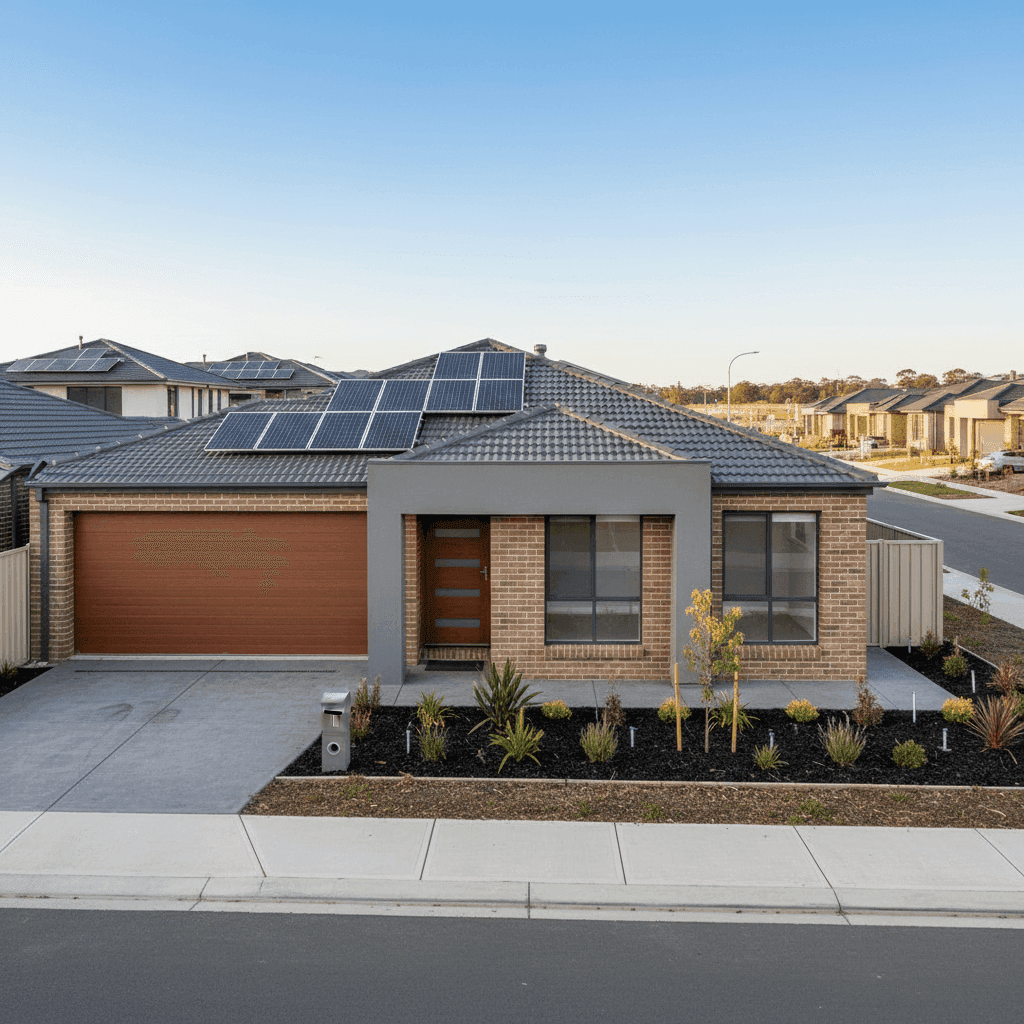
Cranbourne West is one of Melbourne's fastest-growing outer-south-east suburbs, and with new housing estates continuing to expand across the area, home insurance is a key financial consideration for local homeowners. This article takes a close look at a real home and contents insurance quote for a four-bedroom, two-bathroom free standing home in Cranbourne West (VIC 3977) — and breaks down whether it represents good value, what's driving the premium, and how you can make sure you're not overpaying.
---
Is This Quote Fair?
The quote in question comes in at $1,146 per year (or roughly $118 per month) for combined home and contents cover, with a building sum insured of $750,000 and contents cover of $100,000. The building excess is $3,000 and the contents excess is $1,000.
Our price rating for this quote is FAIR — Around Average, which is a reasonable outcome for a well-appointed modern home in this suburb. It sits just below the suburb average of $1,235/yr and the suburb median of $1,203/yr, meaning this homeowner is paying slightly less than what most comparable properties in Cranbourne West are quoted. That's a solid position to be in.
It's worth noting that "fair" doesn't necessarily mean "the best available." There's a meaningful spread of premiums across the suburb — the cheapest 25% of quotes come in under $786/yr, while the most expensive 25% exceed $1,645/yr. With the right insurer and policy structure, there may be room to bring this premium down further without sacrificing meaningful cover.
---
How Cranbourne West Compares
One of the most striking takeaways from the pricing data is just how favourably Cranbourne West sits relative to broader benchmarks. Here's a quick snapshot:
| Benchmark | Average Premium | Median Premium |
|---|---|---|
| Cranbourne West (suburb) | $1,235/yr | $1,203/yr |
| LGA (Frankston) | $3,283/yr | — |
| Victoria (state) | $3,000/yr | $2,718/yr |
| Australia (national) | $5,347/yr | $2,764/yr |
The quote of $1,146/yr sits well below the Victorian state average of $3,000/yr and is a fraction of the national average of $5,347/yr. Even compared to the broader Frankston LGA average of $3,283/yr, this Cranbourne West quote looks very competitive.
Why the difference? Cranbourne West benefits from relatively low natural disaster risk — no cyclone exposure, minimal flood history in newer estates, and a suburban environment that insurers tend to price more favourably than coastal, bushfire-prone, or high-crime areas. The suburb's newer housing stock also plays a role, as modern builds tend to attract lower premiums due to updated construction standards.
You can explore the full Cranbourne West insurance statistics here, including premium distributions and insurer breakdowns.
---
Property Features That Affect Your Premium
Several characteristics of this particular property have a direct influence on the premium quoted. Let's unpack the key ones:
Modern Construction (Built 2018)
Homes built after 2016 in Victoria are subject to stricter building codes, including improved structural requirements and energy efficiency standards. A 2018 build signals to insurers that the property is unlikely to have ageing infrastructure issues — things like outdated wiring, old plumbing, or deteriorating roofing that can drive up risk and therefore premiums.
Brick Veneer Walls and Tiled Roof
Brick veneer is one of the most common external wall materials in Australian suburban homes and is generally viewed favourably by insurers. It offers good fire resistance and durability. Combined with a tiled roof — another robust, low-maintenance choice — this property presents a solid risk profile from an underwriting perspective.
Slab Foundation
Concrete slab foundations are standard in newer Victorian homes and are associated with lower subsidence and movement risk compared to older pier-and-beam or strip footing constructions. This is a neutral-to-positive factor for pricing.
Solar Panels
The presence of solar panels adds some replacement cost to the building sum insured, as panels can be expensive to repair or replace after a storm or hail event. It's important to confirm with your insurer that solar panels are explicitly covered under your building policy — not all policies include them automatically, and some may apply sub-limits.
Ducted Climate Control
Ducted heating and cooling systems are a high-value fixed installation and are typically covered under building insurance. However, given the top-of-the-range fittings quality noted for this property, it's worth reviewing your sum insured to ensure it accurately reflects the full replacement cost of all fixtures and fittings — underinsurance is a common and costly mistake.
Top-of-the-Range Fittings
High-end finishes — think stone benchtops, premium appliances, designer tapware, and quality flooring — significantly increase the cost to rebuild or repair a home. This is likely a contributing factor to the $750,000 building sum insured, which is appropriate for a 244 sqm home with premium fittings in this area.
---
Tips for Homeowners in Cranbourne West
1. Review Your Building Sum Insured Annually
Construction costs in Victoria have risen sharply over the past few years. A sum insured that was accurate when you first took out your policy may no longer reflect the true cost to rebuild your home today. Use a building cost calculator or speak with a quantity surveyor to validate your figure — especially given the top-of-the-range fittings in this property.
2. Confirm Solar Panel Coverage
As mentioned above, solar panels are a meaningful asset that can be overlooked in standard building policies. Check your Product Disclosure Statement (PDS) to confirm panels are covered, understand any applicable sub-limits, and ask your insurer whether damage from hail or storm is included.
3. Compare Quotes Before Renewal
Insurers regularly adjust their pricing models, and the cheapest option one year may not be the best value the next. Given that the cheapest 25% of quotes in Cranbourne West come in under $786/yr, there's a real possibility of finding a lower premium with equivalent cover. Use CoverClub to compare quotes before your renewal date.
4. Consider Your Excess Structure Carefully
This policy carries a $3,000 building excess, which is on the higher end. A higher excess generally means a lower premium, but it also means a larger out-of-pocket cost if you need to make a claim. Think about what you could comfortably afford to pay in the event of a claim, and adjust your excess accordingly to find the right balance for your situation.
---
Get a Better Deal on Home Insurance
Whether you're a new homeowner in Cranbourne West or coming up for renewal, it pays to shop around. CoverClub makes it easy to compare home and contents insurance quotes from a range of Australian insurers — so you can see exactly where your current premium sits and whether there's a better option available.
Get a home insurance quote at CoverClub and find out if you could be paying less for the same level of protection.