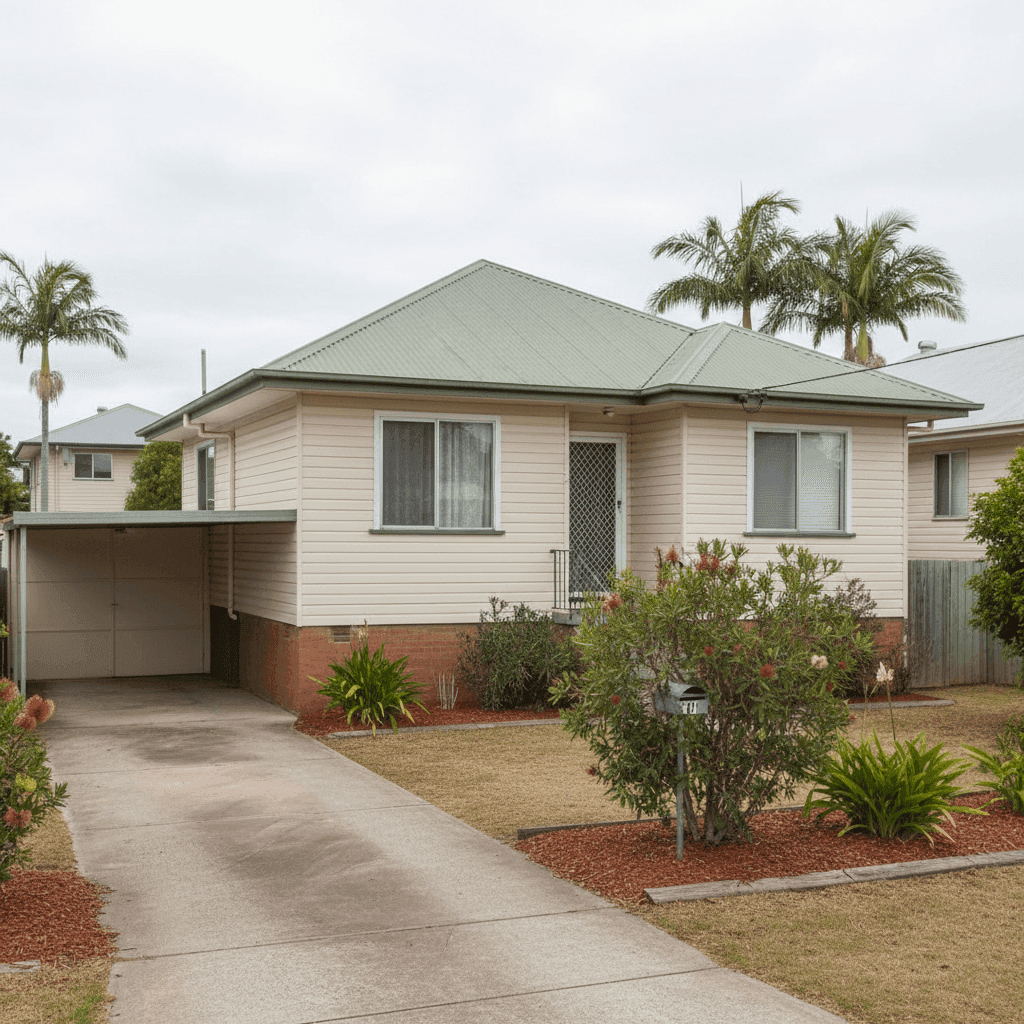
Home insurance in North Queensland is rarely cheap — and if you've recently received a quote for a free standing home in Cranbrook, QLD 4814, you may be wondering whether the price on the table is reasonable or whether you're being overcharged. This article breaks down a real building insurance quote for a three-bedroom home in Cranbrook, benchmarks it against local, state, and national data, and explains exactly why premiums in this part of Queensland look the way they do.
---
Is This Quote Fair?
The quote in question comes in at $6,035 per year (or $578 per month) for building-only cover, with a $1,000 building excess and a sum insured of $500,000. Our price rating for this quote is Expensive — Above Average.
That label isn't arbitrary. When we stack this figure against the data we've collected for Cranbrook specifically, the quote sits noticeably above both the suburb average ($3,954/yr) and the suburb median ($2,903/yr). In fact, it's also above the suburb's 75th percentile — $5,774 per year — meaning it's pricier than at least three-quarters of comparable quotes we've seen in the area.
That said, "expensive" doesn't automatically mean "wrong." Several property-specific factors push this particular quote higher than the suburb norm, and we'll unpack those below. What it does mean is that shopping around is well worth your time.
---
How Cranbrook Compares
To put this quote in proper context, here's how Cranbrook stacks up against broader benchmarks:
| Benchmark | Premium |
|---|---|
| This quote | $6,035/yr |
| Cranbrook suburb average | $3,954/yr |
| Cranbrook suburb median | $2,903/yr |
| Cranbrook 25th percentile | $2,541/yr |
| Cranbrook 75th percentile | $5,774/yr |
| Townsville LGA average | $7,340/yr |
| QLD state average | $9,129/yr |
| QLD state median | $3,903/yr |
| National average | $5,347/yr |
| National median | $2,764/yr |
A few things stand out here. First, the QLD state average of $9,129 per year is extraordinarily high — a reflection of the outsized cyclone and flood risk that affects much of Queensland. Compared to that figure, $6,035 looks almost moderate. But the national average of $5,347 and the suburb median of $2,903 tell a more nuanced story: this quote is above the national average and more than double the typical Cranbrook premium.
The Townsville LGA average of $7,340 per year provides useful local context — it suggests that the broader Townsville region carries significant risk loading, and this quote is actually tracking below the LGA average, which is a mild silver lining.
You can explore more localised data for this postcode on the Cranbrook suburb stats page.
> Note: The suburb sample size for Cranbrook is 8 quotes, so these figures should be treated as indicative rather than definitive. A larger dataset would produce more stable averages.
---
Property Features That Affect Your Premium
Several characteristics of this property have a direct bearing on the premium — some pushing it up, others keeping it in check.
Cyclone Risk Area
This is the single biggest factor. Cranbrook sits within the Townsville area, which is classified as a cyclone risk zone. Insurers apply significant loadings to properties in these regions to account for the potential for catastrophic wind and storm damage. This loading alone can double or even triple a premium compared to an equivalent property in southern Queensland or interstate.
Fibro Asbestos Walls
The external walls of this home are constructed from fibro asbestos — a material common in homes built before the mid-1980s. Insurers view this material with caution for two reasons: first, it's more brittle than modern cladding and more susceptible to storm damage; and second, any repair or rebuild work involving asbestos-containing materials requires specialist contractors and safe disposal procedures, which significantly increases the cost of a claim. This is a meaningful premium driver.
Construction Year: 1983
A home built in 1983 predates modern cyclone-resistant building codes, which were substantially tightened in Queensland following Cyclone Tracy in 1974 and further updated in subsequent decades. Older construction standards mean the home may be less resilient to extreme wind events, which insurers factor into their risk assessment.
Colorbond Steel Roof
On a more positive note, a steel Colorbond roof is generally viewed favourably by insurers. It's durable, low-maintenance, and performs well in high-wind environments compared to terracotta or concrete tiles. This likely provides a modest offset to some of the other risk factors.
Ducted Climate Control
The presence of ducted climate control adds to the insured value of the home's fixtures and fittings. While it's not a dramatic premium driver, it does contribute to the overall replacement cost and is reflected in the sum insured.
Slab Foundation & Timber/Laminate Flooring
A concrete slab foundation is standard and unremarkable from an insurer's perspective. Timber and laminate flooring can be susceptible to water damage, which may be a minor consideration in a region prone to storm-related flooding.
---
Tips for Homeowners in Cranbrook
If you're looking to manage your home insurance costs without compromising on protection, here are four practical steps worth considering:
1. Review your sum insured carefully. At $500,000, the building sum insured needs to reflect the actual cost to rebuild the home — not its market value. For a 130 sqm fibro home in Townsville, it's worth getting a professional building valuation to ensure you're not over-insured. Even a modest reduction in the sum insured can meaningfully reduce your annual premium.
2. Consider a higher excess. The current excess is set at $1,000. Opting for a higher voluntary excess — say, $2,000 or $2,500 — can reduce your annual premium. Just make sure you'd be comfortable covering that amount out of pocket in the event of a claim.
3. Get multiple quotes. The spread between the 25th percentile ($2,541) and this quote ($6,035) in Cranbrook is substantial. Different insurers assess cyclone risk and asbestos construction very differently, and the only way to find the most competitive price for your specific property is to compare. Get a quote at CoverClub to see what's available for your address.
4. Ask about cyclone mitigation discounts. Some insurers offer premium reductions for homes that have undergone cyclone-proofing upgrades — such as improved roof tie-downs, cyclone shutters, or reinforced garage doors. If you've made any improvements to the property's wind resistance, it's worth raising this with your insurer directly.
---
Compare Your Options with CoverClub
Whether this quote is the right one for your home comes down to your individual circumstances — but you should never accept the first number you're given. CoverClub makes it easy to compare home insurance quotes across multiple insurers in one place, so you can see exactly where your premium sits relative to the market.
Start comparing quotes for your Cranbrook property today — it takes just a few minutes and could save you hundreds of dollars a year.