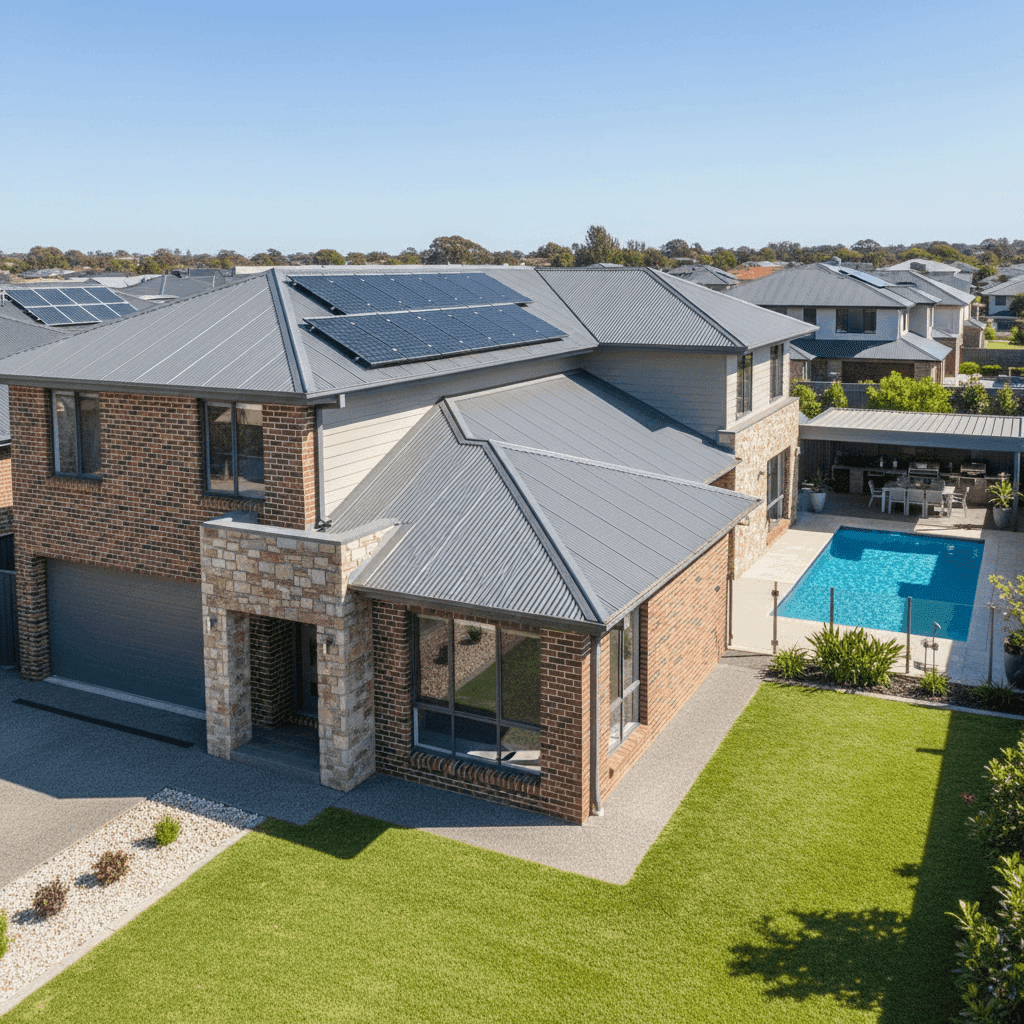
Cranebrook, nestled in the Penrith local government area on Sydney's western fringe, is a well-established suburban neighbourhood popular with families seeking space and value. If you own a free standing home here, you already know the appeal — generous block sizes, good schools, and a strong sense of community. But when the home insurance renewal lands in your inbox, you might find yourself wondering: is what I'm paying actually reasonable?
In this article, we break down a real home and contents insurance quote for a four-bedroom, three-bathroom free standing home in Cranebrook, comparing it against suburb, state, and national benchmarks to help you make a more informed decision.
---
Is This Quote Fair?
The annual premium for this property comes in at $5,356 per year (or roughly $506 per month), covering a building sum insured of $1,098,000 and contents valued at $249,000. Our price rating for this quote is Expensive — above average for the area.
To put that in perspective: the average home insurance premium across Cranebrook sits at just $1,782 per year, with a median of $1,642. This quote is more than three times the suburb average, which is a significant gap that warrants a closer look.
That said, context matters enormously in insurance pricing. The building sum insured of $1,098,000 is substantial — well above what many homes in the suburb are insured for — and the contents cover of $249,000 adds meaningfully to the overall risk the insurer is taking on. Higher sums insured naturally translate to higher premiums, so the comparison isn't entirely apples-to-apples when benchmarking against the suburb average.
Still, even accounting for the elevated coverage levels, there may be room to shop around. Explore Cranebrook suburb insurance stats to see the full spread of premiums in your postcode.
---
How Cranebrook Compares
Understanding where your premium sits relative to broader benchmarks can be illuminating. Here's how the numbers stack up:
| Benchmark | Average Premium | Median Premium |
|---|---|---|
| Cranebrook (2749) | $1,782/yr | $1,642/yr |
| Penrith LGA | $2,220/yr | — |
| NSW | $9,528/yr | $3,770/yr |
| National | $5,347/yr | $2,764/yr |
A few things stand out here. First, Cranebrook is a relatively affordable suburb to insure — the local average of $1,782 sits well below both the Penrith LGA average ($2,220) and the NSW average ($9,528). The NSW average is heavily skewed upward by high-risk coastal and flood-prone areas, which is why the state median of $3,770 is a more useful comparison point.
Interestingly, this particular quote of $5,356 sits almost exactly in line with the national average premium of $5,347 — suggesting that while it's expensive for Cranebrook specifically, it's not out of step with what Australians across the country pay for comparable coverage. You can dig deeper into NSW insurance averages or view national home insurance benchmarks for further context.
The suburb sample size of 43 quotes gives us a reasonable basis for comparison, though it's worth noting that the 75th percentile for Cranebrook sits at $2,209 — meaning this quote is still well above even the most expensive quarter of local premiums. That reinforces the case for comparing alternatives.
---
Property Features That Affect Your Premium
Several characteristics of this property directly influence the cost of cover. Understanding these can help you have a more productive conversation with insurers — or identify areas where adjustments might be possible.
High building sum insured ($1,098,000) This is likely the single biggest driver of the elevated premium. A building replacement cost of just over $1 million reflects the size (205 sqm), quality of construction, and above-average fittings throughout. Insurers price premiums as a function of the maximum payout they could face, so a higher sum insured means a higher base premium.
Above-average fittings quality The property features above-average internal fittings — think quality cabinetry, premium tapware, stone benchtops, and the like. These increase both the rebuild cost and the contents value, which flows through to the premium.
Swimming pool A pool adds liability exposure and increases the complexity of a rebuild, both of which can nudge premiums upward. Insurers factor in the cost of reinstating a pool as part of the building replacement calculation.
Solar panels Solar panels are increasingly common on Australian homes, but they do add to the insured building value and can complicate claims (particularly for roof damage). Some insurers treat them as a separate item; others fold them into the building sum insured. It's worth confirming exactly how your policy handles solar.
Brick veneer walls and Colorbond roof On the positive side, brick veneer construction and a steel Colorbond roof are both well-regarded by insurers. They offer solid fire resistance and durability, which can work in your favour compared to, say, weatherboard cladding or older tile roofs.
Ducted climate control Ducted air conditioning is a meaningful inclusion in the building's replacement cost and is a common feature that can add several thousand dollars to the rebuild estimate.
Slab foundation, no cyclone risk A concrete slab foundation is structurally sound and generally viewed favourably. The absence of cyclone risk (this part of NSW is not a designated cyclone zone) also removes one of the more significant premium loading factors seen in northern Queensland and parts of WA.
---
Tips for Homeowners in Cranebrook
Whether you're reviewing your current policy or shopping for a new one, here are four practical steps worth taking:
- Validate your building sum insured. A sum insured of $1,098,000 is significant — make sure it reflects an accurate rebuild cost rather than the market value of your home. Overinsuring inflates your premium without providing extra benefit; underinsuring can leave you badly exposed. Consider commissioning an independent building valuation or using an online calculator to cross-check the figure.
- Compare quotes from multiple insurers. The gap between this quote and the suburb average is large enough to suggest meaningful savings may be available elsewhere. Insurers price risk differently, and a home with a pool, solar panels, and premium fittings will be rated differently across providers. Get a comparison quote at CoverClub to see what's available for your specific property.
- Review your contents sum insured. $249,000 in contents cover is substantial. Take the time to do a proper home inventory — room by room — to confirm this figure is accurate. Overestimating contents value is a common (and costly) mistake.
- Ask about bundling discounts and loyalty offers. Some insurers offer discounts when you combine home and contents cover, or when you've been a customer for multiple years. It's always worth asking — but don't let a loyalty discount stop you from shopping around if a competitor offers meaningfully better value.
---
Compare Your Options with CoverClub
Whether this quote looks right to you or raises a few eyebrows, the best way to know for certain is to compare. CoverClub makes it easy for Australian homeowners to benchmark their premiums against real data from their suburb, state, and across the country. Start your comparison today at CoverClub and find out whether you're getting a fair deal — or paying more than you need to.