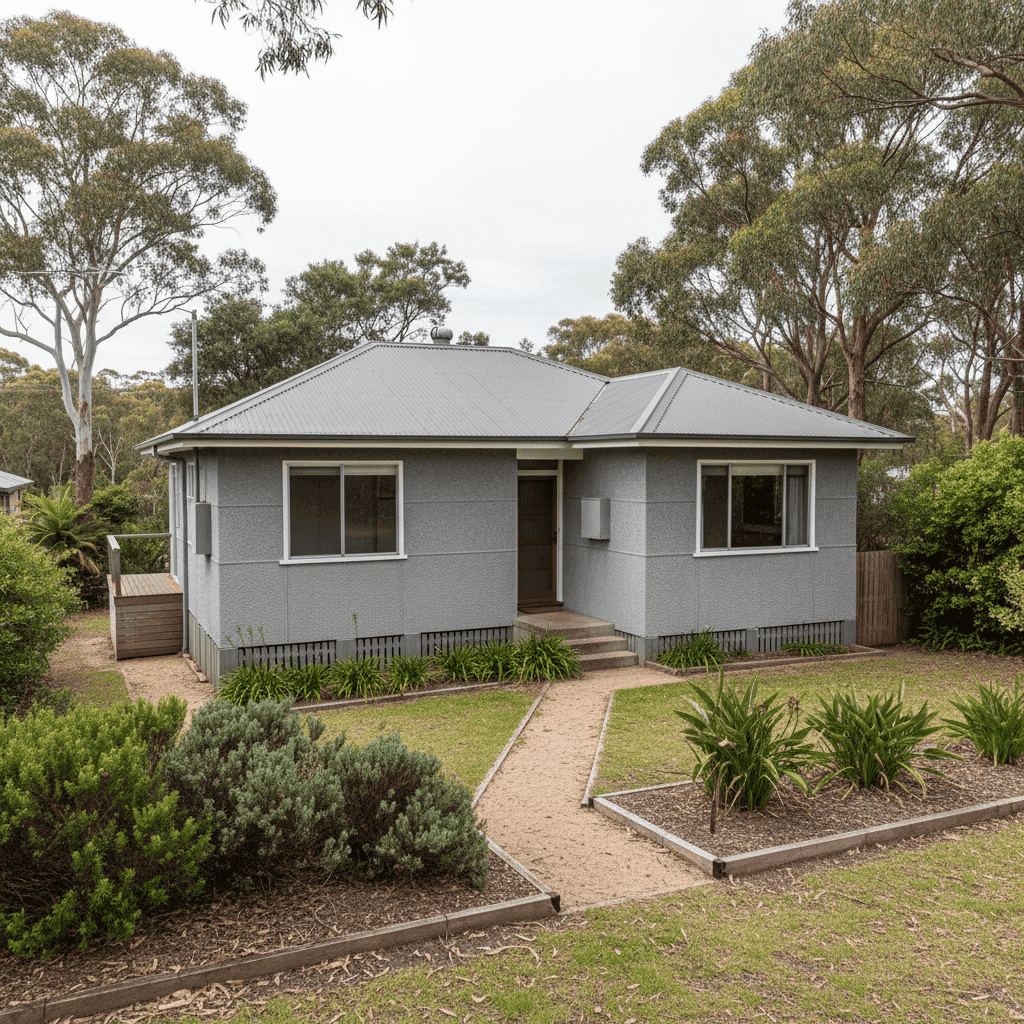
If you own a free standing home in Crescent Head, NSW 2440, you already know what makes this coastal village special — relaxed surf culture, a tight-knit community, and a laid-back pace that's increasingly hard to find on the NSW Mid North Coast. But when it comes to home insurance, that idyllic lifestyle can come with a surprisingly steep price tag. This article breaks down a real building-only insurance quote for a 3-bedroom, 2-bathroom home in the area, and puts the numbers in context so you can make a more informed decision.
---
Is This Quote Fair?
The quote in question comes in at $9,150 per year (or $877/month) for building-only cover on a free standing home with a sum insured of $900,000 and a $1,000 building excess.
Our price rating for this quote is EXPENSIVE — above average. That's not a label we apply lightly. To understand why, it helps to look at what other homeowners in the same suburb are paying.
According to CoverClub's Crescent Head suburb data, the suburb average premium sits at just $2,184 per year, with a median of $2,265. Even at the 75th percentile — meaning most local homeowners are paying less — the figure is only $2,382. At $9,150, this quote is more than four times the suburb average, which is a significant gap that warrants closer examination.
It's worth noting that the suburb sample size is relatively small (7 quotes), so there's some natural variability in those local figures. Still, the disparity is hard to ignore and suggests that specific property characteristics are driving the premium well above typical local rates.
---
How Crescent Head Compares
Zooming out to a broader view helps put this quote into perspective.
| Benchmark | Premium |
|---|---|
| Crescent Head suburb average | $2,184/yr |
| Crescent Head suburb median | $2,265/yr |
| LGA (Port Macquarie-Hastings) average | $7,001/yr |
| NSW state average | $9,528/yr |
| NSW state median | $3,770/yr |
| National average | $5,347/yr |
| National median | $2,764/yr |
Interestingly, while the quote looks expensive against local suburb comparisons, it's actually just below the NSW state average of $9,528/yr — and above the national average of $5,347/yr. The LGA average for Port Macquarie-Hastings sits at $7,001/yr, which is also notably below this quote.
This tells us a couple of things. First, NSW is one of the more expensive states for home insurance in Australia — you can explore NSW-wide insurance data here. Second, even within that elevated state context, this particular quote is on the higher end. For a full national picture, CoverClub's national stats page offers a useful comparison.
The $900,000 sum insured is a key driver here. A higher insured value means the insurer is on the hook for more in a total loss scenario, and premiums scale accordingly.
---
Property Features That Affect Your Premium
Several characteristics of this property are likely contributing to the elevated premium. Understanding them can help you have a more informed conversation with your insurer — or shop around more effectively.
Fibro Asbestos External Walls
This is arguably the most significant risk factor. Homes built with fibro asbestos (common in Australian construction from the 1940s through to the mid-1980s) carry higher premiums because of the cost and complexity involved in repairing or rebuilding them. If asbestos-containing materials are disturbed during a claim event, licensed asbestos removal is required by law, which adds substantially to repair costs. Built in 1974, this home falls squarely within the era when fibro asbestos was widely used.
Construction Era
Homes built in the early-to-mid 1970s may also have older electrical systems, plumbing, and structural elements that don't meet current building codes. Insurers factor in the likelihood that a partial repair could trigger broader compliance upgrades, increasing their potential liability.
Slab Foundation
A concrete slab foundation is generally considered neutral to slightly favourable by insurers — it's durable and resistant to termites compared to raised timber stumps. However, slabs can be more costly to repair if subsidence or cracking occurs, particularly in coastal areas where soil movement is more common.
Steel/Colorbond Roof
On the positive side, a Colorbond steel roof is viewed favourably by most insurers. It's durable, fire-resistant, and holds up well in high-wind events — all of which can help moderate your premium compared to, say, terracotta tiles.
Ducted Climate Control
The presence of ducted climate control adds to the overall replacement cost of the home, which is reflected in the sum insured and, by extension, the premium.
Coastal Location
Crescent Head's proximity to the ocean introduces risk factors including salt air corrosion, storm surge potential, and elevated wind exposure. Coastal properties across Australia consistently attract higher premiums than their inland counterparts.
---
Tips for Homeowners in Crescent Head
If you're looking to manage your home insurance costs without sacrificing meaningful cover, here are some practical steps to consider.
1. Get multiple quotes — and do it annually The insurance market is competitive, and premiums can vary significantly between providers for the same property. Using a comparison platform like CoverClub makes it easy to see what multiple insurers would charge for your home. Don't assume loyalty earns you the best rate — it often doesn't.
2. Review your sum insured carefully A $900,000 sum insured is substantial. Make sure it reflects the actual cost to rebuild your home (not its market value), including demolition, debris removal, and compliance upgrades. Overinsuring inflates your premium unnecessarily, while underinsuring leaves you exposed. A quantity surveyor can provide a professional rebuild estimate.
3. Ask about asbestos-specific policy terms If your home has fibro asbestos walls, it's worth asking insurers exactly how they handle asbestos removal in a claim. Some policies have caps or exclusions around hazardous material removal. Knowing this upfront can save you a nasty surprise at claim time.
4. Consider a higher excess Increasing your excess from $1,000 to $2,500 or more can meaningfully reduce your annual premium. This strategy works best if you have the financial buffer to cover that excess should you need to make a claim — and if you're unlikely to make small claims that don't justify the administrative effort.
---
Compare Your Options with CoverClub
Whether this quote feels right for your situation or you're convinced you can do better, the smartest move is to compare. CoverClub makes it simple to benchmark your premium against real data from homeowners in your suburb, your LGA, and across Australia. Get a building insurance quote today and see how your current cover stacks up — you might be surprised at what's available.