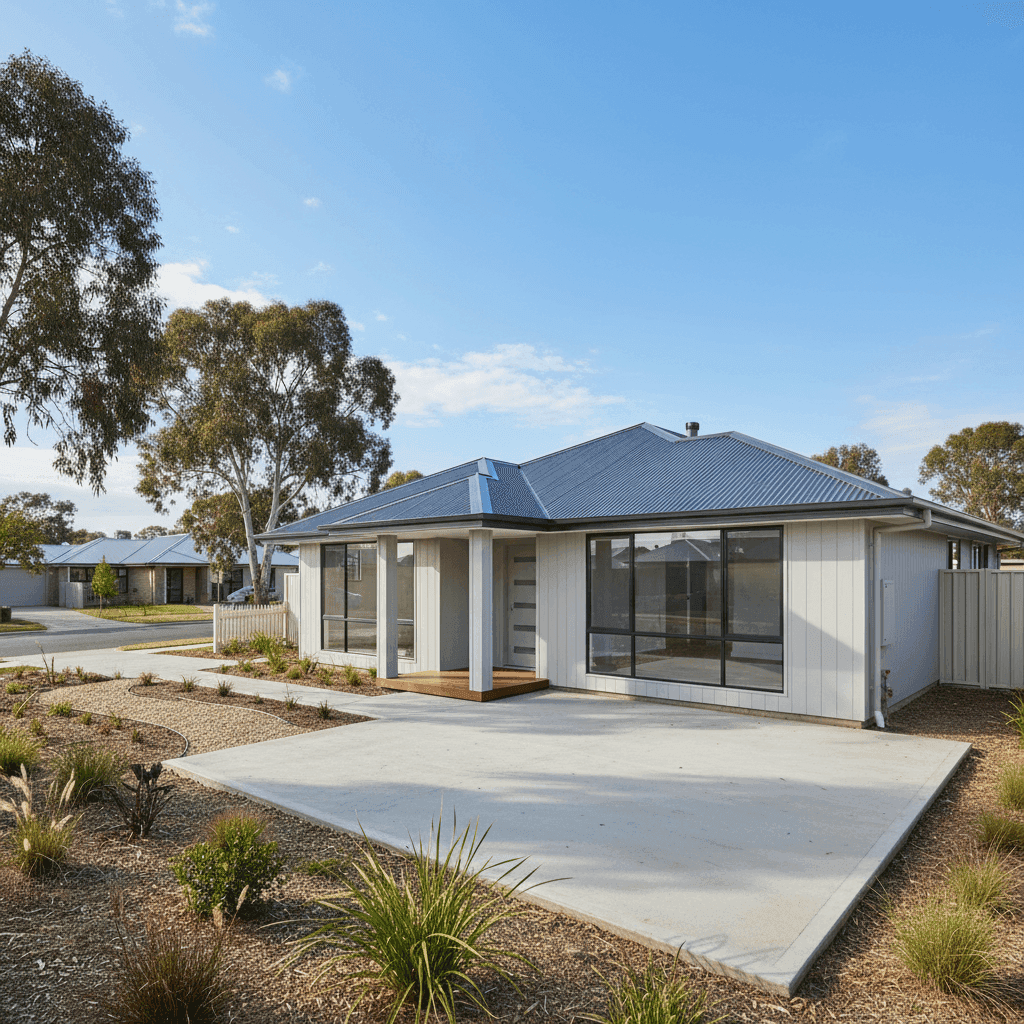
If you own a free standing home in Crescent, SA 5341, understanding what drives your home insurance premium can save you hundreds of dollars a year. This article breaks down a real building insurance quote for a six-bedroom property in Crescent, compares it against South Australian and national benchmarks, and offers practical advice for getting better value on your cover.
---
Is This Quote Fair?
The quote in question comes in at $2,615 per year (or $267 per month) for building-only cover on a six-bedroom free standing home, with a building excess of $2,500. Our price rating for this quote is Expensive — above average for the area.
To put that in perspective:
- The SA state average premium is $1,933/yr, and the state median sits at $1,787/yr
- The national average is $2,965/yr, with a national median of $2,716/yr
- The Unincorporated SA LGA average (the local government area covering Crescent) sits at $2,039/yr
So while this quote is well above the South Australian average and the local LGA average, it actually comes in below the national average and median. That nuance matters — Australia's home insurance market varies enormously by region, and what looks expensive locally can still be competitive on a national scale.
That said, paying $576 more per year than the SA state average and $676 more than the LGA average is a meaningful gap, and it's worth understanding why — and whether there's room to negotiate.
---
How Crescent Compares
Without suburb-level data available for Crescent specifically, we can draw on the broader SA state insurance statistics and national benchmarks to frame this quote.
| Benchmark | Annual Premium |
|---|---|
| This Quote | $2,615 |
| Unincorporated SA LGA Average | $2,039 |
| SA State Average | $1,933 |
| SA State Median | $1,787 |
| National Average | $2,965 |
| National Median | $2,716 |
The quote sits 35% above the SA state average but 12% below the national average. For a large property (380 sqm, six bedrooms) with a high sum insured of $800,000, some premium loading is expected — but the gap above local averages suggests there may be room to shop around.
You can explore suburb-specific data for Crescent at the Crescent SA 5341 insurance stats page as more data becomes available, and compare it against national trends here.
---
Property Features That Affect Your Premium
Several characteristics of this property have a direct bearing on what insurers charge. Here's how each one plays into the pricing:
Size and Sum Insured
At 380 sqm with a $800,000 sum insured, this is a large home with significant rebuild value. Insurers price building cover based heavily on the cost to rebuild from scratch — and a six-bedroom, 380 sqm home in regional SA carries a substantial rebuild cost. A high sum insured is the single biggest driver of this premium.
Construction Materials
The home features Hardiplank/Hardiflex external walls and a steel/Colorbond roof — both of which are generally viewed favourably by insurers. Fibre cement cladding (like Hardiflex) is fire-resistant and durable, while Colorbond roofing is robust and widely used across regional Australia. These materials typically attract lower risk ratings compared to timber weatherboard or older tile roofs.
Slab Foundation
A concrete slab foundation is considered low-risk by most insurers. Slabs are less susceptible to subsidence and pest damage than raised timber stumps, which can translate to slightly lower premiums.
Vinyl Flooring
Vinyl flooring is practical and cost-effective to replace, which may have a modest positive effect on the overall rebuild cost estimate — keeping the sum insured from being inflated unnecessarily.
Standard Fittings
With standard-quality fittings, this home avoids the premium loading that comes with high-end fixtures, custom joinery, or luxury appliances. Standard fittings keep rebuild costs predictable and more straightforward to assess.
No Pool, Solar, or Cyclone Risk
The absence of a pool, solar panels, and cyclone risk exposure all work in the homeowner's favour. Each of these features can add complexity and cost to a policy. Being outside a designated cyclone risk zone is particularly significant for regional SA properties.
Construction Year
Built in 2010, this home is relatively modern — old enough to have settled but young enough to avoid the structural concerns associated with pre-1980s construction. Insurers generally view homes built after 2000 more favourably from a risk perspective.
---
Tips for Homeowners in Crescent
1. Review Your Sum Insured Carefully
At $800,000, the sum insured is substantial. It's worth getting an independent building replacement cost estimate to ensure you're not over-insured (paying for more cover than you need) or under-insured (exposed to a shortfall if you need to rebuild). Tools like the Cordell Sum Sure calculator can help you arrive at a more accurate figure.
2. Compare Quotes Before Renewing
The most effective way to reduce your premium is to compare multiple insurers. Loyalty doesn't always pay in the Australian home insurance market — insurers often reserve their best rates for new customers. Use a comparison platform like CoverClub to see what competing insurers would charge for the same level of cover.
3. Consider Your Excess Level
This policy carries a $2,500 building excess. Opting for a higher excess is one of the most reliable ways to reduce your annual premium. If you have the financial buffer to cover a larger out-of-pocket cost in the event of a claim, increasing your excess could meaningfully lower what you pay each year.
4. Bundle or Consolidate Cover
If you have contents, vehicles, or other assets insured separately, some insurers offer multi-policy discounts when you consolidate cover. It's worth asking your insurer or broker whether bundling could reduce your overall insurance spend.
---
Ready to Find a Better Rate?
Whether this quote represents fair value or not, the best way to know for certain is to compare it against what else is available in the market. At CoverClub, we make it easy for Australian homeowners to benchmark their premiums and explore alternatives — all in one place.
Get a home insurance quote for your Crescent property today →