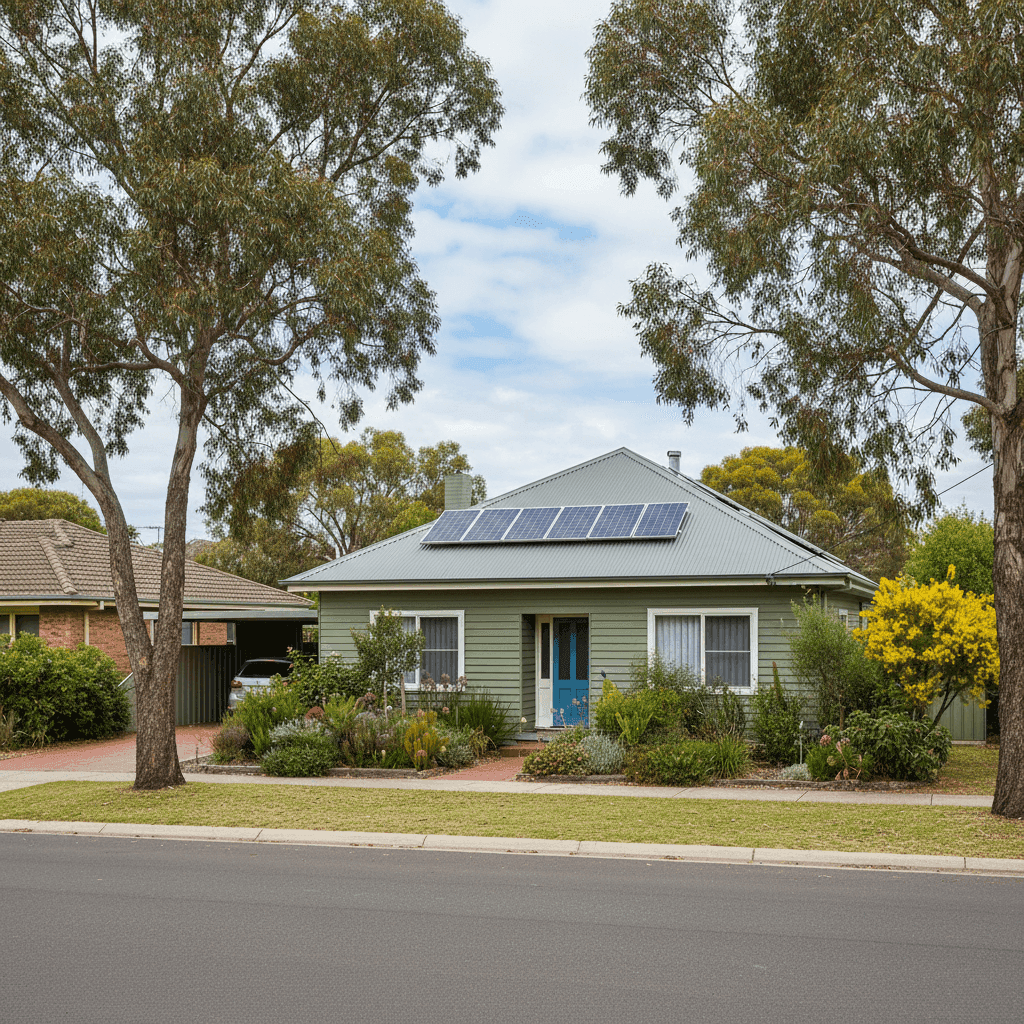
Nestled on the Mornington Peninsula along the shores of Western Port Bay, Crib Point is a quiet, established suburb with a strong sense of community and a mix of older and mid-century homes. If you own a free standing home here — particularly one built in the post-war era — understanding what you should be paying for building insurance is an important step in protecting one of your most valuable assets. This article breaks down a real building-only insurance quote for a 3-bedroom, 1-bathroom weatherboard home in Crib Point (VIC 3919) and puts it into context against local, state, and national benchmarks.
---
Is This Quote Fair?
The quote in question comes in at $1,762 per year (or $172/month) for building-only cover, with a $1,000 building excess and a sum insured of $464,000. Our price rating for this quote is EXPENSIVE — above average for the area.
To put that in perspective: the suburb average premium in Crib Point sits at $1,044/year, with a median of $972/year. This quote is roughly 69% above the suburb average and nearly double the suburb median. Even at the 75th percentile — meaning three-quarters of comparable quotes are cheaper — the figure is only $1,124/year. That means this quote is priced well above what most homeowners in the same postcode are paying.
That said, "expensive" doesn't necessarily mean "wrong." Several property-specific factors (discussed below) can legitimately push a premium higher than the suburb norm. The key question is whether those factors justify a gap of this size — and whether shopping around could close it.
---
How Crib Point Compares
To fully appreciate where this quote sits, it helps to zoom out and look at the broader picture. You can explore the full data on the Crib Point suburb stats page, the Victoria state stats page, or the national stats page.
| Benchmark | Average Premium | Median Premium |
|---|---|---|
| Crib Point (VIC 3919) | $1,044/yr | $972/yr |
| Mornington Peninsula LGA | $2,652/yr | — |
| Victoria (State) | $3,000/yr | $2,718/yr |
| National | $5,347/yr | $2,764/yr |
A few things stand out here. First, Crib Point is actually a relatively affordable suburb to insure compared to the broader Mornington Peninsula LGA average of $2,652/year and the Victorian state average of $3,000/year. Homeowners in Crib Point are, on average, paying significantly less than their counterparts elsewhere in Victoria — which makes the above-average quote even more notable.
Second, it's worth noting that national averages are heavily skewed by high-risk regions in Queensland and Western Australia, where cyclone and flood exposure drives premiums through the roof. Crib Point is not a designated cyclone risk area, which typically works in homeowners' favour.
The suburb sample for this comparison is based on 13 quotes — a modest but meaningful dataset that gives a reasonable indication of what local homeowners are paying.
---
Property Features That Affect Your Premium
Several characteristics of this particular property are likely contributing to its above-average premium. Here's how each one plays into the insurer's risk assessment:
Weatherboard Timber Walls
Weatherboard homes are charming and common in older Victorian suburbs, but they carry a higher fire risk than brick or rendered construction. Timber is combustible, and older weatherboard can be more susceptible to termite damage, moisture ingress, and general wear — all of which insurers factor into their pricing.
Construction Year: 1965
A home built in 1965 is now over 60 years old. Older homes often have ageing electrical wiring, plumbing systems, and structural elements that haven't been updated to modern standards. This increases the likelihood of claims related to electrical faults, burst pipes, and subsidence — all of which push premiums upward.
Stump Foundation
Homes on stumps (also known as pier or post foundations) are common in older Victorian properties. While they offer excellent ventilation and can be practical in certain soil conditions, they can be vulnerable to movement, rot, and pest damage. Insurers may view this foundation type as a higher-risk structural feature compared to a concrete slab.
Timber and Laminate Flooring
The flooring type contributes to the overall replacement cost assessment. Timber floors, particularly original hardwood, can be expensive to replace or repair — and this is reflected in both the sum insured and the premium calculation.
Solar Panels
Solar panels are a positive feature for sustainability, but they do add to the replacement value of the home and introduce additional risk factors (such as storm damage to panels or electrical faults). Most insurers include solar panels in building cover, but their presence can nudge premiums slightly higher.
Ducted Climate Control
Similarly, a ducted heating and cooling system represents a significant built-in asset. These systems are costly to repair or replace and are factored into the building sum insured, which at $464,000 is a substantial figure for a 130 sqm home.
---
Tips for Homeowners in Crib Point
If you're looking to get better value on your home insurance, here are four practical steps worth considering:
- Shop around and compare multiple quotes. The single most effective way to reduce your premium is to get competing quotes. With a gap this large between your current quote and the suburb average, there's a strong chance another insurer will price this risk more competitively. Use CoverClub's free quote comparison tool to see what else is available.
- Review your sum insured carefully. At $464,000 for a 130 sqm home, it's worth verifying that your sum insured reflects the actual rebuild cost — not the market value of the property. Overinsuring can unnecessarily inflate your premium, while underinsuring leaves you exposed. A quantity surveyor or online building cost calculator can help you land on an accurate figure.
- Ask about discounts for home improvements. If you've updated the electrical wiring, replumbed the home, or restumped since purchase, let your insurer know. These upgrades reduce the risk profile of an older home and may qualify you for a lower premium. Similarly, installing a monitored security system or smoke alarms beyond the minimum requirement can sometimes attract discounts.
- Consider your excess level. A $1,000 excess is fairly standard, but opting for a higher excess (say, $2,500 or $5,000) can meaningfully reduce your annual premium. This strategy works well if you have a financial buffer and are primarily seeking cover for major, catastrophic events rather than minor repairs.
---
Ready to Find a Better Deal?
Whether this quote is the right fit or not, the smartest move is to make sure you've explored your options. At CoverClub, we make it easy to compare home insurance quotes from a range of Australian insurers — all in one place, with no pressure and no hidden fees. Get a quote today and see how much you could save on your Crib Point home insurance.