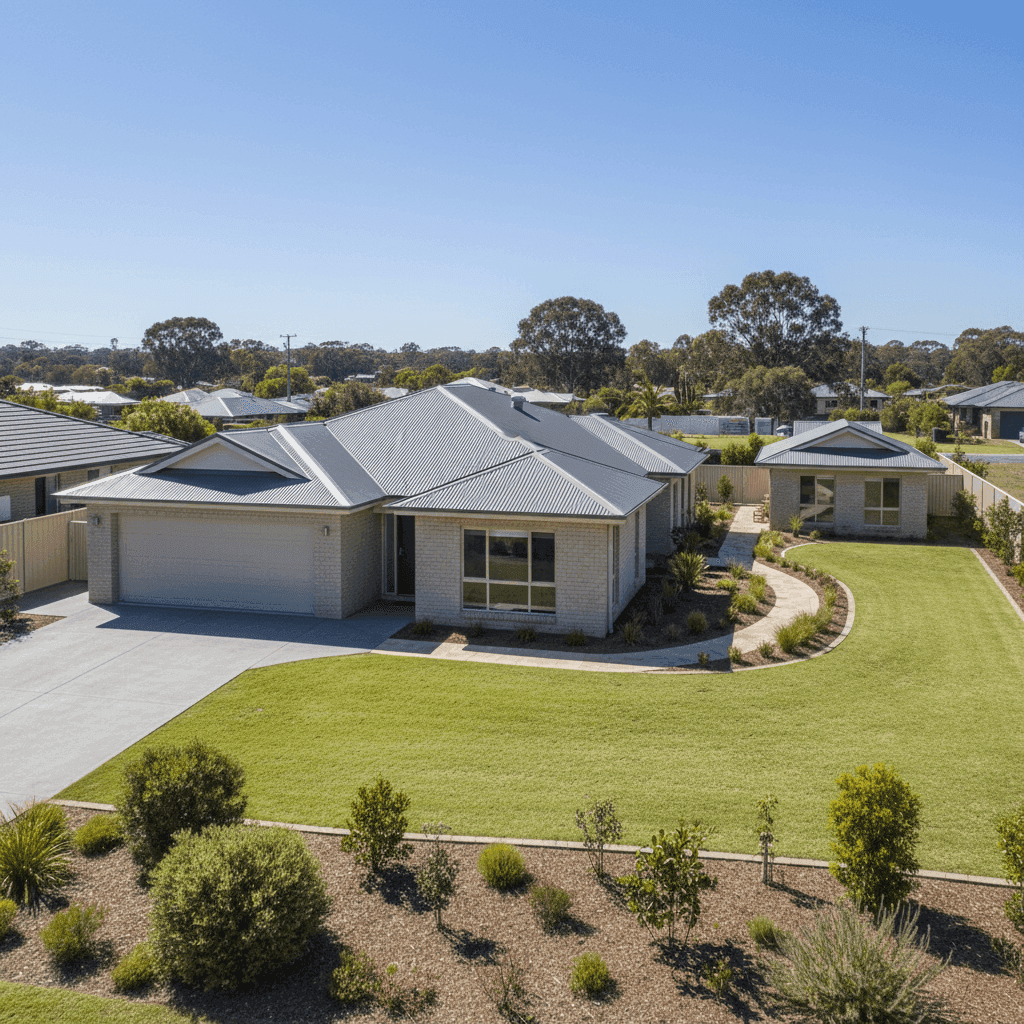
If you own a free standing home in Croobyar, NSW 2539, you've probably noticed that insurance costs in regional New South Wales can vary enormously depending on where you live, what your home is made of, and how much cover you actually need. This article breaks down a real home and contents insurance quote for a three-bedroom property in Croobyar, compares it against state and national benchmarks, and offers practical advice to help you get the best value for your premium dollar.
---
Is This Quote Fair?
The quote in question comes in at $3,266 per year (or $334/month) for combined home and contents cover, with a building sum insured of $767,000 and contents valued at $50,000. The building excess sits at $3,000 and the contents excess at $1,000.
Our pricing engine rates this quote as CHEAP — below average — which is genuinely good news for the homeowner. Given the relatively high rebuild value and the inclusion of contents cover, landing below the median is a solid outcome. It suggests the property's characteristics, location risk profile, and construction quality are all working in the policyholder's favour.
To put this in perspective: a "below average" rating doesn't mean the cover is inadequate — it means the premium is lower than what most comparable properties are paying. That's a meaningful distinction when you're budgeting for the year ahead.
---
How Croobyar Compares
Understanding where your premium sits relative to broader benchmarks gives you real negotiating power. Here's how this quote stacks up:
| Benchmark | Annual Premium |
|---|---|
| This Quote | $3,266 |
| NSW State Median | $3,770 |
| NSW State Average | $9,528 |
| National Median | $2,764 |
| National Average | $5,347 |
| Shoalhaven LGA Average | $11,272 |
A few things stand out here. First, the Shoalhaven LGA average of $11,272 is remarkably high — more than three times this quote. The Shoalhaven region encompasses a wide range of coastal and bushland properties, many of which carry significant flood, bushfire, and storm surge risk. That elevated LGA average reflects the diversity and exposure of properties across the region, not necessarily what every homeowner pays.
Second, the NSW state average of $9,528 is heavily skewed by high-risk and high-value properties across the state. The median — a better indicator of what a "typical" NSW homeowner pays — sits at $3,770, which is still higher than this quote.
Against the national median of $2,764, this quote is slightly above, but that's not surprising given NSW's elevated risk environment and the relatively high building sum insured of $767,000.
The bottom line: this is a competitively priced policy for the Croobyar area. You can explore more localised pricing data on the Croobyar insurance stats page, or browse NSW-wide insurance trends and national benchmarks for broader context.
---
Property Features That Affect Your Premium
Insurance underwriters assess dozens of variables when pricing a policy. For this particular property, several features are likely contributing to the favourable premium:
Double Brick Construction
Double brick walls are among the most resilient external wall materials available. They offer strong resistance to fire, wind, and impact damage, which translates directly into lower risk for insurers. Compared to weatherboard or lightweight cladding, double brick homes typically attract lower premiums.
Steel / Colorbond Roof
A Colorbond steel roof is another premium-friendly feature. It's durable, low-maintenance, and performs well in both bushfire-prone and storm-affected environments. Unlike older terracotta or concrete tiles, steel roofing is less prone to cracking, moss growth, and storm displacement.
Slab Foundation
Concrete slab foundations are generally considered lower risk than raised stumped or timber-framed subfloors, particularly in terms of pest damage and moisture ingress. This can positively influence how underwriters assess the structural risk of the property.
Tile Flooring
Tiled floors are durable and resistant to water damage — a factor that can reduce claims related to accidental water leaks or flooding events. They're also easier to remediate than carpet or timber in the event of an incident.
Granny Flat
The presence of a granny flat on the property adds complexity to the risk profile. Depending on the insurer, a granny flat may be included within the main building sum insured or may require separate consideration. It's worth confirming with your insurer that the granny flat's rebuild cost is adequately captured in the $767,000 building sum insured.
Standard Fittings
Standard-quality fittings (as opposed to premium or luxury) keep replacement costs predictable and generally support a more modest premium. High-end kitchens, stone benchtops, and designer bathrooms can push rebuild costs — and premiums — significantly higher.
No Pool, Solar, or Ducted Climate Control
The absence of a pool removes liability and equipment breakdown risk. No solar panels means no concerns about panel damage or inverter claims. And without ducted climate control, there's one less complex mechanical system that could fail and generate a claim.
---
Tips for Homeowners in Croobyar
Whether you're renewing your policy or shopping for the first time, these practical steps can help you protect your home without overpaying.
1. Verify Your Building Sum Insured Includes the Granny Flat
A common and costly mistake is insuring only the main dwelling while the granny flat is left underinsured or excluded entirely. Ask your insurer explicitly whether the granny flat is covered under the building sum insured, and whether that $767,000 figure reflects the full cost to rebuild both structures to current standards.
2. Review Your Excess Strategy
This policy carries a $3,000 building excess, which is on the higher side. A higher excess typically reduces your annual premium, but it also means a larger out-of-pocket cost when you do make a claim. Consider whether you have sufficient savings to comfortably cover that excess in an emergency — if not, it may be worth paying a slightly higher premium for a lower excess.
3. Check Your Bushfire and Flood Risk Ratings
The Shoalhaven region includes areas with elevated bushfire and flood exposure. Even if your specific block in Croobyar has a lower risk rating, it's worth checking your property's hazard classifications through the NSW Rural Fire Service and your local council's flood mapping tools. Some insurers apply loadings based on postcode alone, so knowing your actual risk can help you challenge unfair pricing.
4. Compare Quotes Annually
Insurance loyalty rarely pays. Premiums can shift significantly from year to year based on insurer risk models, reinsurance costs, and claims history in your area. Set a reminder to compare quotes at renewal time — even a 10–15% saving on a policy at this price point is worth the 20 minutes it takes.
---
Ready to Compare?
Whether this quote looks like a great deal or you think you can do better, the smartest move is always to compare. At CoverClub, we make it easy to see how your current premium stacks up and find competitive alternatives tailored to your property. Get a home insurance quote today and see what you could be saving.