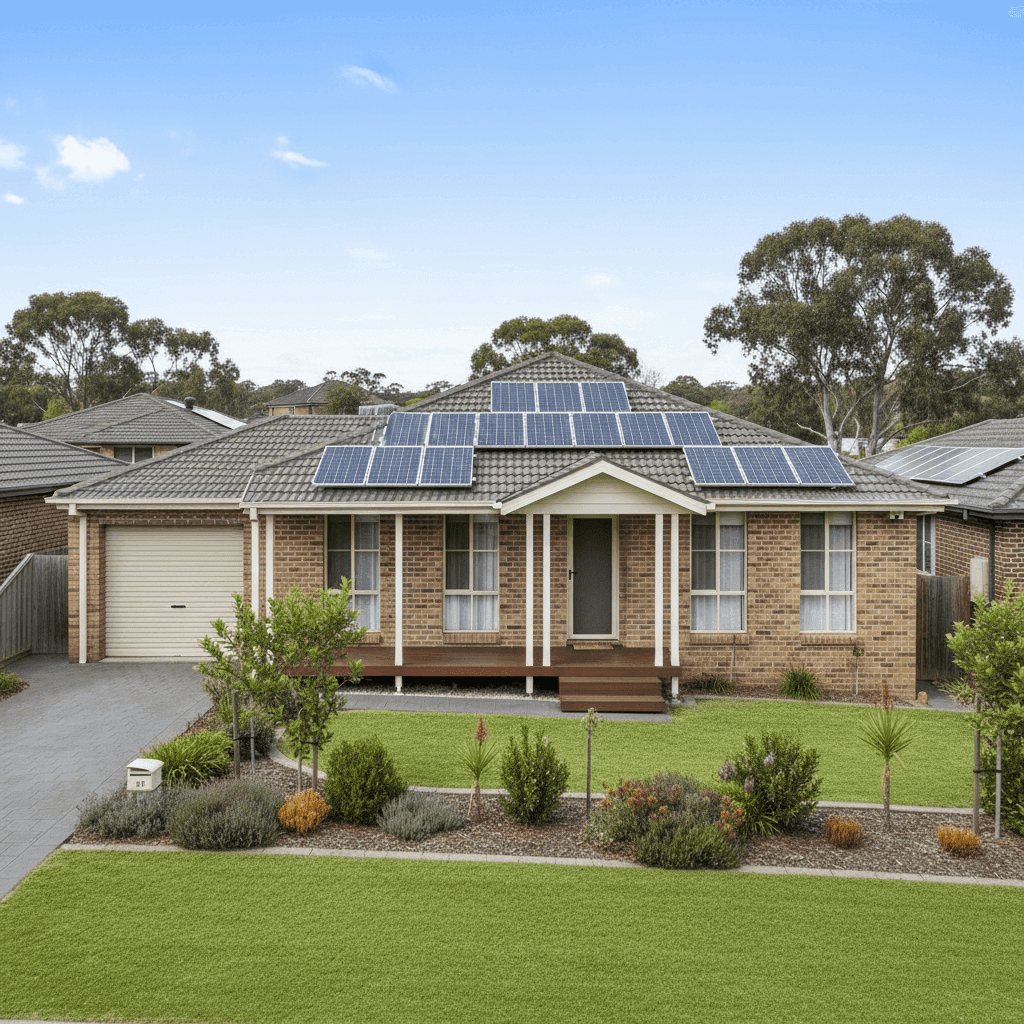
Croydon North is a leafy, family-friendly suburb in Melbourne's outer east, sitting within the Maroondah local government area. With its mix of established brick homes and tree-lined streets, it's a popular choice for owner-occupiers looking for space and suburban comfort. If you own a free standing home here, understanding what you should be paying for home and contents insurance — and whether your current quote is competitive — can save you thousands over the life of your policy.
This article breaks down a recent home and contents insurance quote for a 3-bedroom, 2-bathroom free standing home in Croydon North, and puts the numbers in context against local, state, and national benchmarks.
---
Is This Quote Fair?
The quote in question comes in at $1,681 per year (or around $161 per month), covering a building sum insured of $701,000 and contents valued at $130,000, each with a $2,000 excess. Our analysis rates this quote as CHEAP — below average for the area.
That's a strong result. When you consider that the suburb average for Croydon North sits at $3,240 per year, this quote comes in at roughly 48% below the local average — a significant saving of over $1,500 annually. Even compared to the suburb's 25th percentile (the cheapest quarter of quotes), which sits at $2,821 per year, this premium is still materially lower.
For a homeowner paying monthly, that difference is real money — closer to $130 per month back in your pocket compared to what many neighbours might be paying.
It's worth noting that a $2,000 excess on both building and contents is on the higher side. Insurers often offer lower premiums in exchange for a higher excess, meaning you'd bear more of the cost in a smaller claim. That trade-off is worth factoring in when assessing overall value — but for homeowners who are primarily concerned with protecting against major losses (storm damage, fire, significant theft), a higher excess is often a sensible and cost-effective choice.
---
How Croydon North Compares
To properly contextualise this quote, it helps to look at the broader pricing landscape.
| Benchmark | Annual Premium |
|---|---|
| This Quote | $1,681 |
| Croydon North Suburb Average | $3,240 |
| Croydon North Suburb Median | $3,233 |
| Maroondah LGA Average | $2,133 |
| VIC State Average | $3,000 |
| VIC State Median | $2,718 |
| National Average | $5,347 |
| National Median | $2,764 |
A few things stand out here. First, Croydon North's local averages sit noticeably above the Victorian state median of $2,718, suggesting the suburb carries some pricing pressure — likely driven by bushfire proximity, older tree canopy, and the general cost of insuring Melbourne's outer east. Second, the national average of $5,347 is dramatically higher, largely skewed by high-risk areas in Queensland and northern Australia where cyclone and flood exposure drives premiums up significantly.
The Maroondah LGA average of $2,133 is notably lower than the Croydon North suburb average of $3,240, which may reflect variation in property types and risk profiles across the broader council area. Either way, this quote at $1,681 sits well below every comparable benchmark — a genuinely competitive result.
(Note: Suburb comparison is based on a sample of 10 quotes, so averages should be treated as indicative rather than definitive.)
---
Property Features That Affect Your Premium
Several characteristics of this property work in favour of a lower premium, while others add nuance to the risk profile.
Brick Veneer Construction Brick veneer is one of the most common wall types in Melbourne's eastern suburbs, and insurers generally view it favourably. It offers reasonable fire resistance and structural durability compared to weatherboard or clad alternatives, which can contribute to lower building premiums.
Tiled Roof A tiled roof is another positive signal for insurers. Tiles are durable, long-lasting, and perform well in hail and storm events — all relevant considerations for Victoria's sometimes volatile weather.
Stump Foundation with Timber/Laminate Flooring The home sits on stumps and features timber or laminate flooring — a combination common in older Melbourne homes that have been updated. Stump foundations can introduce some risk around subsidence and moisture, but the 2000 construction year suggests modern engineering standards were applied, reducing that concern significantly.
Solar Panels The presence of solar panels is increasingly common and generally adds modest value to a contents or building policy. Insurers treat rooftop solar as a fixed installation, typically covered under the building component. It's worth confirming with your insurer exactly how solar panels are covered under your specific policy.
Ducted Climate Control Ducted heating and cooling systems are a fixed installation that adds to the replacement cost of the home. This is likely reflected in the building sum insured and is an important feature to account for when calculating your coverage needs.
Above Average Fittings The property's above-average fittings quality — think stone benchtops, quality appliances, premium fixtures — increases the cost to rebuild or repair, which is appropriately captured in the $701,000 building sum insured. Underinsuring a well-appointed home is a common and costly mistake.
Slightly Elevated (Less Than 1m) The home is slightly elevated, which can offer some protection from minor surface water intrusion. While this isn't classified as a high-set or Queenslander-style elevation, it may provide a marginal benefit in flood or stormwater scenarios.
---
Tips for Homeowners in Croydon North
1. Review Your Sum Insured Annually Building costs in Victoria have risen sharply in recent years due to labour and material shortages. A sum insured of $701,000 for a 105 sqm home with above-average fittings may be appropriate today, but it's worth reassessing each year — or using a building cost calculator — to ensure you're not left underinsured after a total loss.
2. Understand Your Bushfire Risk Croydon North sits close to bushland corridors in Melbourne's outer east. While it's not in a designated cyclone risk area, bushfire exposure is a genuine consideration. Check your property's Bushfire Attack Level (BAL) rating and confirm your policy covers bushfire damage — most standard home policies do, but the extent of cover can vary.
3. Don't Overlook Your Solar Panels With solar panels installed, make sure your policy explicitly covers them for damage from storm, hail, or fire. Some policies include them automatically under building cover; others may require a separate endorsement. It's a quick conversation with your insurer that could save a significant headache at claim time.
4. Compare Before You Renew Even if your current premium is competitive, insurers adjust their pricing annually and your circumstances may have changed. Shopping around at renewal — rather than simply accepting the rollover — is one of the most effective ways to keep your insurance costs in check over time.
---
Find a Better Deal with CoverClub
Whether you're a first-time buyer or a long-time Croydon North resident, comparing home and contents insurance quotes is one of the simplest ways to protect your finances. CoverClub makes it easy to see what you should be paying — and whether your current insurer is giving you a fair deal.
Get a home insurance quote today and see how your premium stacks up against your neighbours. You can also explore detailed pricing data for Croydon North and across Victoria to make a fully informed decision.