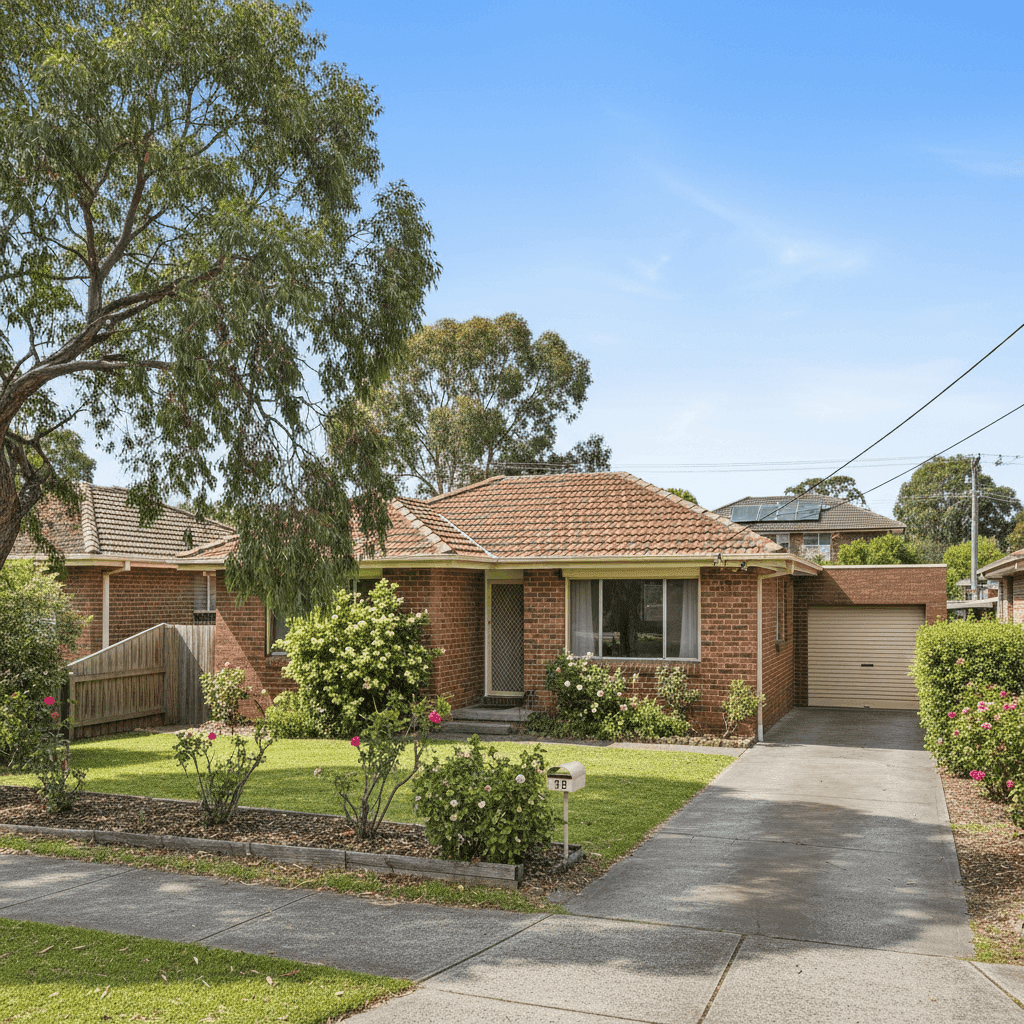
If you own a free standing home in Croydon, VIC 3136, you've probably wondered whether your home insurance premium is reasonable — or whether you're quietly paying more than you need to. This article breaks down a real building insurance quote for a three-bedroom, brick veneer home in Croydon, benchmarking it against local, state, and national data so you can make a more informed decision.
---
Is This Quote Fair?
The quote in question comes in at $1,371 per year (or $131 per month) for building-only cover, with a $500 building excess and a sum insured of $421,000. Our analysis rates this as FAIR — around average for the area.
That "fair" rating reflects a nuanced picture. Within Croydon itself, this premium sits comfortably within the typical range — above the suburb median of $825/yr but well within the 75th percentile of $1,388/yr. In other words, roughly three-quarters of comparable quotes in the suburb come in at or below this level, which means the quote is on the higher side locally, but not an outlier.
The sum insured of $421,000 for a 139 sqm home built in 1965 is a significant factor here. Rebuild costs in Melbourne's outer east have risen considerably in recent years, and insurers price accordingly. A higher sum insured naturally lifts the premium, so it's worth confirming that your coverage amount accurately reflects current construction costs — neither over- nor under-insured.
---
How Croydon Compares
Understanding where your premium sits relative to broader benchmarks is one of the most useful tools a homeowner has. Here's how this quote stacks up:
| Benchmark | Premium |
|---|---|
| This quote | $1,371/yr |
| Croydon suburb average | $1,004/yr |
| Croydon suburb median | $825/yr |
| Croydon 25th percentile | $664/yr |
| Croydon 75th percentile | $1,388/yr |
| Maroondah LGA average | $2,133/yr |
| Victoria state average | $3,000/yr |
| Victoria state median | $2,718/yr |
| National average | $5,347/yr |
| National median | $2,764/yr |
A few things stand out immediately. First, Croydon homeowners are paying significantly less than the Victorian state average — and dramatically less than the national average, which is heavily influenced by high-risk regions such as North Queensland and parts of coastal Western Australia. This reflects Croydon's relatively benign risk profile: no cyclone exposure, low flood risk in most pockets, and a well-established suburban streetscape.
Second, the Maroondah LGA average of $2,133/yr is notably higher than the suburb-level figures, suggesting that other parts of the Maroondah council area carry more risk — whether due to bushfire proximity, property values, or construction types. Croydon itself benefits from its position within the LGA.
You can explore the full local data on the Croydon suburb stats page, compare with the Victorian state overview, or check out national home insurance benchmarks to see how your situation fits into the broader picture.
> Note: The suburb sample size for this analysis is seven quotes, so while directionally useful, these figures should be treated as indicative rather than definitive.
---
Property Features That Affect Your Premium
Every property is different, and insurers weigh up a range of characteristics when calculating your premium. Here's how the specifics of this Croydon home are likely influencing the quote:
Brick veneer construction is generally viewed favourably by insurers. It offers solid fire resistance and structural durability compared to weatherboard or lightweight cladding, which can translate to more competitive premiums. That said, brick veneer homes built in the 1960s may have older mortar and tie systems that can be more susceptible to subsidence or movement — something worth keeping in mind for maintenance.
Terracotta or concrete tile roofing is another positive signal for insurers. Tiles are durable, fire-resistant, and have a long lifespan when maintained properly. They're less prone to wind damage than corrugated iron in typical suburban conditions, though they can be heavier and may require periodic inspection for cracked or slipped tiles.
Slab foundation is standard for homes of this era in Melbourne's eastern suburbs. While generally stable, slab foundations on reactive clay soils — common in this part of Victoria — can be susceptible to movement during prolonged dry periods or after heavy rainfall. Insurers are aware of this, and it can be a contributing factor in premium calculations.
Construction year (1965) means this home is over 60 years old. Older homes often attract slightly higher premiums because they may have aging electrical wiring, plumbing, or structural elements that increase the likelihood of a claim. If you've undertaken significant renovations or updates, it's worth ensuring your insurer knows — this can positively affect your premium.
Ducted climate control adds to the insured value of the property and is reflected in the sum insured. Systems like these are expensive to repair or replace, and their presence is a legitimate driver of a higher coverage amount.
No pool and no solar panels keep the risk profile simpler. Both features can add complexity to claims and, in some cases, increase premiums — so their absence is a minor but real positive here.
---
Tips for Homeowners in Croydon
Whether you're reviewing an existing policy or shopping around for the first time, these practical steps can help you get better value from your home insurance:
1. Review your sum insured regularly Building costs have risen sharply across Victoria in recent years. If your sum insured hasn't kept pace with current rebuild costs, you may be underinsured — meaning you'd face a shortfall in the event of a total loss. Equally, if your sum insured is too high, you're paying for coverage you don't need. Use a building cost calculator or speak with a quantity surveyor to get an accurate figure.
2. Investigate your soil type and foundation condition Croydon sits on reactive clay soils in many areas. If you've noticed cracking in walls or uneven flooring, it's worth having a structural assessment done. Some insurers exclude or limit cover for subsidence-related damage, so understanding your policy's fine print is essential.
3. Consider your excess strategically This quote carries a $500 building excess. Opting for a higher excess — say, $1,000 or $2,000 — can meaningfully reduce your annual premium. If you're unlikely to make small claims (and many homeowners aren't), a higher excess can be a cost-effective trade-off over time.
4. Bundle and compare If you also need contents insurance, bundling both under one policy with the same insurer often unlocks a discount. That said, bundling isn't always the cheapest option — it's worth comparing combined and separate policies to see which delivers better overall value.
---
Ready to Compare?
A single quote is just a starting point. The best way to know whether you're getting genuine value is to compare multiple offers side by side. At CoverClub, we make it easy to benchmark your premium against real data from homes like yours across Croydon and beyond.
Get a home insurance quote today and see how your current cover stacks up — it only takes a few minutes, and the savings could be well worth it.