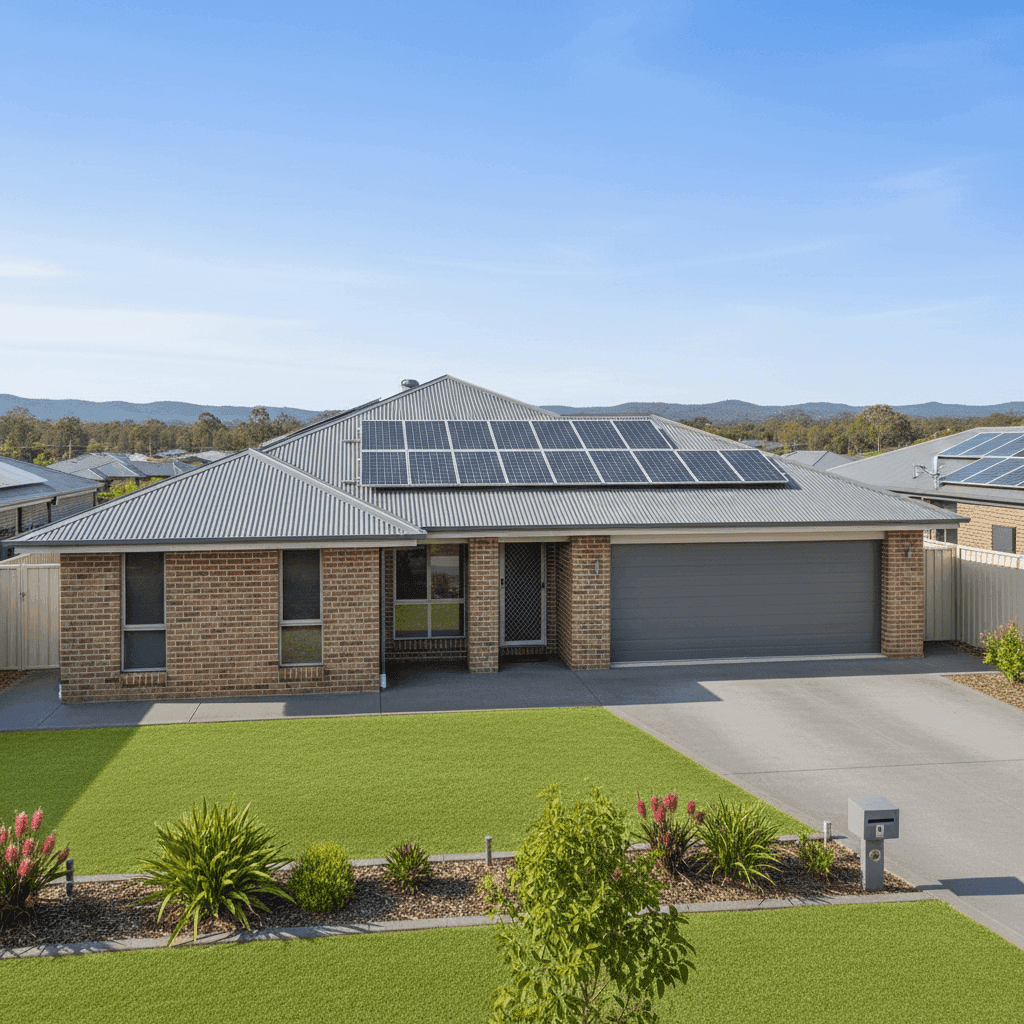
If you own — or are thinking of buying — a four-bedroom free standing home in Curra, QLD 4570, understanding what you should expect to pay for home and contents insurance is an important first step toward protecting one of your biggest assets. Curra is a semi-rural locality in the Gympie region of South-East Queensland, and like much of regional Queensland, insurance pricing here can vary considerably depending on the insurer, the property's characteristics, and local risk factors. This article breaks down a real quote obtained for a property in Curra and puts it into context against suburb, state, and national benchmarks.
---
Is This Quote Fair?
The quote in question comes in at $2,591 per year (or around $253 per month) for combined home and contents cover, with a building sum insured of $850,000 and contents valued at $199,000. The building excess sits at $3,000 and the contents excess at $1,000.
Based on CoverClub's pricing data, this quote is rated CHEAP — below the suburb average. That's genuinely good news for the homeowner. To put it plainly: this premium is well below what most people in Curra are paying for comparable cover.
The suburb average annual premium sits at $5,873, meaning this quote is roughly 56% cheaper than the typical policy taken out in the area. Even compared to the suburb median of $3,770 — a more balanced benchmark that strips out extreme outliers — this quote still comes in about $1,179 less per year. It also sits below the suburb's 25th percentile of $3,061, meaning it's cheaper than at least three-quarters of the quotes recorded in this postcode. That's a strong result by any measure.
---
How Curra Compares
To understand just how competitive this quote is, it helps to zoom out and look at the broader pricing landscape. You can explore the full data on the Curra suburb stats page, the Queensland state stats page, and the national insurance stats page.
Here's a snapshot of how premiums compare across different benchmarks:
| Benchmark | Annual Premium |
|---|---|
| This Quote | $2,591 |
| Curra Suburb Average | $5,873 |
| Curra Suburb Median | $3,770 |
| Curra 25th Percentile | $3,061 |
| Fraser Coast LGA Average | $4,810 |
| QLD State Average | $9,129 |
| QLD State Median | $3,903 |
| National Average | $5,347 |
| National Median | $2,764 |
A few things stand out here. Queensland's state average of $9,129 is extraordinarily high — largely driven by cyclone-prone coastal and far-north Queensland postcodes where insurers price in significant natural disaster risk. The state median of $3,903 is a more realistic reflection of what most Queenslanders pay, and this quote still beats it comfortably.
Nationally, the average premium is $5,347, and the median is $2,764. This quote sits just above the national median, which is a very reasonable outcome for a property of this size and value in regional Queensland.
The Fraser Coast LGA average of $4,810 also provides useful local context — and again, this quote comes in well below that figure. Based on 83 quotes collected in the Curra area, this result places the homeowner among the most cost-effectively insured in the suburb.
---
Property Features That Affect Your Premium
Several characteristics of this particular property likely contribute to its favourable pricing:
New Construction (2025) Brand-new homes are generally viewed more favourably by insurers. A 2025 build means modern construction standards, up-to-date wiring and plumbing, and materials that comply with current building codes — all of which reduce the likelihood of claims related to wear, deterioration, or substandard workmanship.
Brick Veneer Walls and Colorbond Roof Brick veneer is considered a solid, fire-resistant wall construction, and Colorbond steel roofing is widely regarded as durable, low-maintenance, and well-suited to Australian conditions. Together, these materials typically attract lower premiums than, say, timber weatherboard or fibrous cement cladding.
Slab Foundation and Tile Flooring A concrete slab foundation is structurally sound and resistant to issues like subsidence or termite damage that can affect other foundation types. Tile flooring similarly adds to the property's resilience — it's durable, easy to replace, and not susceptible to water damage in the same way carpet or timber floors might be.
No Pool Pools introduce additional liability risk and can push premiums higher. The absence of a pool here removes that loading from the equation.
Solar Panels The property does have solar panels, which are worth noting. Some insurers include solar panels under building cover automatically, while others treat them as an optional extra. It's worth confirming with your insurer that your panels are explicitly covered — both for accidental damage and for any liability arising from their installation.
No Cyclone Risk Curra is not classified as a cyclone risk area, which is a meaningful factor in Queensland. Cyclone cover can add substantially to premiums in affected regions, so properties outside those zones benefit from this exclusion.
Above-Average Fittings The property's above-average fittings quality — think quality fixtures, finishes, and appliances — is reflected in the higher building sum insured of $850,000. This is appropriate; underinsuring a well-appointed home is a common and costly mistake.
---
Tips for Homeowners in Curra
Whether you're reviewing an existing policy or shopping for the first time, here are a few practical steps worth taking:
1. Don't set and forget your sum insured Construction costs have risen significantly in recent years. A sum insured that was accurate two years ago may no longer be sufficient to fully rebuild your home today. Review your building sum insured annually, and consider using a building cost calculator to check your figure is realistic.
2. Confirm solar panel coverage As mentioned above, solar panels aren't always automatically included in building policies. Ask your insurer directly whether your panels are covered, what the limits are, and whether damage during extreme weather events (such as hailstorms) is included.
3. Review your contents value carefully Contents cover of $199,000 is substantial, but it's easy to underestimate the true replacement value of everything inside your home — furniture, electronics, clothing, jewellery, and appliances all add up quickly. Walk through each room and make sure your estimate reflects what it would actually cost to replace items at today's prices, not what you originally paid.
4. Compare quotes at renewal time Even if you're happy with your current insurer, it pays to compare at renewal. Premiums can shift year to year, and the difference between insurers for the same level of cover can be significant — as this quote clearly demonstrates. Use a comparison platform to make sure you're not paying more than you need to.
---
Ready to Find a Better Deal?
Whether your premium is above or below the suburb average, it always makes sense to know your options. At CoverClub, we make it easy to compare home and contents insurance quotes from a range of Australian insurers — so you can find the right cover at the right price.
Get a home insurance quote today and see how your current premium stacks up against the market. You might be pleasantly surprised.