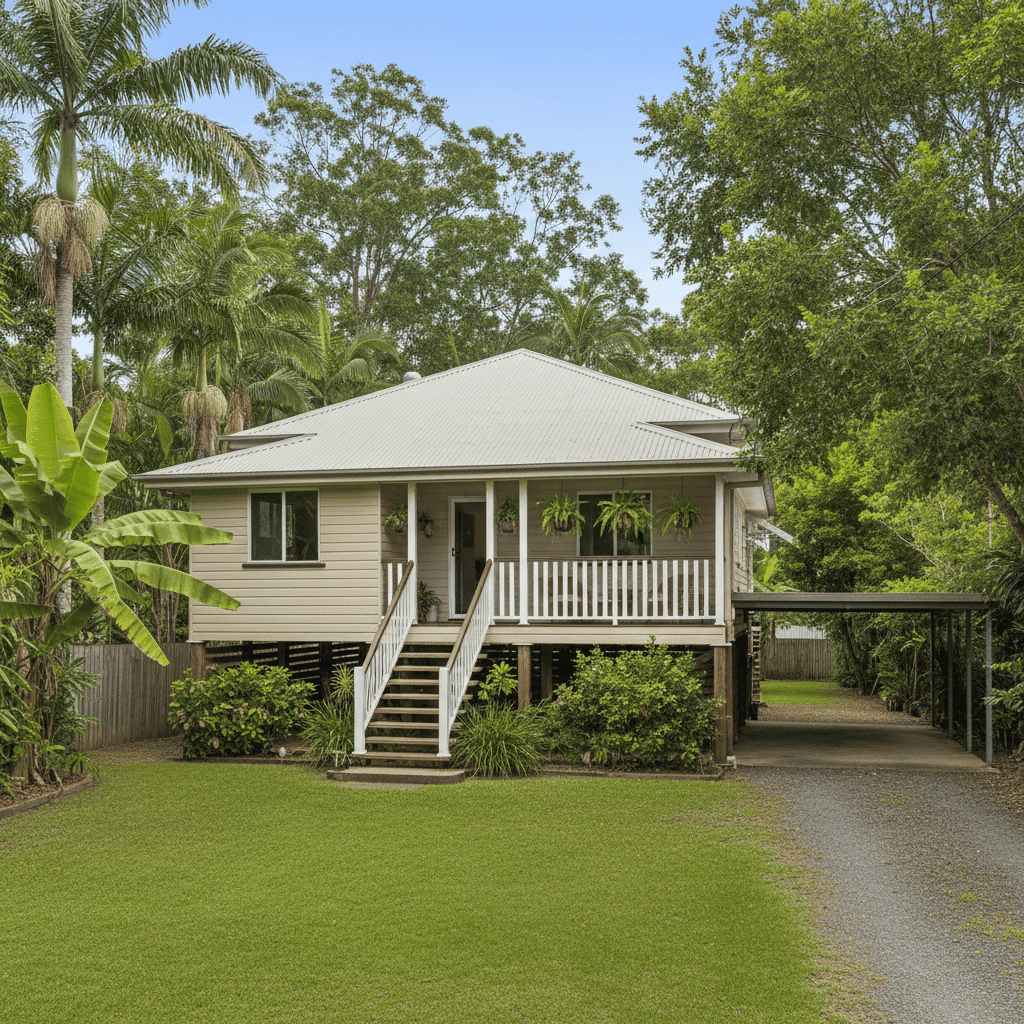
If you own a free standing home in Curra, QLD 4570, you already know this part of the Gympie region offers a relaxed, semi-rural lifestyle — but what does it mean for your home insurance costs? We recently analysed a building-only insurance quote for a 3-bedroom, 2-bathroom weatherboard home in Curra and the results are worth unpacking. Whether you're a long-time local or considering a move to the area, understanding what drives your premium can save you hundreds of dollars a year.
---
Is This Quote Fair?
The short answer: yes — and then some. This quote came in at $2,716 per year (or $253 per month) for building-only cover on a home insured for $536,000, with a $1,000 building excess. CoverClub's pricing engine rates this as CHEAP — below average for the area, and the data backs that up convincingly.
To put it in perspective, the suburb average premium in Curra sits at $5,873 per year — more than double what this quote is offering. Even the suburb's 25th percentile (meaning 75% of quotes are more expensive) comes in at $3,061 per year, which is still $345 more than this quote. In other words, this premium is genuinely competitive — not just by a small margin, but by a significant one.
For a homeowner on a budget, or simply someone who wants solid cover without overpaying, this quote represents real value. That said, it's always worth comparing multiple insurers to ensure the policy terms, inclusions, and claim processes meet your needs — not just the price tag.
---
How Curra Compares
Understanding your premium in isolation only tells part of the story. Here's how Curra stacks up against broader benchmarks, based on data from 83 quotes in the 4570 postcode:
| Benchmark | Premium |
|---|---|
| This Quote | $2,716/yr |
| Curra Suburb Average | $5,873/yr |
| Curra Suburb Median | $3,770/yr |
| Curra 25th Percentile | $3,061/yr |
| Curra 75th Percentile | $5,066/yr |
| LGA (Fraser Coast) Average | $4,810/yr |
| QLD State Average | $9,129/yr |
| QLD State Median | $3,903/yr |
| National Average | $5,347/yr |
| National Median | $2,764/yr |
A few things stand out here. Queensland's state average of $9,129 per year is extraordinarily high — more than three times this quote. This reflects the significant insurance burden faced by many Queenslanders, particularly those in cyclone-prone coastal areas, flood zones, and regions with elevated storm risk. The state median of $3,903 is a more realistic benchmark for typical QLD homeowners, and this quote still beats it comfortably.
Nationally, the picture is more moderate. The national average of $5,347 reflects the diversity of risk profiles across Australia, while the national median of $2,764 is remarkably close to this quote — suggesting that on a national scale, this premium is right around the middle of the pack, which is impressive given Queensland's generally elevated risk profile.
The Fraser Coast LGA average of $4,810 also provides useful local context. Curra sits within this broader regional area, and the quote comes in well below this benchmark too, suggesting the specific characteristics of this property are working in the homeowner's favour.
---
Property Features That Affect Your Premium
Several features of this particular property likely contribute to its competitive pricing — and a couple are worth watching.
Elevated foundation on stumps is one of the most significant factors. Homes raised at least one metre off the ground on stumps — classic Queenslander style — are generally better protected from flood and storm water inundation. Insurers typically reward this with lower premiums, particularly in areas that can experience heavy rainfall events.
Steel/Colorbond roofing is another positive. Modern metal roofing is durable, fire-resistant, and performs well in high-wind events compared to older tile or fibrous cement options. It's a feature that tends to reduce risk in the eyes of underwriters.
Weatherboard timber walls, however, are a double-edged sword. While they're a charming and common construction type in regional Queensland, timber weatherboard homes can carry a higher fire risk rating than brick or rendered alternatives. This can push premiums up with some insurers, so it's worth shopping around to find one that prices this construction type favourably.
The 1977 construction year is also relevant. Older homes can attract higher premiums due to ageing infrastructure — plumbing, wiring, and structural elements that may be costlier to repair or replace. However, a well-maintained home of this era with updated systems can still attract competitive rates.
Timber and laminate flooring is relatively straightforward from an insurance perspective, though it can be more susceptible to water damage than tiles. Given the elevated foundation, the risk of water ingress from below is mitigated, which is a sensible design choice for this part of Queensland.
The absence of a pool, solar panels, and ducted climate control keeps the insured risk profile simple and lean — fewer features means fewer potential claims, which often translates to lower premiums.
---
Tips for Homeowners in Curra
1. Lock in your rate while it's low Insurance premiums in Queensland have been rising steadily due to increased climate-related claims. If you've found a competitive rate, consider whether an annual payment (rather than monthly) could lock in savings and avoid any mid-term adjustments.
2. Review your sum insured regularly This home is insured for $536,000 in building cover. With construction costs rising across regional Queensland, it's important to review your sum insured annually to ensure you're not underinsured. Use a building cost calculator or speak with a quantity surveyor if you're unsure.
3. Maintain your stumps and subfloor Because this home is elevated on stumps, the subfloor condition is critical. Rotting or deteriorating stumps can affect structural integrity and may impact your ability to make a successful claim. Regular inspections — every few years — are a worthwhile investment.
4. Compare quotes at renewal time Even if your current premium is competitive, the insurance market shifts constantly. Set a reminder to compare quotes on CoverClub at least 30 days before your renewal date. You may find an even better deal — or confirm that you're already on a great rate.
---
Get Your Own Quote
Curious how your home insurance stacks up? CoverClub makes it easy to compare building and contents insurance quotes from multiple Australian insurers in minutes. Whether you're in Curra or anywhere else across the country, start your free comparison today and make sure you're not paying more than you need to.